How A Teen’s Coerced Confession Set Her Free
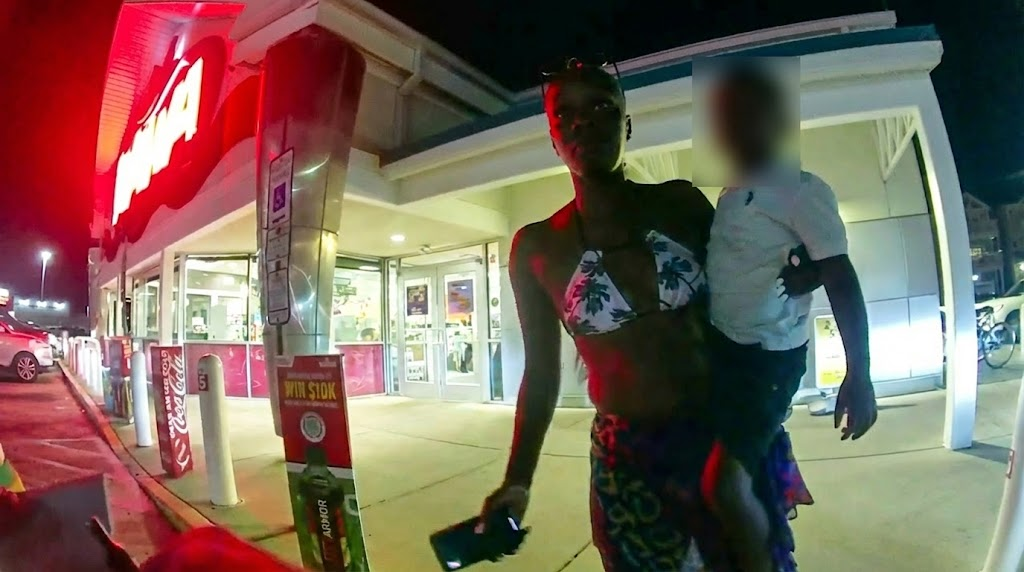
A screen shot of video footage attained by WBUR shows Worcester Police Sgt. Kevin Pageau (right) and Detective John Doherty as they interrogate Nga Truong, then 16, after the 2008 death of her baby boy.
It’s Dec. 1, 2008, a couple of days before Nga Truong’s 17th birthday. Truong is in “the box,” a tiny interrogation room at the Worcester, Mass., police department.
The day before, Worcester 911 had received a hysterical call for help from the apartment where the Vietnamese-American teenager lived with her 13-month-old son, Khyle; her boyfriend; her mother; and her younger brothers. Khyle wasn’t breathing, and an hour and a half later, a doctor at a nearby hospital pronounced him dead.

Back in the interrogation room, Sgt. Kevin Pageau presses in on the sobbing teenager.
“Somebody hurt that baby, and we need to know who it was, and we’re going to find out who it was,” Pageau says.
“I’m telling you everything,” Truong replies.
“No you’re not. Stop. Don’t lie to me,” Pageau says.
In that room, Truong will admit to suffocating her son. She’ll be arrested and she’ll spend almost three years awaiting trial for murder. But a videotape that police made of that interrogation, which NPR member station WBUR fought in court to obtain, will eventually set her free.

Before his death in 2008, Nga Truong’s son, Khyle, suffered from respiratory problems that required a nebulizer.
via Facebook
That videotape provides a rare look into the interrogation room, and the potential power it gives detectives to coerce false confessions.
‘The Worst Luck In The World’
Much of the recording shows Pageau and Detective John Doherty sitting across the table from a distraught Truong. The room is gray, and Truong wears a black and white sweatshirt.
“That baby was smothered. Somebody smothered him,” Pageau says. “You have some bad luck watching kids.”
That “bad luck” refers to the death, years ago, of Truong’s 3-month-old brother, Hein. Truong’s mother left her alone with the infant when she was only 8 years old. When Hein suddenly became unconscious, Truong brought him to a neighbor who called 911. But it was too late.
After an investigation and an autopsy, the medical examiner determined that Hein had died of sudden infant death syndrome. But when the two detectives learn of Hein’s death, they quickly decide that Truong had killed her brother and now she’s killed her baby, too.
“Sudden death syndrome? How about big sister syndrome?” Pageau says in the recording. “That baby mysteriously dies. And now Khyle’s in your care, and he mysteriously dies. Either you’re a liar or you just got the worst luck in the world.”
Lies In The Interrogation Room
Homicide detectives are often required to confront the people they question. But in the case of a teenage girl whose baby has been dead for 27 hours and who pleads and cries through much of the interview, Truong’s attorney, Ed Ryan, says this is psychological torture.
“Their interrogation was designed not to determine the truth, not to get at the facts,” says Ryan, who wasn’t present for the interrogation, when Truong didn’t yet have a lawyer. “Their intention was designed to force her to confess to doing it in the way they figure she did it. They are the ones that force-fed her the word ‘suffocation.’ “
Watch Nga Truong’s Confession:
WBUR YouTube
Watch more exclusive video footage of Nga Truong’s 2008 interrogation on WBUR’s website.
Pageau also fed her the word “smother,” saying the medical examiner had determined Khyle had been smothered to death. But, in fact, the medical examiner said no such thing. Pageau was lying to Truong.
According to conventional training manuals, the purpose of interrogation is to get the suspect to incriminate themselves or, better yet, make a full confession. Confessions are considered the queen of criminal evidence, so in that room, Pageau does what he can to get the evidence he’s looking for.
The detective knows, as he will later acknowledge in court, that the medical examiner who conducted the autopsy a few hours earlier has not yet discovered a cause of death. But in the box, he betrays no doubt.
“I know how he died, which is why we are here,” Pageau tells Truong.
In fact, at this point, Pageau does not know how Khyle died. William Powers, a former Massachusetts State Police detective who has interviewed thousands of suspects and trained countless detectives, watched the videotape. He says that in Massachusetts, courts and judges take a particularly dim view of false statements by detectives.
According to Powers, “While they have never said flat out, ‘You cannot lie,’ it’s a real negative factor with the courts.”
The Worcester detectives continually lie to Truong while at the same time accusing her of lying to them every time she says she didn’t kill her baby.
The Confession
“Maximization” is a technique detectives use to convey to the suspect the hopelessness of their situation. It’s meant to give the impression that continued denials will fail and that confession is an easier way out. And that’s just what Pageau does when he tells Truong, “If you think this is going to be like that other baby you were watching so well, you’re sadly mistaken.”
Eventually, the detectives switch from “maximization” to “minimization.” Pageau’s partner, John Doherty, offers Truong sympathy and plays down her responsibility for what they accuse her of doing. After all, Doherty tells her, “you’re just a kid.”
“People will be much more understanding if you come forward and say, ‘I’m a 16-year-old girl. I lost it, this is what happened,’ ” Doherty says.
The detectives exploit the antagonism between Truong and her mother, who is only 14 years older than Truong. They say the house is a mess and that Truong’s mother is unfit. While offering Truong an excuse, they dangle a motive for why she did what they accuse her of doing.
“It’s not fair to you,” Pageau says. “You’re a kid. You should be able to be a kid, right?”
He continues, “We know you’re pissed because you have to keep taking care of your mother’s kids, and you didn’t have a chance to be a kid. That’s why you smothered Khyle, didn’t you?”
“I did not,” Truong replies.
“That’s why you smothered him, didn’t you?”
“I would never kill him.”
That’s when the detectives turn to another method of extracting a confession: making promises and offering inducements. They say they can get Truong help if she confesses.
“All everyone’s waiting for today is for you to admit to what you did so that we can start the process of getting you some help,” Pageau says, “getting your brothers out of that house and getting them in a better home, where there’s a mom that gets up in the morning and takes care of them.”
A few minutes later, Truong asks, “What kind of help am I going to get?” That’s when the detectives know they’re getting close. Pageau tells her there are women on the other side of the door who help children “like you.” But there are no women on the other side of the door.
He tells her that if she confesses, she will get help and leniency in the juvenile court, saying, “Keep it in the juvenile court. Keep it in the juvenile system, where punishment is minimal, if any — let’s say there is any.”
Bill Powers, who trains detectives through Boston University, says that’s where the Worcester cops cross a big, bright line of the law.
“We can’t make promises. We can’t say we will do things that we can’t do,” Powers says. “To say she will be tried as a juvenile versus as an adult, that’s not our call. That’s the call of the [district attorney’s] office.”
But Truong buys their promises.
“Do I have to say it?” she whispers.
Hear David Boeri’s Original Report For WBUR:
Anatomy Of A Bad Confession, Part 1
Anatomy Of A Bad Confession, Part 2
“You do,” Pageau replies, in an even lower voice.
Truong sobs for a whole minute, then delivers her confession: “I smothered Khyle.”
When the detectives ask if she knows why she smothered Khyle, she says no and drops her head.
Later, she asks, “Is it OK if I leave now?” and “Will me and my brothers get to go to foster care?” Powers says those questions point to how clueless Truong was.
“[That] shows what was going on in her mind at the time,” he says. ” ‘I will make the admission, and I can go forward in my life and my brothers can go forward in their lives,’ not processing at 16 years old that she’s just admitted to homicide.”
The detectives tell Truong they’re putting her under arrest.
“This has to be today?” she asks.
“It has to be today,” Pageau says.
“Is it going to be more than a day?”
In fact, it was more than a day — it was two years and eight months.
Making The Case For A Bad Confession
On the tapes, the detectives promise Truong that she would go into the juvenile system if she confessed, but the teenager was charged as an adult with murder. Denied the right to attend her son’s funeral, she was sent to jail where she spent her first four months in solitary confinement and on suicide watch.
“This entire case went off the rails from the moment these two officers decided that Nga Truong was guilty,” says attorney Ed Ryan.
Truong had been locked up for two years when Worcester Superior Court Judge Janet Kenton-Walker heard Ryan’s motion to suppress the confession. At center stage was the police videotape, and problems filled the screen as soon as Kenton-Walker started watching.
In the first three minutes of the recording, it becomes clear that the detectives don’t even know how old their suspect is.
“You’re going to be 18 in a couple days?” Doherty asks.
“I’m going to turn 17 in a couple days,” Truong replies.
“Oh, you’re not 17 yet,” Pageau says, surprised.
At 16, Truong is still a juvenile, and as a juvenile she’s entitled to special Miranda rights that the cops have failed to give her. That was the first reason the judge gave for throwing out the confession.
Kenton-Walker also concluded that Truong was “a frightened, meek, emotionally compromised teenager who never understood the implications of her statements.”
In other words, Truong’s statements weren’t voluntary. That was the second reason Kenton-Walker gave for ruling in February 2011 that the confession was inadmissible and could not be used at trial.
Kenton-Walker also found that the detectives’ use of false statements, deception, trickery and implied promises led to Truong’s confession.
Six months later, Worcester County District Attorney Joe Early was forced to drop the case.
“There was no longer a confession in the case, nor any physical evidence,” he says.
The lack of any physical evidence raises the question of why the two detectives presumed Truong to be guilty in the first place.
The official autopsy states the manner of Khyle’s death to be “undetermined,” and the death certificate describes the cause of death as “asphyxial death consistent with but not exclusively diagnostic of suffocation.” Contributing factors, it says, were strep throat and tracheobronchitis. That’s all on top of a history of asthma. Finally, the boy’s body temperature was 101 degrees an hour after he died, suggesting he had a fever.
Whatever else may have happened to Khyle Truong, there’s no doubt he was a sick boy.
“Mistakes were made,” Early says, but he won’t say anything critical about the Worcester Police Department.
Watch An Interview With Nga Truong:
YouTube
Three Years Later And Trying To Move On
When I ask Nga Truong what is was like to get out of jail, she says she can’t even explain it.
“I got into school, I got a job,” she says. “It’s been great.”
In December 2011, just after the third anniversary of Khyle’s death, Truong turned 20.
The Worcester Police Department never responded to repeated requests for interviews, and Sgt. Kevin Pageau says department policy prevents him from commenting.
But the department did release a written statement saying that Pageau and Doherty “continue to perform their duties as investigators with the full support and confidence of the police administration.”
Truong has been free for just four months. She says she’s struggling to rebuild her life, but she’s no longer angry at the police — they were just doing their job.
I finally get to ask her why, three years ago, she confessed to something she didn’t do.
“It was a pretty long two hours, and all I could hear throughout those two hours was that they were going to give me help if I confessed,” she replies. Then she apologizes, bows her head and starts crying.
“I never thought of the consequences.”
Improving Police: A Necessary Conversation
A veteran police chief committed to improving police leadership, trust, effectiveness, and officer safety.
Hazing and Bullying in the Police Academy
Post navigation

Last week I read an article in the New York Times Magazine about police training in Atlanta. It reminded me of my days in the Marines – not my 33 years in the police.
I spent a decade on active and reserve duty as a U.S. Marine. I was an enlisted man and went through a tough 12-week boot camp in San Diego in the late 1950s.. The things I were asked to do and bear made sense given my chosen occupation: I was to be a fighting man — to seek out, engage, and destroy an enemy
When I left the Marines and set off to become a police officer, I thankfully was trained as a police officer and not a soldier. That made sense to me as I quickly understood that there was a big difference between the two.
Now back to the Times story: it was about Jacob Mach’s journey to America from the Sudan. He was one of the 4,000 “Lost Boys” of the Sudan. After coming to America 12 years ago, he now was training to become an Atlanta police officer.

You can see the full video story HERE.
What I saw in this documentary was a questionable learning environment that both emotionally and physically stressed its students.
During my years as a police leader, I tried to teach other police departments the best way to go about preparing young men and women to become police officers. This was not one of them.
I stress in my book that police officers need to be college educated, well-trained, controlled in their use of force, honest, and respectful. The following is a story about one of my experiences teaching leadership and improvement methods to a large urban police department in the West:
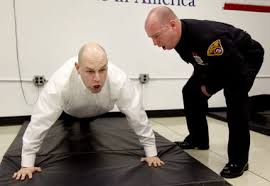
“As I was setting up my classroom at their training academy, I looked out the window and observed a formation of their new police recruits. I decided to go outside and get a closer look. The recruits were standing in three ranks—it was an inspection, a situation I could easily relate to from my days as a Marine.
“Suddenly, the training instructors started yelling at the new officers. Some were ordered to do push-ups by way of the familiar military command: ‘Drop and give me ten.’ In addition, I heard the instructors calling the young officers ‘assholes.’ I returned to the classroom in time to greet the chief and his command staff. I introduced myself and the curriculum for the next three days, then asked, ‘Are your officers permitted to call citizens names?’ They seem shocked, ‘We have rules against doing that. Why do you ask?’
“’Well,’ I replied, ‘I was watching your new officers outside this window and observed your trainers calling them very derogatory names. You know, it really doesn’t matter if you have rules against such conduct because when their teachers call them names, they will think that it’s okay for them to do the same to citizens. And if you ever try to discipline them, their defense will simply be, ‘That’s what the department taught me.’”
“I recently learned that the department never did change. Their academy remains stress-based, military, and intimidating. I don’t know if their training officers ever stopped calling recruit officers names. But one thing I do know, is that if they don’t stop, I predict they will continue to have problems with officers disrespecting citizens. How could they expect any different kind of an outcome?…
“Half of our nation’s police academies train in an atmosphere police trainers themselves identify as stress-based; that is, intimidating, even bullying. This makes half of American police academies more like military boot camps or correctional facilities than places in which college-educated young men and women are prepared to be professional police practitioners…
“Today, many police departments still continue to run their training academies like boot camps. These departments have training officers who look and act like Marine Corps drill instructors. They even wear the familiar Smoky Bear hats of a Marine drill instructor. As I became more acquainted with police work, I couldn’t understand why police were using the same training model I had been subjected to as a Marine. There was no similarity whatsoever between being a Marine infantryman and a police officer—the two job functions were as different as night and day.
I found this documentary about police training in Atlanta to be very unsettling. I challenge the basic assumptions about the efficacy of this model. First of all, is it necessary to bully and abuse police recruits in order to teach them the skills necessary to be an effective police officer today? Do people learn better under encouragement than stress? I think we all know the answer.
Secondly, if the stress-based, boot camp style is a necessary part of police work, why aren’t the highly-valued physical fitness requirements required of all police officers during their careers, not just at the beginning? (In fact, the only skill that continues to be evaluated by most police departments is periodic firearms, and not physical fitness, qualification standards.)
The best argument against this method of teaching occurs in the documentary itself. It was when Mach was having trouble on the shooting range and we see two styles of teaching used on him: one by an aggressive and demeaning male instructor and the other by a nurturing female instructor. Which one was effective in helping Mach qualify that day? Of course, the instructor who acted in a helping and humane manner.
This kind of debasing treatment in one way or another continues as the primary training protocol in at least half of our nation’s police training academies. It must stop.
At the end of the documentary, Mach was dismissed from the academy. Thankfully, he found a job as an Atlanta city Code Enforcement Officer. Watching him work effectively in this new job tells me that given another kind of training environment he would be a successful police officer.
The other thing that troubles me is that while we, as a nation, are working to eliminate hazing and bullying in our nation’s schools and workplaces, we need to take a better look at how our recruit police officers are treated. Hazing and bullying does not teach anyone anything except how to haze and bully. And they are not the kind of things we want our nation’s police to know let alone be subjected to.
[UPDATE: More recently Sue Rahr, director of police training in Washington state made some important changes along the lines of this blog in 2015 in order to instill a “guardian” mindset (versus “warrior”) among her recruits and was included in the recommendations of the Task Force on 21st Century Policing.]
[NEWER UPDATE: RCMP Recruiting video. To which my comment is: “Great for training Marines, bad for police and citizens they serve.”