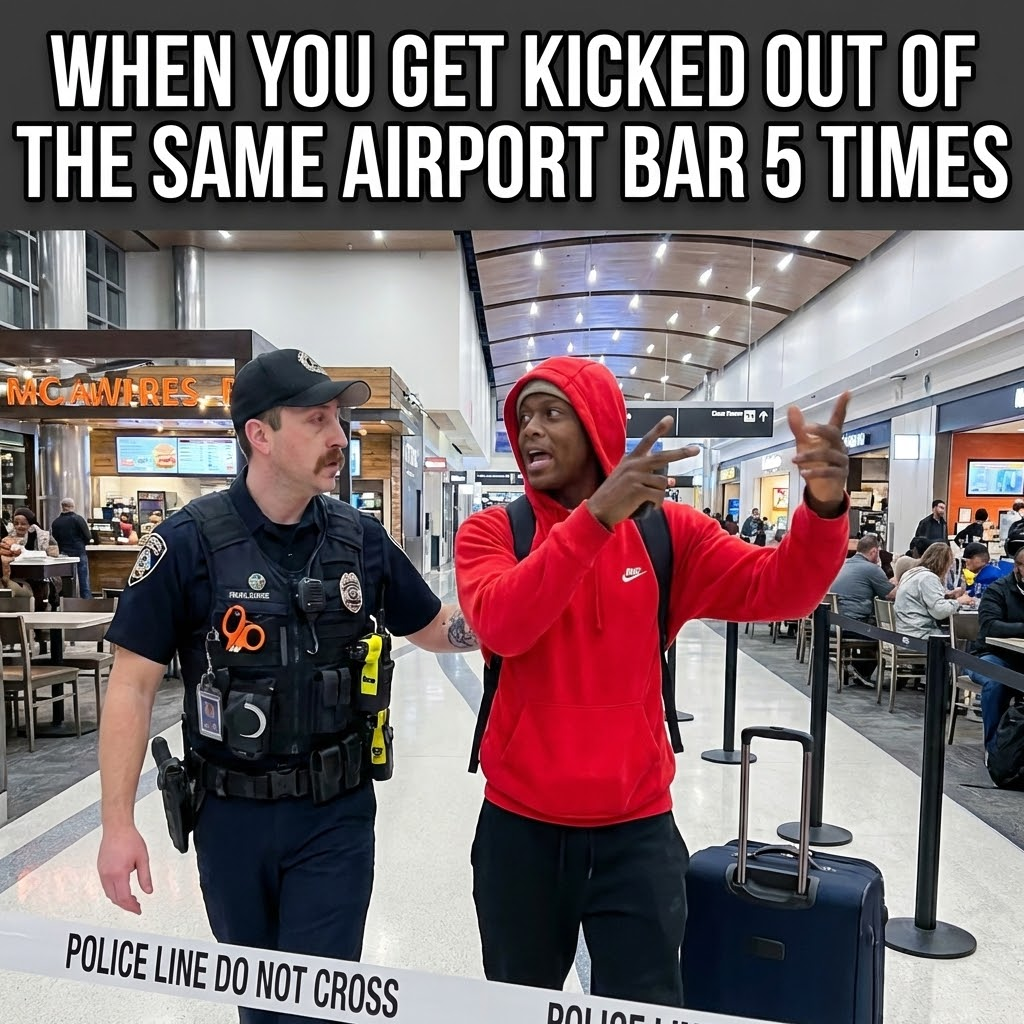
You Got Kicked Out of a Bar and Were Arrested When You Went Back – You May not be Guilty!
It’s an easy thing to happen. You got into an argument with someone in a bar who was annoying you. There wasn’t any violence, but the bar manager told you to leave. Fair enough.
You weren’t keen on staying anyway. But then you find you left your wallet behind at the bar and go back to collect it. At the bar, a bouncer grabs hold of you and the bar manager calls the police. A police officer turns up and listens to what both you and the bar manager have to say. You get the wallet back and are told by the officer not to return.
Then an hour later, you discover that the wallet wasn’t the only thing you left behind. In the heat of the moment, you left your cell phone behind when you picked up your wallet. You go back and just outside the bar see the same bouncer and tell him you have left the phone behind.

There is a loud discussion whether you can get it back or not and the same police officer returns and arrests you for ‘trespass after warning.’ You have never heard of this before and are wondering whether an attorney can help defend you against what you think an unjustified arrest.
Explaining trespass after warning
Basically, a trespass occurs when you enter a building without the owner’s (or their representative’s) permission. Obviously, if you go to a store, a supermarket or a bar, assuming they are open to the public at the time, you cannot be accused of trespass just by being inside!
However, if you have been told to leave the building, then it can be assumed that you don’t have permission to re-enter it sometime later. If you are caught inside this building after being warned not to return, then you could be committing a crime of trespass after warning as stated by Florida Statute § 810.08.
Potential penalties for trespass
Someone who enters an empty building without permission may be convicted of a 2nd degree misdemeanor and face a period in a county jail of up to 60 days.
If the building is occupied (as in the bar example above), then this could amount to a 1st degree misdemeanor and if convicted the trespasser may face jail time in a county jail of up to a year.
If the person was armed on entry, then this could be considered a felony in the 3rd degree with up to five years in a state prison imposed on conviction.
Defense against trespass
There are two ways a defense against trespass after warning can be mounted:
1. The alleged offense did not actually take place inside the building where the warning took place. Florida law is quite specific about what constitutes a building.
If there is a fence or wall or something similar around the building, then any entry past that barrier is considered a potential trespass. If the arrest took place on the sidewalk outside the building then the ‘crime’ could not have occurred because the sidewalk is public property.
2. For a misdemeanor trespass after warning to occur, the arrest must be made by an officer who has actually seen the person inside the building where the warning was given. In the example given above, the person trying to recover his cell phone stopped outside the bar and was arrested there. This cannot constitute a valid arrest as the arrest did not take place by an officer who had seen the person actually inside the bar.
If arrested for trespass, you cannot be convicted unless the evidence available shows ‘beyond reasonable doubt’ that you committed the offense. It is your right to be represented by an attorney.
A highly experienced Miami criminal defense attorney like Albert Quirantes knows the law inside out and will be able to vigorously defend you if you have been arrested for something you have not done.

Albert Quirantes: Your Miami Criminal Defense Lawyer & DUI Lawyer
http://www.criminaldefendant.com/
For over 30 years, Miami criminal defense attorney Albert M. Quirantes has been aggressively and zealously defending the rights of those accused of felony and misdemeanor crimesthroughout South Florida. With his dedicated team, reasonable legal fees, and a well-earned reputation for challenging prosecutors at every turn, he has protected over 8,000 clients during some of the roughest times of their lives.
Increase your knowledge! If you want to know more about how to resolve the problems you face when charged with a criminal offense in Florida, then you can follow Miami Criminal Attorney Albert M. Quirantes on Facebook, Twitter, or Google+.
If you have been arrested and charged with a crime, please call us today at (305) 644-1800 or fill out our online form to arrange for your free, confidential initial consultation.
If you have any questions about this or any other criminal accusation, call Miami Criminal Defense Lawyer Albert Quirantes at: (305) 644-1800 or visit our homepage www.CriminalDefendant.com for a direct link to the office or a text message or a map and directions to our office.
Flight Delays and Cancellations: A Guide
Table of contents
- 1. Introduction
- 2. Types of flight delays and cancellations
- 3. Obligations: Situations within the airline’s control
- 4. Obligations: Situations within the airline’s control, but required for safety
- 5. Obligations: Situations outside the airline’s control
- 6. Complaints to the CTA
- Annex A: Legislative and Regulatory References

Air Passenger Protection

1. Introduction
This is a guide explaining passenger rights and airline obligations if there is a flight delay or cancellation. These apply to flights to, from and within Canada, including connecting flights. The airline operating the affected flight is responsible for meeting obligations to the passenger. This guide describes the different types of flight delays and cancellations and how an airline’s obligations are different, depending on their level of control over the situation.
An airline’s tariff (the contract of transport between the passenger and the airline), which sets out its terms and conditions, cannot offer passengers less than these obligations require. If an airline chooses, its tariff may offer passengers terms that go beyond these minimum requirements.
This guide also provides tips for managing common flight delay or cancellation situations. These are meant to help both airlines and passengers understand what factors the Canadian Transportation Agency (CTA) would consider if a passenger complained to the CTA about a disrupted flight.
This is not a legal document. The explanations and definitions it provides are for general guidance purposes only. Airline obligations related to flight delays and cancellations can be found in the Air Passenger Protection Regulations (APPR) and Annex A of this guide. In case of differences between this guide and legislation or regulations, the legislation and regulations prevail.
2. Types of flight delays and cancellations
When a flight is delayed or cancelled (including before the day of travel), an airline has minimum obligations to passengers that could include certain kinds of assistance (standards of treatment), rebooking or refunds, and up to $1,000 in compensation for inconvenience. Their obligations depend on whether the disruption is within the control of the airline, within the airline’s control but required for safety, or outside the airline’s control. These situations are described briefly below. More detail, including how to treat the impacts of a flight disruption on other flights, is included in Types and Categories of Flight Disruption: A Guide.
Within the airline’s control
Situations within an airline’s control usually happen because of commercial decisions an airline makes in its day-to-day operations. These could include staffing issues and decisions to consolidate flights because of low demand.
Disruptions due to scheduled maintenance (including any work to address issues found during that maintenance) are also considered within the airline’s control.
Within the airline’s control, but required for safety
In this category, “required for safety” means “required by law to reduce risk to passengers.” Generally, these are situations in which an airline must delay or cancel a flight to follow rules put in place to make sure the flight and people on board are safe. These rules include the Canadian Aviation Regulations and its standards. For example, flight disruptions due to safety issues identified during pre- or post-flight checks which are performed for every flight to locate last-minute, unforeseeable issues, would fall into this category.
Outside the airline’s control
This category covers flight delays and cancellations over which the airline does not have control. These could include security incidents, medical emergencies, bad weather, or orders from applicable authorities.
Additional information:
In the event of a delay on the tarmac, airlines have all the obligations outlined in this guide, depending on their level of control over the situation, as well as other, specific obligations. For more detail, see Tarmac Delay Assistance and Disembarkation: A Guide.
3. Obligations: Situations within the airline’s control
An airline operating a flight that is delayed or cancelled for reasons within its control must communicate key information and, when applicable, do the following for the affected passengers:
- Provide assistance;
- Offer alternate travel arrangements or a refund; and
- Pay compensation for inconvenience.
Communicating with Passengers During a Disruption
Airlines have specific communication obligations when they delay or cancel a flight. The airline operating the disrupted flight must give passengers key information, including the reason for the delay or cancellation. The information should be in plain language without technical jargon and provide enough detail, so passengers can understand the reason given and how this reason caused the delay or cancellation. Airlines must also tell passengers about the compensation and assistance they may be entitled to, and their rights and options for making a complaint – including to the CTA.
During flight delays, airlines must provide regular flight status updates at least every 30 minutes until a new departure time or flight arrangement has been confirmed. The airline must provide any new information to passengers as soon as is feasible, including new information on the departure time, boarding gate, and reason for the delay.
All communication must be available in a format that is accessible to persons with disabilities.
Communication Guide:
Airlines’ communications obligations in the event of a flight delay or cancellation are described in greater detail in Communicating Key Information to Passengers: A Guide. This guide includes expectations regarding when and how to communicate this information.
Assistance
When there is a flight disruption, the operating airline must provide the assistance described below to passengers at the airport, if the passengers:
- were informed of the disruption less than 12 hours before the original departure time; and
- have waited two hours or more since the original departure time.
Reasonable amount of food and drink
Airlines must provide reasonable amounts of food and drink, free of charge. They should take into account the following factors when determining the quantity and timing:
- Length of delay/time of day: Airlines should consider the length of the disruption and the time of day it occurred in deciding how much food to provide and when. For example, serving water and a snack (like a granola bar) could meet the food and drink obligation for a short delay in the middle of the afternoon, but it would be reasonable to expect more food at typical meal times or after a lengthy wait.
- Location of airport: Where the disruption takes place may affect the type and range of food and drink options. For example, options may be more limited in Canada’s North and remote areas.
Access to means of communication
Airlines must give passengers access to a means of communication, free of charge. How they do this depends on the circumstances. For example, they could provide access to Wi-Fi, have phones available at the gate for passengers to use, or provide a pre-paid calling card.
Overnight accommodation
When a passenger will have to wait overnight for their flight (and where this would not have been necessary for the original flight), the airline must offer them hotel or other comparable accommodation. This must:
- be free of charge to the passenger;
- be reasonable, considering the passenger’s location; and
- include transportation to, and from, the accommodation.
Example
A passenger’s 2:00 pm flight has been cancelled at their point of departure in a remote location. The airline has made new travel arrangements for the passenger on a flight early the following morning.
When arranging the overnight stay for this passenger, the airline should first discuss with the passenger whether accommodations are needed. For example, if the passenger lives near the airport, it may be more convenient for them to stay at their home, in which case, the airline must simply cover their transportation home and back to the airport the next day.
If the passenger does need accommodation, the arrangements the airline makes will depend on the availability of accommodations. The airline is expected to make every reasonable effort to book hotel accommodations for the passenger. In certain circumstances (for example, in a remote community), it may not be possible to book accommodations within a reasonable distance of the airport (to ensure the passenger can make it back to the airport the next morning).
Refusing or limiting assistance
An airline may only limit or refuse to provide the required assistance if doing so would further delay the passenger. For example, if a flight has been delayed for two hours, but boarding is expected to start within 30 minutes, offering passengers airport food vouchers may prevent timely boarding. In this case, offering water and a simple snack may be reasonable.
Alternate travel arrangements and refunds
Airlines must always ensure that a passenger whose flight has been disrupted completes their journey – either on the original flight or through alternate travel arrangements. The aim must be to get the passenger to the destination indicated on their original ticket as soon as possible.
The requirement to provide alternate travel arrangements, free of charge, applies when a flight is cancelled and for flight delays of three hours or more. This could be achieved in the following ways:
- The operating airline makes alternate travel arrangements for all affected passengers, with the option for the passenger to refuse the new arrangements; or
- The operating airline offers alternate travel arrangements to each affected passenger and makes those new arrangements for any passenger who accepts.
In either case, the passenger may choose to accept the alternate travel arrangements offered by the airline, or opt not to travel and receive a refund.
Large and small airlines have different obligations for making alternate travel arrangements.
About large and small airlines
An airline’s tariff (the contract of transport between the passenger and the airline) must say whether it is a large or small airline.
An airline is a large airline if it transported at least two million passengers during each of the past two calendar years. This includes all passengers carried throughout the airline’s entire network. Otherwise, the airline is a small airline.
A small airline transporting passengers on behalf of a large airline under a commercial agreement (like a code share or a block space agreement) will have to follow the large airline obligations for those passengers.
Tip for passengers: If there is a commercial arrangement in place, the passenger’s ticket or itinerary will show which two airlines are involved. The first two letters of the flight number are the unique two-letter code of the airline that sold the ticket to the passenger (for example, AC142 is an Air Canada flight, while WS450 is a WestJet flight). The ticket or itinerary should also say which airline is operating the flight on behalf of the first.
Large airlines
Large airlines must book the passenger on the next available flight that is operated by them, or an airline with which they have a commercial agreement. The new flight:
- must take any reasonable route out of the same airport to the passenger’s destination indicated on their original ticket; and
- must depart within nine hours of the departure time indicated on the passenger’s original ticket.
If the airline cannot provide a reservation on a flight which departs within nine hours, they must book the passenger, as soon as possible, on a flight operated by any airline. The new flight:
- must take any reasonable route out of the same airport to the passenger’s destination indicated on their original ticket. This may mean buying a ticket for the passenger on a competing airline; and,
- must depart within 48 hours of the departure time indicated on the passenger’s original ticket.
If the airline cannot provide a reservation on a flight which departs within 48 hours of the original departure time, the airline must book the passenger as soon as possible, on a flight operated by any airline, from a nearby airport. They will also have to transport the passenger to that airport, free of charge. The new flight:
- must take any reasonable route out of the nearby airport to the passenger’s destination indicated on their original ticket.
Reasonable Route: Example
A large airline is making alternate travel arrangements for passengers whose direct flight from Punta Cana to Vancouver was cancelled. In determining options, the airline must consider whether the available flights take reasonable routes.
The first available option involves two connections – in Toronto and Edmonton – and would have the passengers reaching their destination 28 hours later than indicated on their original ticket. This may not be considered a reasonable option, because the length of time and multiple connections would further inconvenience the passengers (especially given they had originally booked a direct flight).
In this case, a direct flight leaving a little later than the first option would likely be considered the more reasonable option.
Small airlines
Small airlines must book the passenger on the next available flight operated by them or an airline with which they have a commercial agreement. The flight must take any reasonable route from the same airport to the passenger’s destination indicated on their original ticket. Small airlines do not have to book the passenger with an airline with which they do not have a commercial agreement.
Comparable conditions and services
To the extent possible, airlines must provide alternate travel arrangements comparable to the ones the passenger originally purchased in terms of:
- the class of service; and
- added services the passenger purchased.
If the arrangements mean the passenger will be travelling in a higher class of service than originally purchased, the airline must not ask for an additional payment. If the passenger will be travelling in a lower class of service, the airline must refund the difference in cost for the applicable portion of the original ticket.
The airline must also provide a refund for any added services the passenger purchased but did not receive on the alternate flight or added services they had to pay for a second time.
For example, if the passenger prepaid for a meal and a meal was not available on the alternate flight, or the passenger had to buy the meal again, the airline is obligated to refund the cost of that prepaid meal.
Diversions
If a flight is diverted to a different airport than the one on the passenger’s original ticket, the airline (large or small) must transport the passenger to the airport on the ticket unless the passenger chooses not to accept that transportation. For example, if the diversion is to another airport in the same city, the airline may have to provide shuttles or taxis to the original destination airport on the ticket.
Refund
If an airline (large or small) offers alternate travel arrangements but these do not meet a passenger’s needs, the passenger is entitled to a refund. If the passenger’s trip no longer serves its purpose because of the disruption, and the passenger is no longer at their point of origin (for example, if they are at a connecting point in their multi-leg ticket), then the airline must book the passenger on a flight back to their point of origin that accommodates the passenger’s travel needs, free of charge, and refund the entire ticket (as if no part of the trip had been made).
In any other case, when the alternate travel arrangements do not meet a passenger’s travel needs, the operating airline must provide a refund for the unused portion of the ticket.
Form of refund
Airlines must make refunds to the person who purchased the ticket in the same form of payment the ticket or additional service was purchased.
Airlines may offer another form of refund (for example, travel vouchers), but only if:
- it does not expire;
- the airline informs the person in writing of the value of the ticket and their right to receive a refund in that amount by the original payment method; and
- the person confirms in writing that they have been informed of their right to a refund by the original method of payment and instead have chosen the other form of refund.
The airline will be required to provide the refund within 30 days, regardless of the refund format (for example, cash, credit, alternate forms).
Compensation
Airlines should give passengers as much notice as possible that their flight will be delayed or cancelled. If an airline informs the passengers 14 days or less before their original departure time, they will have to compensate the passengers for the inconvenience of the disruption. The amount of compensation depends on how late the passenger arrives at their destination, compared to the arrival time indicated on their original ticket.
Large airlines must pay:
- $400 if the passenger arrives three or more hours late, but less than six hours;
- $700 if the passenger arrives six or more hours late, but less than nine hours; and
- $1,000 if the passenger arrives nine or more hours late.
Small airlines must pay:
- $125 if the passenger arrives three or more hours late, but less than six hours;
- $250 if the passenger arrives six or more hours late, but less than nine hours; and
- $500 if the passenger arrives nine or more hours late.
Passengers who choose to take a ticket refund instead of alternate travel arrangements must still be compensated for inconvenience if the disruption was within the airline’s control. Large airlines must pay them $400 and small airlines, $125.
A passenger can only receive compensation for inconvenience under the APPR if they have not already received compensation for the same delay or cancellation under other air passenger protection rules in another jurisdiction. Passengers have the right to seek compensation under the regime of their choice – airlines cannot refuse to compensate a passenger simply because that passenger would also be eligible under another jurisdiction’s rules. Airlines are encouraged to track claims submitted to them under other rules to make sure the passenger receives compensation for inconvenience once.
Claims for compensation
A passenger has one year from the date the flight delay or cancellation happened to make a compensation claim with the airline. The airline has 30 days to respond by either making the payment or saying why it believes compensation is not owed.
Making a claim using representation
If a passenger would like to have a third party represent them in making a claim with an airline, the passenger should check the airline’s policies and procedures in this area. Some airlines may, for example, ask for proof that the passenger has given the other party permission to represent them.
Making the compensation payment
If compensation is owed, the airline must offer it in a monetary form. This can include cash, cheque, bank drafts, and electronic bank transfers.
An airline may also offer another form of compensation, such as vouchers, but only if:
- it tells the passenger the monetary amount they are entitled to;
- it tells the passenger in writing the value of the other form of compensation it is offering;
- the other form is greater in value than the monetary amount the passenger is entitled to;
- the other form of compensation has no expiry date; and
- the passenger confirms in writing they know that monetary compensation is available, but they choose the other form of compensation.
The amount of the compensation airlines provide must be equal or greater than the required amount of compensation in Canadian dollars. If a passenger requests compensation in a particular currency, airlines are encouraged to accommodate them, if possible. It is recognized that it may not be feasible to offer all currencies.
The compensation must be paid to the passenger who experienced the disruption, regardless of who paid for their ticket.
Rejecting a claim for compensation
Flight disruptions can be complex – the situation can change over time, there can be more than one reason for the flight disruption, and a passenger can experience more than one disrupted flight on the way to their destination. In some cases, the airline may only be sure of the primary reason for a flight disruption once it has had time to investigate, after the travel has been completed. This means the primary reason for the disruption may be different from the one originally provided by the airline at the time of the flight disruption.
That is why it is important for the airline to provide a full and clear explanation to the passenger when rejecting a claim for compensation. The explanation must give the passenger enough information to decide whether they would like to file a complaint to challenge the rejection. The airline’s explanation must include the reason for the disruption and why it means that no compensation is owed. The 30-day response window gives the airline enough time to look into the claim and collect the necessary information.
Not providing the passenger with a full and clear explanation of why the airline is rejecting the claim for compensation may leave the passenger confused or suspicious. This is especially true if the explanation does not match the reason for disruption originally provided by the airline. In these cases, the airline should explain that the situation evolved, or that new information came to light.
Multiple reasons and multiple flight disruptions
If there were multiple reasons for a flight disruption or multiple disrupted flights on a passenger’s itinerary, the airline must decide whether compensation is owed based on the three-step process described in Types and Categories of Flight Disruption: A Guide.
If the airline follows this process and decides that compensation is not owed, their explanation to the passenger must indicate:
- what the different reasons were, the length of delay that each one caused, and which flight was affected (if there was more than one disrupted flight);
- what was the primary reason the passenger arrived at their destination late; and
- what APPR category that reason falls into – outside the airline’s control or within the airline’s control but required for safety purposes.
Tip for passengers
In addition to the minimum compensation for inconvenience described in this guide, a passenger who is delayed while travelling internationally may also be entitled to make a claim under the Montreal or Warsaw Convention for certain damages – for example, expenses – that happened because of the delay. It is recommended that passengers first make these claims with the airline in writing. There is a 2-year time limit for any court action to claim damages.
4. Obligations: Situations within the airline’s control, but required for safety
If an airline delays or cancels a flight for reasons within its control, but required for safety, it does not have to compensate passengers. However, the airline must meet the other obligations described in “Situations within the airline’s control”, above.
5. Obligations: Situations outside the airline’s control
If an airline delays or cancels a flight for reasons outside its control, it does not have to compensate affected passengers, and the requirement to provide minimum assistance (food, drink, access to communications, and overnight accommodations) does not apply. However, the airline must follow the communication requirements described in Situations within the airline’s control, above. It must also make alternate travel arrangements for passengers, or, in certain circumstances, provide a refund.
Alternate travel arrangements and refunds
In situations outside its control, the airline operating the flight must ensure that the passengers complete their journey. If a flight is cancelled or once a flight delay has reached three hours, the airline must provide the passenger with a confirmed reservation on the next available flight that is operated by the original airline, or an airline with which the original airline has a commercial agreement. The flight must depart within 48 hours after the departure time indicated on the passenger’s original ticket. If the airline cannot provide a reservation on a flight that departs within 48 hours of the original departure time indicated on the passenger’s ticket, the airline must, at the passenger’s choice;
- Provide a refund; or
- Make alternate travel arrangements for passengers, free of charge. The details of the new flight depend on the size of the airline, as follows.
If the passenger chooses alternate travel arrangements and is travelling with a large airline
Large airlines must book the passenger on a flight operated by any airline. The new flight must take any reasonable route from the same airport or from a nearby airport to the passenger’s destination indicated on their original ticket. In that case, they will also have to transport the passenger to that airport, free of charge.
If the passenger chooses alternate travel arrangements and is travelling with a small airline
Small airlines must book the passenger on the next available flight operated by them or an airline with which they have a commercial agreement. The flight must take any reasonable route from the same airport to the passenger’s destination indicated on their original ticket. Small airlines are not required to book the passenger with an airline with which they do not have a commercial agreement.
If the passenger chooses a refund and is no longer at their point of origin
If a passenger who chooses to be refunded is no longer at the point of origin that is indicated on the original ticket (for example, if the passenger is at a connecting point) and the travel no longer serves a purpose because of the delay or cancellation, then the airline (large or small) must rebook the passenger on a flight back to that point of origin that accommodates the passenger’s travel needs, free of charge, and refund the entire ticket (as if no part of the trip had been made).
Form of refund
Airlines must provide the refund to the person who originally purchased the ticket, using that person’s original payment method (for example, a return on the person’s credit card). The airline may offer the refund in another form (for example, travel vouchers), but only if:
- it does not expire;
- the airline informs the person in writing of the value of the ticket and their right to receive a refund in that amount by the original payment method; and
- the person confirms in writing that they have been informed of their right to a refund by the original method of payment and instead have chosen the other form of refund.
The airline must provide the refund within 30 days, regardless of the refund format (for example, cash, credit, travel voucher, etc).
6. Complaints to the CTA
If a person’s travel has been disrupted and they believe that the airline did not meet the obligations in its tariff (the contract of transport between the passenger and the airline) or the APPR, they should contact the airline in writing. If the airline does not respond after 30 days or if they are not satisfied with the airline’s response, they can make a complaint to the CTA.
The CTA can help resolve complaints about air travel to, from and within Canada. The CTA’s role is to make sure that airlines apply their terms and conditions of carriage set out in their tariffs, follow the Air Passenger Protection Regulations, and that both passengers and airlines have met their respective responsibilities.
The passenger may choose to have a friend, family member, representative or lawyer submit their complaint, but the passenger and anyone included in the complaint, must have actually experienced the flight delay or cancellation raised in the complaint.
Recommended practice – information to provide the CTA in the event of a complaint
In the context of air travel complaints filed with the CTA, the CTA expects passengers and airlines to provide detail of what happened when the flight was disrupted.
If a passenger brings forward a complaint to the CTA regarding a flight disruption, the CTA will expect certain information from the passenger and the airline.
If a passenger disagrees with how an airline categorized a flight disruption, the CTA will expect them to justify why they disagree. In turn, the airline will be expected to provide evidence demonstrating which category the disruption falls into. Such evidence is the basis upon which the CTA will decide if the passenger received what they are entitled to under the APPR and the airline’s tariff. For example:
If the airline had decided a flight disruption was caused by bad weather and was therefore outside its control, they would be expected to provide the CTA with a weather report or similar evidence describing that weather situation.
If the complaint is that the airline did not meet its obligations during a flight disruption, the CTA will also expect airlines to provide documentation showing the assistance and compensation they provided affected passengers, if any, and how they communicated with them.
More information on the evidence that airlines may have to provide to the CTA if there is a complaint related to a crew shortage can be found in the Supplementary Guidance: evidentiary requirement for airlines for complaints relating to crew shortages.