Meth and heart disease: A deadly crisis we don’t fully fathom, report says
By American Heart Association News
Please note: This article was published more than two years ago, so some information may be outdated. If you have questions about your health, always contact a health care professional.
Although frequently overshadowed by the opioid epidemic, surging methamphetamine use nationally and around the world has fueled a chilling crisis of its own, according to a new report.
The result is a significant increase in meth-related deaths from unique cardiovascular consequences that researchers are trying to understand.
Methamphetamines can cause blood vessels to constrict and spasm, dangerous spikes in blood pressure, and the rewiring of the heart’s electrical system, among other potentially fatal heart-related problems.
“Cardiovascular disease represents the second-leading cause of death among methamphetamine abusers following only accidental overdose,” according to the report published Wednesday in the American Heart Association’s journal Arteriosclerosis, Thrombosis, and Vascular Biology.
The report reviews current research on methamphetamine and the drug’s effect on heart disease and stroke. It discusses potential mechanisms behind those effects and highlights “our deficiencies in understanding how to treat methamphetamine-associated cardiovascular dysfunction.”
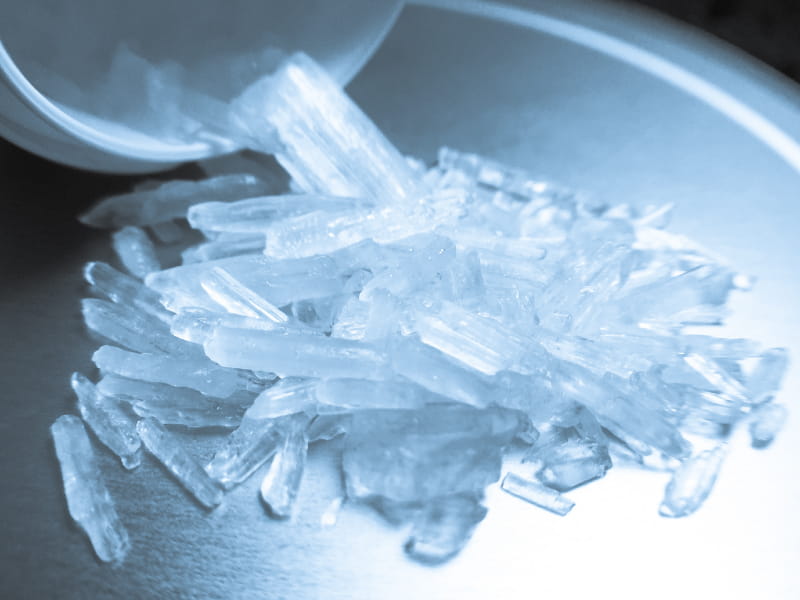
Methamphetamine, also known as crank, ice, crystal meth, speed and glass, is a highly addictive stimulant that can be smoked, snorted, swallowed or injected.
Meth users tend to show evidence of cardiovascular disease at greater intensity and at younger-than-typical ages, according to the report. The review also looked at how methamphetamine leads to a type of blood pressure that affects the heart and the arteries in the lungs, and how it can lead to an abnormal heart rhythm, called arrhythmia, and change in the structure of the heart muscle, or cardiomyopathy.
The drug’s popularity has been reflected in emergency room visits. Amphetamine-related admissions to hospitals soared by more than 270% between 2008 and 2015, according to a study published last fall.
One reason for the drug’s growth is that methamphetamine has been easier, and cheaper, to buy. Seizures at the U.S.-Mexico border increased tenfold from 2010 to 2018. A surplus of the drug has been documented in Southeast Asia.
But the rise in methamphetamine use has been overshadowed by an opioid epidemic full of headline-grabbing tragedies.
“When people look at overdose deaths from drugs, opioid is a much bigger problem. But what people are overlooking is the fact that meth users, while they’re not overdosing, they’re dying of other things. They’re dying of heart attacks, they’re dying of heart failure,” said Wayne Orr, senior author of the report.
“A lot of the time, a meth user will come off of the methamphetamines, try to get clean, and the severe dysfunction in their cardiovascular system really limits their ability to function in society to work, and that can lead to enhanced relapses,” said Orr, director of the Center for Cardiovascular Diseases and Sciences at Louisiana State University Health Shreveport.
The new report is a thorough review of what cardiologists are increasingly facing, said Dr. Isac Thomas, an assistant professor at the University of California, San Diego School of Medicine.
“It’s a growing body of literature but frankly, there’s an overall dearth of research. This problem is just rapidly accelerating,” said Thomas, who was not involved in the report but has conducted several studies on the topic. Earlier this year, he released research that found widespread meth use has created a unique form of severe heart failure, often in younger patients.
With production, trafficking and potency on the rise, methamphetamine is “expanding to more and more parts of the country and the world,” Thomas said, “and that’s outpacing our knowledge of how to manage and treat it, and what kind of mechanisms are involved in terms of how it’s causing cardiovascular disease.”
For the medical community, the report discusses potential mechanics involved in the heart damage at a molecular level. It also stresses the need for more research and public awareness.
“I’m quite sure that people who use meth don’t understand or appreciate the damage they’re doing to their cardiovascular system. That even if they do get clean, the damage already there could be long-lasting,” said lead author Chris Kevil, vice chancellor for research and professor of pathology at LSU Health Shreveport.
He said he and his colleagues can recite stories of people who have tried to bounce back from meth use.
“They’ve gotten clean after using meth for many years, and then all of a sudden they have a massive heart attack due to just getting excited at their son’s football game,” Kevil said. “They don’t realize that it’s like a ticking bomb in them. On top of that, neither do their primary care physicians, most likely. This is an education concept for both the public and health care professionals.”
If you have questions or comments about this story, please email editor@heart.org.
American Heart Association News Stories
American Heart Association News covers heart disease, stroke and related health issues. Not all views expressed in American Heart Association News stories reflect the official position of the American Heart Association. Statements, conclusions, accuracy and reliability of studies published in American Heart Association scientific journals or presented at American Heart Association scientific meetings are solely those of the study authors and do not necessarily reflect the American Heart Association’s official guidance, policies or positions.
Copyright is owned or held by the American Heart Association, Inc., and all rights are reserved. Permission is granted, at no cost and without need for further request, for individuals, media outlets, and non-commercial education and awareness efforts to link to, quote, excerpt from or reprint these stories in any medium as long as no text is altered and proper attribution is made to American Heart Association News.
Other uses, including educational products or services sold for profit, must comply with the American Heart Association’s Copyright Permission Guidelines. See full terms of use. These stories may not be used to promote or endorse a commercial product or service.
HEALTH CARE DISCLAIMER: This site and its services do not constitute the practice of medical advice, diagnosis or treatment. Always talk to your health care provider for diagnosis and treatment, including your specific medical needs. If you have or suspect that you have a medical problem or condition, please contact a qualified health care professional immediately. If you are in the United States and experiencing a medical emergency, call 911 or call for emergency medical help immediately.
You asked, we answered: I use meth medically to stay awake, how can I quit?

Question:
I have had issues with excessive tiredness for many years. I’ve been tested for thyroid, leukemia, sleep apnea and others. I do have sleep apnea and use a CPAP. But we have never been able to resolve the fatigue. I started using methamphetamine and have way more energy. I know it’s awful and I need to quit but I’m terrified of going back to sleeping 10 to 14 hours. What options are there?
Answer by addiction medicine specialist Kenneth Zoucha, MD:
Methamphetamine isn’t a good solution for fatigue because of how it affects your body. We also know that a good portion of methamphetamine is adulterated with fentanyl. The good news is, there are a lot of other options. We just need to have a better idea of your situation to find something that works.
When you use methamphetamine, the dopamine and serotonin system in your body adapt by lowering the natural levels of these neurotransmitters. Low levels of dopamine and especially serotonin can be very disruptive to your sleep and energy levels. Methamphetamine also decreases energy levels like motivation and changes the melatonin system which leads to a lot of sedation.
A few questions for you:
- Do you have any psychiatric diagnoses, like depression or attention deficit hyperactivity disorder (ADHD)?
- Are you using any other substances, like alcohol, bath salts or kratom, in addition to methamphetamine?
- How does your sleeping affect you functionally? Does your fatigue cause you to miss work, sleep through family activities or ruin your time with friends? Do you fall asleep while working or doing these things?
- Are you prescribed any other medications?
Depending on those answers, we would be able to try something different without the ill effects.
You might need to see a sleep specialist or have a home sleep study done off methamphetamine to see what things are like. They could make a diagnosis of a possible sleep-wake disturbance. If you have narcolepsy or ADHD that doesn’t respond to bupropion, stimulant medications may help.
Either way, we would rather have you taking a medication that doesn’t disrupt the natural levels of your neurotransmitters like methamphetamine does.