
Recruiting more women won’t solve police brutality
Debates around ‘warrior cop’ masculinity and excessive use of force in policing have continued in the wake of the death of George Floyd and the Black Lives Matter protests; but suggestions that simply hiring more women will change police culture are flawed, says Harvard Masters candidate Diane Liang.
In the wake of the Black Lives Matter protests and reckonings with police brutality in the United States, some have pushed the idea that hiring more women will help fix the problem. A similar sentiment can be seen in the United Nations, which marked the 20th anniversary of its women, peace and security agenda last year. A ‘top priority’ of the United Nations Police is increasing the number of female officers. More women, says the UN, “means more effective police services”.
This ‘add women and stir’ solution to improving policing seems attractive for several reasons.
“
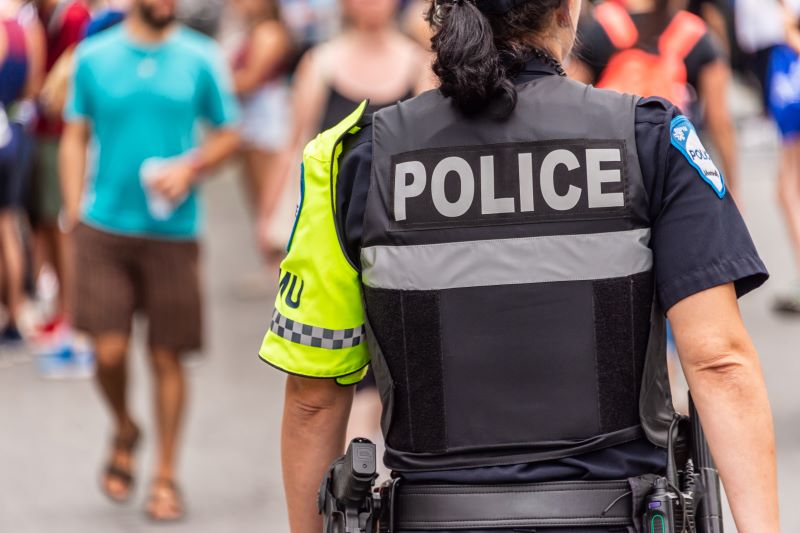
Women are believed to be more peaceable: they are more peace prone (women are less likely to escalate in language, tactics and means of violence) and better peacemakers (women are supposedly more conciliatory and considered better at defusing tensions).
First, women are believed to be more peaceable: they are more peace prone (women are less likely to escalate in language, tactics and means of violence) and better peacemakers (women are supposedly more conciliatory and considered better at defusing tensions). Women are also seen as better communicators. This presumably allows them to access tools and work towards outcomes other than violence.
Second, beyond reducing police brutality, women can add other benefits to police forces. These functional arguments include that a police force which is more representative of the community is considered more trustworthy and approachable. Women may feel more comfortable approaching female police officers – especially when reporting sexual assault and other gender-based violence. And female police officers may be more responsive to domestic and gender-based violence (although the evidence for this is mixed).
Finally, diverse teams make better decisions. More women, the argument goes, leads to improved policing.
Binary gender stereotypes
But it’s important to note that many of the arguments for increasing women’s participation lean on binary gender stereotypes. Women don’t hold a monopoly on the traits, tools or benefits that are assumed to improve policing.
Men can be taught communication and conciliation. Male police officers can be equipped with a range of tools that don’t depend on force. They can be taught to reach for those tools more frequently. Diversity generally (not just gender diversity) can mean better decision-making in teams and improved community trust and access.
Nevertheless, to the extent that women do bring unique benefits to policing, simply adding women won’t solve police brutality. We must look at the systems in which police officers work.
“
External and internal incentives can pressure women to ‘prove themselves’ on male terms, thus sidelining their diverse perspectives. Adding women to the police force may simply replicate the status quo, rather than create a more peaceful force.
Institutions such as the police and military, which are charged with protecting citizens and are authorised to use force, tend to incentivise warrior masculinity, protective masculinity and militarised masculinity. These aggressive masculine attributes tend to define the job, while traits associated with femininity are undervalued.
External and internal incentives can pressure women to ‘prove themselves’ on male terms, thus sidelining their diverse perspectives. Adding women to the police force may simply replicate the status quo, rather than create a more peaceful force.
The experience of other security organisations helps to show how this can occur. Orna Sasson Levy is a scholar studying gender in the Israeli Defense Forces, which conscripts both men and women. She observes that women serving in ‘masculine’ (combat-oriented) roles tend to emulate the masculine model of the combat soldier because they ‘perceive masculinity as a universal norm for soldierhood’. In doing so, they reproduce specific forms of masculinity – including some of the behaviours women are supposed to ‘solve’.
Creating different models of the ‘exemplar’ officer
Whatever we find attractive about women’s participation cannot emerge if our systems don’t reward femininity, whatever its forms and associated traits. If we – the public, police officers and police leadership – don’t value the very traits and skills that women are expected to bring and which differentiate them from men, then we cannot expect those items to be at the table.
This means changing social pressures and cultural ‘fit’ in police stations so that traits associated with women are not only acceptable, but actively valued. It means creating more, different models of the exemplar officer and police force.
“
It also means reassessing how police evaluate core skills and promotions, and what benefits and support exist so that women who do join police forces are reasonably able to thrive.
It also means reassessing how police evaluate core skills and promotions, and what benefits and support exist so that women who do join police forces are reasonably able to thrive.
In other words, not only is the ‘add women and stir’ approach insufficient to solve police brutality, but women aren’t the magic ingredient to ‘solving’ policing in America. Nor should women be put in the position of shouldering the burden for reform.
We need different systems – systems that value traits traditionally associated with women and devalue specific forms of masculinity – in our police departments. We need diverse groups not just to be present but to meaningfully participate in resetting the table and changing what good policing looks like.
And women should be at the table – whether or not they bring anything ‘extra’ because of their gender. Making sure our institutions of power reflect the diverse societies they serve can be worthwhile in and of itself.
The Performance Paradox: What the data really tells us about police reform
REGISTER16th January 2026Michael Stephenson, Organisational Psychologist 1 CommentPolicing in the UK is currently waiting expectantly for the soon-to-be-published police reform white paper; in the first of a two-part article on reform – and why bigger isn’t better, culture trumps structure, and technology won’t save us without transformation – organisational psychologist Michael Stephenson explores the performance myths that need to be dispelled, the real story from the PEEL assessment data, and why Positive Deviance methodology could be crucial for police reform.
« Previous ArticleNext Article »
This article is FREE to read with a registered account – no paid subscription is required.
If you have an account, please sign in below or if not please register a FREE account to read the article.
If your organisation has a corporate subscription please register a FREE account with your organisation email address for full subscriber access.
Policy isn’t culture: The real standard officers follow
REGISTER13th January 2026Officer Keith Lazaron II, West Kittanning Police Department 4 CommentsLaw enforcement agencies with “good policies” often continue to get bad outcomes; experienced officer Keith F. Lazaron II, who currently serves with the West Kittanning Police Department in Pennsylvania, explains why policy (what an agency sets out as its standard for behavior) almost always loses out to culture (what officers know gets tolerated) – and what good leaders should be doing to ensure policy and culture align more closely.
« Previous ArticleNext Article »
This article is FREE to read with a registered account – no paid subscription is required.
If you have an account, please sign in below or if not please register a FREE account to read the article.
If your organisation has a corporate subscription please register a FREE account with your organisation email address for full subscriber access.