Ohio bill would allow officers to arrest drivers who refuse to identify themselves at traffic stops
The legislation would make failure to disclose a name, address or date of birth a fourth-degree misdemeanor punishable by up to 30 days in jail

By Anna Staver
cleveland.com
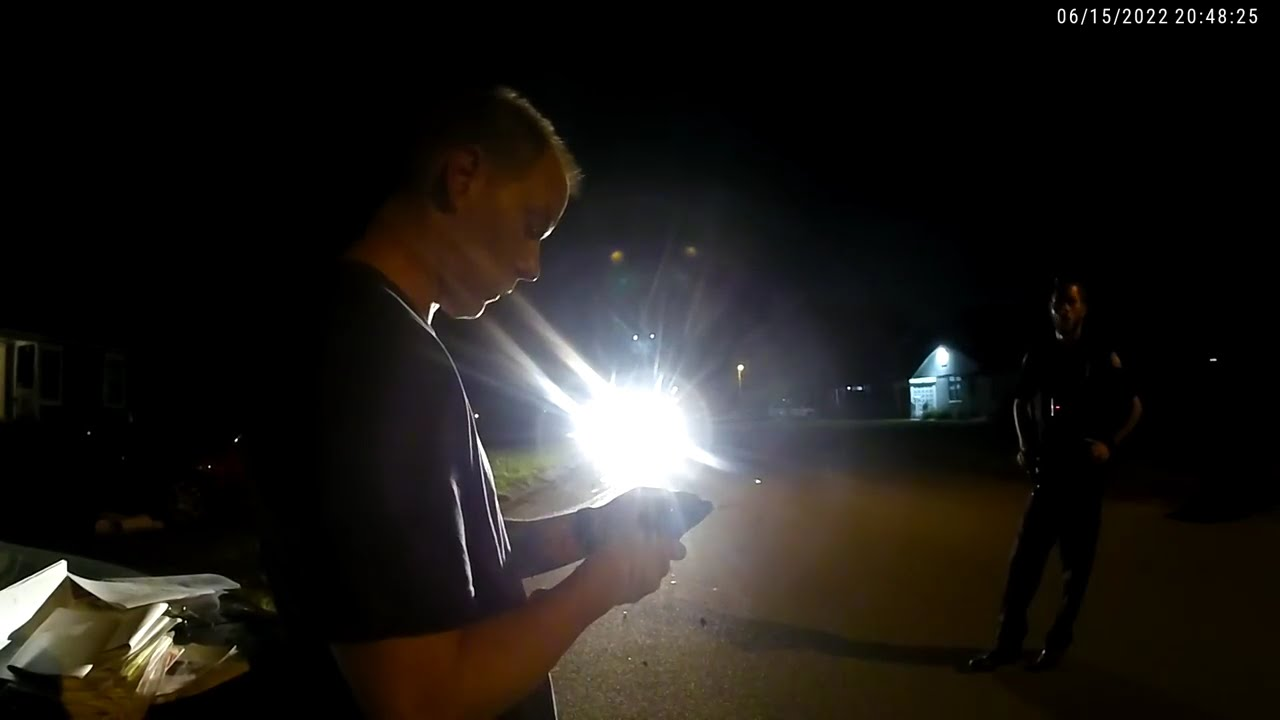
COLUMBUS, Ohio — A growing wave of drivers emboldened by online “know your rights” videos has prompted Ohio lawmakers to consider jailing people who refuse to identify themselves during traffic stops.
House Bill 492, up for its third hearing on Tuesday, would both expand an existing interference statute and create a new “refusal to disclose” offense for drivers.
POLICE RESEARCH: How 8-, 10- and 12-hour police shifts affect staffing and wellness
The measure would make it a fourth-degree misdemeanor—punishable by up to 30 days in jail—for a motorist to refuse to provide their name, address, or date of birth during a traffic stop when an officer suspects a traffic or equipment violation. It would also broaden the definition of interference during an arrest under Ohio’s motor vehicle code, raising that penalty from a minor misdemeanor to a second-degree misdemeanor.
“Not cooperating shouldn’t be treated like a minor inconvenience,” Rep. Sharon Ray, a Wadsworth Republican, said.
Ohio courts have repeatedly found that refusing to identify yourself during a traffic stop doesn’t qualify as obstructing official business, the charge officers typically rely on in those situations.
In Toledo v. Dandridge, the Sixth District Court of Appeals ruled in 2013 that a driver’s refusal to provide a name or license was not obstruction because it wasn’t an “affirmative act.”
The Eighth District reached the same conclusion in 2020 in State v. Ellis, overturning a conviction where the defendant merely refused to cooperate with fingerprinting.
“We have extremely polite folks who won’t give their identification,” Ray said.
Republican Rep. Cindy Abrams, a former Cincinnati police officer, said that puts officers in a difficult position—unsure whether they’re dealing with a harmless protest or something far more serious.
She once had a man refuse to tell her who he was, only to discover he was wanted for murder in Akron once she ran his fingerprints.
The bill is backed by the Fraternal Order of Police of Ohio and other law enforcement groups, who say there’s no clear resolution to the legal gray area without a legislative fix.
“These people, along with sovereign citizens, will turn on their cameras and escalate a rather mundane event by arguing with officers and challenging them until force is the only option left,” FOP of Ohio lobbyist Mike Weinman said.
Supporters emphasized that HB 492 wouldn’t give police new authority to demand identification in every situation. Officers could only charge someone if they’re stopped on a road or waterway for a suspected violation like speeding, running a red light or failing to signal.
Cincinnati Democratic Rep. Cecil Thomas, also a former police officer, initially expressed some reservations during HB 492’s first hearing but appeared to later change his mind.
“I don’t have a problem with the bill,” Thomas said during the second hearing. “I think it’s a good bill.”
Have you dealt with drivers who refuse to provide ID during a stop? Would a law like this make a difference for officers? Share your perspective below.
Share your comments with Police1*First Name*Email*Comments
- I would like to subscribe to Police1 newsletters
Police1 readers respond
- As a police officer in neighboring Indiana, I am amazed that Ohio is finally getting a law like this. We have had it for as long as I can remember, and this law is perfect for the situations in your article, and also for those who lie about their name and date of birth, etc. I am glad that Ohio is getting this valuable tool for law enforcement.
- In Texas, we have a specific law for Fail To ID and if you’re a wanted person, the penalty it is a higher charge. Texas Penal Code 38.02.
- Driving is a privilege once they get their license, and if they do not abide by a law, they should absolutely have to be able to be identified! If they fail to provide identification or the proper name and identifying information, then they need to be detained until they can be identified. Retired police officer of 23 years of service.
- We must consider the consequences of this bill, and what it may or will eventually create. When a driver is cited for a violation, doesn’t the officer run the plates of the vehicle to determine the identity and address of the owner/driver? The driver’s license with a picture of the driver should be in the BMV database. If the picture identity of the driver does not match up with the data on record, then perhaps it is warranted to ask for information from the driver. If the information matches, then send the citation by mail to the driver’s address of record. If there is probable cause for detaining the driver, then the officer making the stop can use other means available. This invasive bill could lead to further restrictions on freedom of movement and liberties guaranteed by the Constitution. The threat of invasive-like policies such as these could be abused to restrict people’s rights. Camera surveillance is already being used to identify speed violations, where a citation is sent to the offending driver’s address of record. Law enforcement tools are a good thing, but this legislation could be used in a manner to punish rather than cite, and administer appropriate consequences for violating the law.
- I’m a privacy advocate. I strongly oppose this bill.
- To the “Privacy Advocate” who wrote that he strongly opposes this bill, it’s not a privacy issue. If the police have pulled you over, it could be that your car matches one that was stolen or is being sought in a crime. The police absolutely need to make sure that you are, or are not the person sought. Also, if they pull you over, you’ve generally committed some kind of traffic infraction. It doesn’t have to be a major crime. In my 47 years of driving, I’ve been pulled over a handful of times. Maybe it was going in excess of the speed limit, or not realizing my brights were on. Each and every time the officer approached my car, by the time he arrived at my window I had my driver’s license, insurance and vehicle registration ready to hand to him as soon as he arrived. No “Why did you stop me?”. Be cooperative and you’ll soon know the reason for the stop. I’ve found a copuple of times that after he ran my license and it was clean, he’d come back and hand me my documentation with a simple “Just slow it down a little” and I left with a friendly warning. Even if I was given a ticket, it’s on me. But being combative and crying “Invasion of my rights and privacy” is a sure way to make a 5-minute stop last much longer, and almost a guarantee that for being so arrogant, you’re not getting a friendly reminder. People bring this upon themselves. It’s not like you’re being asked if you’re married, where you work, or how much you earn. THAT could be a privacy issue. But the Police don’t ask anything more than identifying questions. And for any person over the age of 18, if you do not have a driver’s license or a state identification card on you, you’re either wanted, or something’s very wrong. I fully support the police doing their jobs, and protecting us from potential criminals who refuse to identify themselves. Be courteous and try to make the encounter simple. It’s so easy!
- This bill shouldn’t be passed. All this bill does is give police too much authority to an already overreacting power-tripping group of TAX PAYER FUNDED INDIVIDUALS WHO ARE PAID TO SERVE AND PROTECT.
Video shows Luigi Mangione said he didn’t want to talk. Police kept asking questions

Luigi Mangione appears in Manhattan Criminal Court for an evidence hearing on Thursday in New York.
Curtis Means/POOL Daily Mail/AP
NEW YORK — Minutes after police approached Luigi Mangione in a Pennsylvania McDonald’s, he told an officer he didn’t want to talk, according to video and testimony at a court hearing Thursday for the man charged with killing UnitedHealthcare CEO Brian Thompson.
Although Mangione signaled he wasn’t interested in speaking, police continued asking questions, and he continued answering, video showed. Nearly 20 minutes passed before police informed him of his right to remain silent.
The exchanges have been scrutinized this week at a lengthy New York court hearing as Mangione’s lawyers try to keep some key evidence from being presented at his murder trial, including his statements to police and a gun and diary officers say they found in his backpack when he was arrested Dec. 9, 2024, in Altoona, Pennsylvania.
Mangione’s lawyers argue that his statements aren’t fair game for trial because officers asked questions before reading his rights. The defense says the contents of his backpack should be excluded because police didn’t get a warrant before searching it.
The standards surrounding police questioning and searches are complicated and often argued over once cases get to court. However the issues are ultimately resolved in Mangione’s case, the hearing is giving the public an extensive preview of some testimony, video, 911 audio and other records.
Hearing coincides with anniversary
Mangione has pleaded not guilty to state and federal murder charges. The hearing, which started Monday and could extend to next week, applies only to the state case.
As Mangione sat in a Manhattan court on Thursday’s anniversary of the killing, UnitedHealthcare lowered the flags at its campuses in Minnetonka and Eden Prairie, Minnesota, in Thompson’s memory. Employees were encouraged to engage in volunteering.
The 27-year-old Mangione, meanwhile, appeared to follow the court proceedings intently, at times leaning over the defense table to scrutinize papers or take notes. He briefly looked down as Altoona Police Officer Tyler Frye was asked about a strip-search of Mangione after his arrest. Under the department’s policy, that search wasn’t recorded.
‘I don’t know what you guys are up to’
Five days after Thompson was gunned down, Altoona police were tipped that someone at the McDonald’s resembled the much-publicized suspect in the killing. But Frye and Officer Joseph Detwiler initially approached Mangione with a low-key tone, saying only that someone had said he looked “suspicious.” Asked for his ID, he gave a phony New Jersey driver’s license with a fake name, according to prosecutors.
Moments later, after frisking Mangione, Detwiler stepped away to communicate with dispatchers about the license, leaving the rookie Frye by Mangione’s table. Frye asked him, “What’s going on?” and what had brought him to Altoona.
“I don’t know what you guys are up to. I’m just going to wait,” Mangione answered, and he inquired what was afoot.
After repeating the claim that someone was suspicious of Mangione, Frye asked: “You don’t want to talk to me or anything?”
Mangione indicated that he didn’t, shaking his head. But he continued to answer other questions asked by the officers, and also posed a few of his own.
“Can I ask why there’s so many cops here?” he asked shortly before being informed he was being arrested on a forgery charge related to his false ID. Roughly a dozen officers had converged on the restaurant, and Mangione had been told he was being investigated and had been handcuffed and read his rights.
When he was arrested, an officer asked whether there was anything in the backpack that police needed to know about.
“I’m going to remain silent,” Mangione replied.
Police went on to search the bag. They also searched Mangione’s pockets, finding objects including a pocket knife — which he alerted them to — and what appeared to be a neatly written to-do list. Entries for the previous day ranged from “digital cam” to “hot meal and water bottles” to “trash bag(s).”
Among the items for the day of his arrest: “survival kit.”
What’s at stake?
The evidence is key to prosecutors’ case. They have said the 9 mm handgun found in the backpack matches the firearm used in the killing, that writings in the notebook laid out Mangione’s disdain for health insurers and ideas about killing a CEO at an investor conference, and that he gave police the same fake name that the alleged gunman used at a New York hostel days before the shooting.
Thompson, 50, was shot from behind as he walked to an investor conference. He became UnitedHealthcare’s CEO in 2021 and had worked within parent UnitedHealth Group Inc. for 20 years.
Manhattan prosecutors haven’t yet detailed their arguments for allowing the disputed evidence. Federal prosecutors have maintained that the backpack search was justified to ensure there was nothing dangerous inside, and that Mangione’s statements to officers were voluntary and made before he was under arrest.