Serving Time for Their Abusers’ Crimes
The Marshall Project found nearly 100 people who were punished for the actions of their abusers under little-known laws like “accomplice liability.”
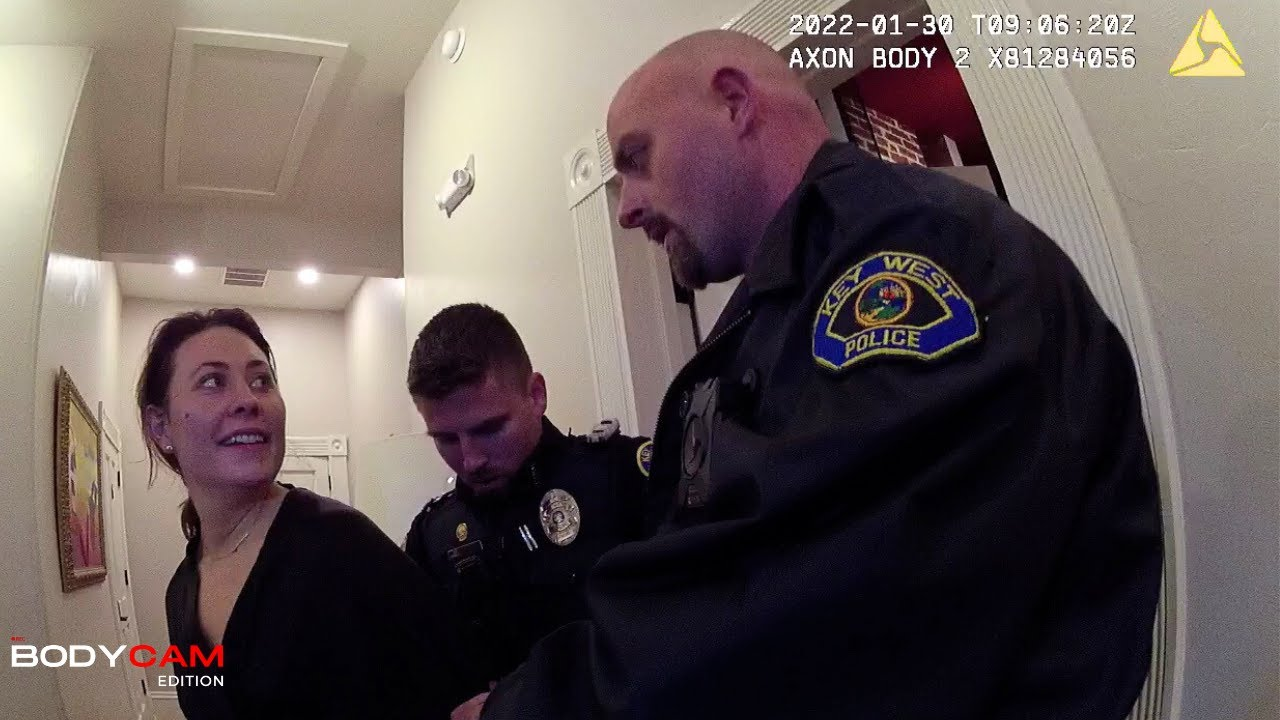
Pat Johnson counted the locks on the apartment door. One. Two. Three. There were too many to undo and escape before Rey Travieso got to her. He’d just killed three people — including an infant. He turned to her, her face covered in tears and snot. “Don’t worry, Pat, I ain’t going to kill you,” she remembers him saying. “You believe me?”
She didn’t believe him. For seven years, she’d been in an abusive relationship with Travieso. If dinner was not ready on time, he broke furniture and beat her. If she was home after her curfew, he hit her. He had hurt her so badly, she landed in the hospital. She knew what he was capable of.
So she did what he told her to do and helped stuff jewelry and money into a bag, and then she kept her mouth shut.
This article was published in partnership with Mother Jones.
Even though he did not kill her, in a way, he still took her life. Since 1993, Johnson has sat in an Illinois prison for the murders she said Travieso committed.
Prosecutors didn’t have to prove that Johnson killed anyone to charge her with murder. Under state law, the “theory of accountability” allows a person to be charged for a crime another person committed, if they assisted. That meant Johnson’s charge was murder, and just like Travieso, she faced a life sentence.
Every state has some version of the theory of accountability — more broadly called “accomplice liability” — though the specifics vary from place to place. These kinds of laws can make victims of intimate partner violence particularly vulnerable to prosecution.
There is no comprehensive national data about how many people are behind bars for a crime committed by their abuser due to laws that allow someone to be charged for the actions of another person. Accomplice liability crimes are not usually tracked by the courts as a distinct offense, and domestic violence is often not documented, so it would be impossible to account for every case.
Still, searching through legal documents, The Marshall Project and Mother Jones identified nearly 100 people across the country, nearly all of them women, who were convicted of assisting, supporting or failing to stop a crime by their alleged abuser. Some of the women showed clear signs of abuse at the time they were arrested. One had been shot by her abuser weeks before; another was in a neck brace.
In some of the cases we reviewed, evidence of an abusive relationship was excluded at trial. In others, lawyers and judges poorly understood the psychological effects of domestic violence and the real dangers victims face. At one woman’s sentencing in 2000, for example, a Michigan judge justified the defendant’s 10- to 30-year prison sentence for assisting her allegedly abusive boyfriend with a string of robberies by saying she had ample opportunity to leave him. But the risk of ending an abusive relationship is high: According to data from the U.S. Department of Justice, of the nearly 5,000 women murdered across the country in 2021, about one-third died at the hands of an intimate partner. Experts say the end of a relationship is the most dangerous time for an abuse victim.
Abusive relationships rarely begin that way. Johnson met Travieso when she was working at a discount chain store. Her manager called her over the loudspeaker to meet Travieso in the hardware department — he wanted to buy an artificial Christmas tree and specifically asked that she help him. A few weeks later, Travieso was waiting outside the store and offered Johnson a ride home. She hesitated. She was just 17 years old, and Travieso was 35, but he showed her that the car had a phone — a luxury in 1985 — and invited her to call her mother and give her his license plate number so she’d feel safer. After that, things moved quickly, and soon they started living together.
Sometimes Travieso could be controlling, dictating where Johnson could go and who she could see. But he also showered her with compliments and made sure she had what she needed. He once gave her a pair of gold, dangly earrings. They went well with her style: short hair and bright red lipstick. Johnson was the youngest of six girls. Her family was poor and had bounced around Chicago, sometimes living in public housing. To Johnson, the earrings were a symbol of Travieso’s ability to provide for her.
But one day, in the parking lot of a Sizzler restaurant, their meaning changed.
Johnson noticed a white Trans Am and offhandedly said it was a nice car, within earshot of its driver. Travieso was furious at Johnson for giving another man attention and called her a whore, then slapped her so hard that one of the earrings flew out of her ear. It wasn’t so much the physical pain that stayed with her, but the utter embarrassment. The restaurant had big windows, and customers and staff inside saw everything — she wanted to crawl under the car and hide.
She said Travieso’s abuse escalated. Once, he beat her so badly that she looked, as she described it, like “the Elephant Man.” He said it was the last time. It wasn’t.
Johnson’s family and friends say they witnessed Travieso’s violence and its aftermath. A shattered glass table. A belt buckle to the face. One of Johnson’s nieces remembers visiting when she was a child and realizing that the phrase “black eye” wasn’t just an expression, but a literal fact: If you hit a person hard enough, the skin around the eye really could bloom into a purple-black cloud.
Once, Johnson said, she tried to hide from Travieso in a closet, but he dragged her out by her ankles. She screamed that God was going to punish him for how he treated her. “I am your god,” he replied. And it felt true. He seemed omniscient. He had strong ties in the neighborhood, and plenty of people were willing to tell Rey Travieso where Johnson went. Every time she tried to leave, he found her and brought her back. “I was so afraid of Rey. I don’t think I ever feared anyone that much,” Johnson said years later. “Sometimes, it was almost like fearing God.”
Eventually, Johnson discovered Travieso was not actually a truck driver, as he had claimed when they first met, but a drug dealer. He started to give her cocaine, and soon she became addicted.
Travieso ran a restaurant with his friend Juan Hernandez. Johnson said they sold food in the front and drugs out of the back. Sometimes they’d fight about their business, and Johnson overheard them threaten each other. But then they’d come out and drink a couple of sodas, and everything would be fine again.
Sign up for the latest news and analysis.
Sign up
Email list managed by Mailchimp
Despite struggling with addiction, Johnson stayed in close contact with her family. Her nieces remember her being more like a sister than another adult. She took them to the beach, and when they threw sand at each other, she joined in. At night, they would stay up late, well past bedtime, watching movies. Even though her niece Tromeka Turner-Mason was a child at the time, she said Johnson confided in her that she felt trapped with Travieso and didn’t know what to do.
In November 1991, when she was 23, Johnson tried to leave Travieso. She went to stay with another man, and they spent their days using crack cocaine. Travieso found her, as he always did, but this time he didn’t make her move back in with him. Instead he kept coming back to see her. Sometimes he’d take her to a motel, where he forced her to have sex. At the trial, when a lawyer asked her why she wasn’t able to refuse him, she explained, “He said he owned me, that’s why.”
On the afternoon of Jan. 16, 1992, Travieso asked Johnson to come with him to “take care of some business.” At her trial, she described what happened that day: They drove to the home of Travieso’s business partner, Hernandez. Johnson knew they’d been fighting because Travieso said Hernandez owed him about $40,000. Travieso was angry and making threats, but she assumed he was just acting macho. Hernandez answered the door and walked them to the living room, where his wife, Olga, sat holding their 10-month-old baby, Evelyn.
Travieso and Hernandez argued, alternating between Spanish and English. Johnson couldn’t follow everything they were saying, but she could tell Travieso was asking for the cash, and Hernandez responded by laughing at him. Clearly, they were unhappy with one another, but it seemed like one of their routine fights. Then someone knocked on the door.
When Hernandez stood up to answer, Travieso pulled out a gun and told him to sit down. That’s when Johnson said she knew this fight was different. Travieso pointed the gun at her and told her to tell the pizza delivery man that the order was canceled. Johnson obeyed. Olga gathered up a few thousand dollars and some jewelry, but it wasn’t enough to satisfy Travieso. He tied Hernandez’s hands, and as medical examiner reports would later show, pistol-whipped him and slit his throat. Next, he killed Olga and the baby. Johnson was certain she would be next.
Travieso told Johnson that if he killed her there, police would trace the crime back to him. But if Johnson stayed calm and never told anyone, then things would be fine. She wiped her tear-stained face on her shirt, and followed his instructions to walk casually to the car with him.
Although this is the story Johnson told at trial, it’s not the only version of events, and there is no clear physical evidence that points to how much Johnson participated in the killings. Only two people really know what took place: Travieso and Johnson.
When police arrested them more than six months after the murders, Travieso confessed to killing Hernandez, but he said that Johnson had killed Olga and the baby. Later at his trial, he changed his story and said he wasn’t there at all, despite strong evidence to the contrary. I wrote to him in prison, where he is serving a life sentence for the murders, to ask about his version of events. He responded briefly: Johnson “should never have been in prison. … All these years I’ve felt bad about it all.” I sent him multiple messages asking for an interview or details about Johnson’s accusations of abuse and account of the murders, but he never replied.
Over time, Johnson’s story has varied. In her police confession, for example, she said she went with Travieso to buy plastic gloves before the murder and was with him when another drug dealer ordered a hit on Hernandez. But at trial, she said the police inaccurately summarized what she told them. A clemency petition, written more than two decades later, says Johnson can’t remember pawning the jewelry, a fact she confessed to at trial. Trauma can reshape a person’s memory — impairing factual recall while also making recollections painfully visceral. But Johnson is consistent on the two most important facts: She did not kill anyone, and she was terrified of Travieso.
Since going to prison, Johnson has come out as a transgender man. He remains in a women’s facility and still uses she/her pronouns when talking about his life before prison — and has requested we do the same, because he said living as a woman was central to the abusive dynamic with Travieso. When Johnson finished telling me the story during an interview last year, he looked over at his lawyer, Rachel White-Domain, and gave a weak smile.
“God was there,” he said.
“You survived,” White-Domain replied.
“God was there. He knows I didn’t hurt anybody. He knows I didn’t kill anyone. God was there. He knows that.”
When White-Domain began working with incarcerated survivors of domestic violence in 2008, she was still in law school at DePaul University. It was a passion project she did on Saturdays with a handful of other volunteers around a kitchen table. At first, most cases involved women who had killed abusive husbands or boyfriends. But as hundreds of letters from women’s prisons poured in, she realized that many were in prison not for killing an abuser, but for aiding them in committing a crime. Johnson was one of the first clients convicted under the theory of accountability whom White-Domain took on in 2019. She estimates that they now make up about a quarter of her clients at the Illinois Prison Project, an advocacy organization for incarcerated people, where she runs the Women & Survivors Project.
Many of the cases against the people White-Domain represents aren’t about evidence or proof; they aren’t “whodunnits.” Instead, juries and judges (and the politicians who write the laws that govern them) must decide: What should a person be held responsible for? How should the conditions of a person’s life be weighed when they are involved in a crime? White-Domain says another lawyer once asked her: Is it worse if they don’t believe your story of abuse, or is it worse if they believe you, but it doesn’t matter?
Even though White-Domain told me she thinks accomplice liability cases are more common than self-defense cases, they are harder to explain to the public and get far less attention.
When people defend themselves against deadly attacks by killing their abusers, it’s relatively easy to sympathize. It’s more complicated when the victim is not a violent husband, but is instead an innocent third party. And it’s even more difficult when the offense involves young victims or especially gruesome murders — the kinds of crimes that make some people so afraid and furious that they want to make sure anyone even remotely involved is punished.
While every state has some version of an accomplice liability law, states vary as to what degree of participation is necessary for someone to be prosecuted. And accomplice liability laws aren’t the only ones that allow people to be punished for supporting or failing to stop another person’s crime.
In many states, felony murder laws allow someone to be punished for a murder they didn’t commit if they were engaged in a dangerous felony with the person who actually did the killing. Prosecutors can charge someone with conspiracy for agreeing to assist with a crime and taking action to help. Failure-to-protect laws in some states allow a parent (in practice almost always a mother) to be punished for abuse committed by another person if the courts believe she should have prevented the crime.
These laws each function differently and often overlap, but together they create a web that expands who can be held responsible for a crime.
No one tracks how many abuse victims are convicted nationwide because of these laws, but there are some telling numbers. A study of 72 women serving life in Michigan found 60% were there for a murder they didn’t themselves commit. Most of those crimes were connected to a man they had a relationship with. In a survey of people serving time for murder or manslaughter in women’s prisons, 13% of the respondents said they had been convicted for a crime committed with their abuser.
The Marshall Project’s reporting found a similar pattern. Reviewing court documents, we identified scores of cases where prosecutors charged a person (almost always a woman) for supporting, taking part in or failing to stop a crime by their alleged abuser. We counted nearly 100 cases that span 26 states and federal courts and date back as far as four decades ago.
In one typical example, Carolyn Moore has been incarcerated in Louisiana since 1985 for assisting her co-defendant — and alleged abuser — with a robbery, during which he killed two men while she waited in the car. She said that he had threatened to kill her if she didn’t help with the robbery. At trial, he admitted to the killings, but denied forcing Moore to participate in the robbery (despite testimony from a witness who said he had admitted to threatening Moore). Moore was sentenced to life without parole.
The cases often blur the line between “victim” and “perpetrator.” In one instance, a girl with developmental delays was sex trafficked at 17 years old by a man who “savagely beat her,” according to a sentencing memo. But because she had helped store a gun and drugs for him, federal prosecutors in Washington charged her as his co-defendant in his trafficking ring. She agreed to a plea deal at age 19 and was released with time served in 2009, but had to serve a year of supervised release.
Sometimes being a domestic abuse survivor is used as evidence against women. In 2016, while Krystal Hayes was at work, her live-in boyfriend severely beat her baby daughter, fracturing her skull. Prosecutors in Tulsa County, Oklahoma, pointed to evidence that her boyfriend had choked Hayes before, and so she should have known better than to allow him near an infant. She pleaded guilty to failing to protect her child. Now she is serving a 20-year sentence.
Even after a person completes their sentence, the shadow of punishment can be long. Ajela Banks was convicted in federal court for conspiracy to sex traffic a minor in Alaska, despite being 19 years old and being trafficked by the same man who was her co-defendant. According to court documents, he had recently shot her in the stomach while she was pregnant with his child. Although she was sentenced to time served, she had to register as a sex offender and her home address was made public, which she said makes her vulnerable to further harassment and threats.
In 1999, Gabby Solano was convicted of felony murder in California in connection with a killing done by her abusive ex-boyfriend. Gov. Jerry Brown commuted her sentence, making her eligible for parole, but because of her conviction, U.S. Immigration and Customs Enforcement deported her to Mexico, a country she had left as a toddler.
White-Domain, Johnson’s lawyer, said that looking at case after case has made one thing abundantly clear to her: The criminal system is not built to support victims of abuse. In some instances, people tried to get help, from police or social workers, and those systems failed to intervene. But bureaucrats aren’t considered accomplices when things go wrong — the victims are, and so they are the ones who suffer the consequences.
At Johnson’s trial in 1993, she was allowed to introduce evidence of Travieso’s abuse. The jury saw pictures of injuries Johnson said Travieso gave her: marks on her knees from a belt, wounds on her lips and shoulder from a hanger, bruises on her backside from the handle of a plunger. But the jury also saw and heard descriptions of the crime scene: the family’s bashed-in skulls, the parents’ slit throats, a baby’s pacifier in a room splattered with blood. At trial, prosecutors explained to jurors that, “When two people do commit a crime together, each person is responsible for the acts of the other.” That meant even if Travieso did the actual killing, because of the help she’d provided, Johnson was just as responsible for the grisly murders.
I recently spoke to a juror, who asked not to be named because she is afraid Travieso could somehow retaliate against her. She and her fellow jurors struggled to know what to do, she said. The physical evidence did not prove how much Johnson had helped. But the juror remembers believing two things: One, Johnson had provided Travieso at least some support. And two, Johnson would have never done anything like this had it not been for Travieso and his control over her.
It’s clear from the trial documents that the jury was wrestling with what the “theory of accountability” meant for someone like Johnson. In one note, they asked the judge for clarity on the term “legally responsible.” In another, they asked, “Do we consider one individual equally accountable for the actions and deeds of another?”
The juror who spoke with me grew up in a home with domestic violence. She understood why a woman could be so afraid that she wouldn’t flee an abuser, no matter how dire the circumstances. But she also wanted to do a good job and follow the law — it wasn’t her place to rewrite it. She said there was almost a hung jury, but in the end, they reached an agreement and found Johnson guilty.
She remembers crying along with other jurors — tears not of relief, but of sadness. Three decades later, the weight of what they did still remains with her. To this day, she said, she believes Johnson was the fourth victim in that crime and that the world is not safer with Johnson behind bars.
The judge sentenced Johnson to life in prison. At her sentencing hearing, Johnson addressed the family of Juan, Olga and Evelyn Hernandez. “My pain is nothing compared to theirs, but I am truly, truly sorry for not coming forward.”
Olga Hernandez’s sister, Dora Arrona, said in a recent interview that Johnson has played the victim, but Olga and her family were the real victims. Arrona discovered the bodies of her family members after they were killed, and that trauma still affects her physical and mental health. She said she was skeptical of Johnson’s version of events because she believes the murders could not have been carried out by a single person. Johnson, she said, should stay behind bars.
Lawyers, lawmakers and advocates who believe people like Johnson should not be in prison have tried different approaches to change the system. One strategy tackles the broader issue of accomplice liability laws, and another targets how domestic violence survivors are sentenced.
Accomplice liability is as old as common law itself. In 1020, English law allowed a thief’s entire family to be enslaved as accomplices. And while the net of accountability might not be quite that wide now, the concept has stubbornly remained part of the criminal justice system.
Joshua Dressler, distinguished emeritus professor of law at The Ohio State University, has studied accomplice liability laws across the country. He noted that it’s difficult for any jurisdiction to narrow accomplice liability, for the same reason that so many attempts at justice reforms are hard: Legislators want to appear to be tough on crime.
At an Illinois legislative hearing last year on a proposal to limit the theory of accountability, a lawmaker argued that these kinds of laws hurt victims of domestic violence. But Democratic state Rep. Dave Vella pushed back. “You’re accountable for the people you do nasty things with,” he said. “And if something bad happens, you should be accountable for the bad act.” The proposed legislation, which would have narrowed the theory of accountability in Illinois, went nowhere, but activists say they are continuing to push for changes.
Another approach lawmakers and activists in several states have taken is to rethink how domestic violence victims are sentenced. New York’s Domestic Violence Survivors Justice Act, passed in 2019, allows judges to depart from mandatory minimums when sentencing (or resentencing) survivors. According to the Survivors Justice Project, which works to free victims of domestic violence from prison, 64 people have been resentenced after filing applications.
Similar bills in other states, including Minnesota, Oregon and Louisiana, have failed.
In 2015, Illinois passed a law to allow people in prison to apply for resentencing if their crime was directly related to domestic violence. The state does not track how many people have been released from prison early under the Illinois law, but it has been much smaller than many advocates for domestic violence victims hoped. One reason is that, unlike New York’s law, it doesn’t say judges can diverge from mandatory minimums. That ended up being key in Johnson’s case. When he applied for resentencing under the law, the judge ruled he was already serving the minimum sentence of life, so he was not eligible for anything less.
During his decades in prison, Johnson has become part of a support group for survivors of domestic violence. Together, they perform poems and songs about their experiences. He has also become deeply devoted to his Christian faith, paying tithes from his meager prison wages. And he is still working on getting released.
In Illinois, governors can grant clemency to people in prison they believe no longer need to be incarcerated. With the help of White-Domain, Johnson filed a clemency petition in 2020. It included certificates, accolades and dozens of letters from academics, lawyers, domestic violence workers, a warden and fellow incarcerated people who call Johnson a mentor.
But the Cook County State’s Attorney’s Office opposed the application. An assistant state’s attorney wrote that for a sentence to be meaningful it must be enforced, and “the purpose of a sentence is not only rehabilitative but also punitive” and Johnson “has not yet fulfilled that punishment.” Last year, Gov. J.B. Pritzker declined to grant Johnson clemency. He can apply again after a year.
If Johnson is released, because of clemency or changes to the law, his family will be ready. They have not one, but two bedrooms set aside for him — one with a niece and one with a sister. Multiple family members tell me they’ve got jobs waiting for him. And he will have a small nest egg to start out with. For years, Johnson’s mother put away a little money from her monthly Social Security checks to help her child. When Johnson’s mom died in 2021, she left behind $6,150 she’d saved for him. His family has even bought Johnson a homecoming outfit: a crisp white shirt and pants and a white ball cap with his nickname, Peppe, embroidered on the side.
Johnson is now 55 years old and has spent more than half his life behind bars. Prison can be hard on a body. His teeth are in bad shape, and he has a cane because of pain in his leg, but he’s trying not to use it. Sometimes he wishes Travieso had killed him that day. But then, just minutes later, he beams talking about the children in his family or the women in prison who call him “Uncle PJ.”
He says he no longer fears Rey Travieso, no longer thinks Travieso is as powerful and omniscient as God. Instead, he prays constantly: on calls with his family, with women who come to his cell for help, with his lawyer during meetings and at the end of our interview. Johnson says he owes it to God to be brave.
Anissa Jordan Took Part in a Robbery. She Went to Prison for Murder.
The legal doctrine that allows people to be prosecuted for murder even if they didn’t kill anyone has fallen out of favor across the globe. In America, it remains common.By Lara Bazelon
Photographs by Carolyn Drake
February 16, 2021ShareSave
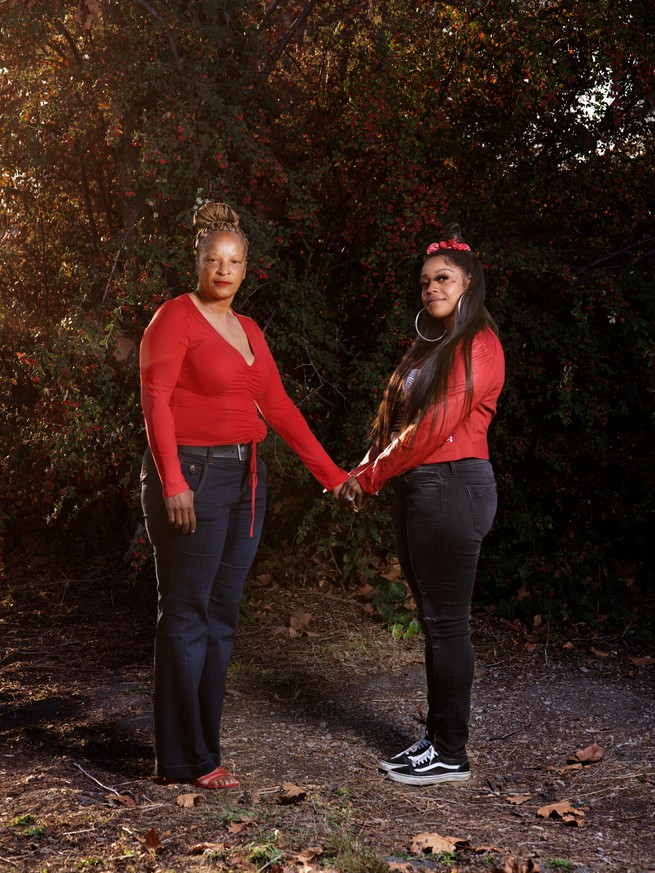
Anissa Jordan was born in Oakland, California, in 1968, the last of eight children. For years, her mother’s live-in boyfriend beat and molested her and her half sister Althenia. The girls didn’t tell their mother. “It was our secret,” Jordan told me. When Jordan was in fourth grade, Althenia was murdered. The case was never solved.
Jordan was held back in school, started acting out, and was sent to juvenile hall. By 10th grade, she was spending most of her time “partying and having fun and smoking weed and drinking beer.” More stints in juvenile hall followed, then a string of arrests and convictions as an adult, nearly all of them theft-related. She had her first child, Amanda, at 21, followed by two more daughters and a son.
In 2005, Jordan was 36. She was on felony probation, unemployed, and addicted to drugs and alcohol. She had moved in with her mother, who was caring for Jordan’s children. “I was truly broken,” she said. Then Jordan met Greshinal Green, a sweet-talking man with a violent criminal past. He told Jordan that he loved her and promised her “all these fantastic things.” But first, she had to help him.
One night that May, Jordan crossed the Bay Bridge into San Francisco in a white Toyota Camry with Green and a woman named Lenora Robinson. Jordan, carrying a red purse and her hair in gold braids, played the role of decoy. She and Robinson approached two men in the Tenderloin, a high-crime area of the city, and asked if they had any ecstasy tablets. Green then emerged from the shadows with a Smith & Wesson .38 Special.
Jordan stood nearby as Green ordered the victims to lie down. “Make sure you got everything,” he told Robinson. Jordan went back to the car and hid a necklace belonging to one of the victims in her purse. She remained there as Green and Robinson left to seek out another mark. She was still in the car when Green and Robinson tried to rob a third man, Carlos Garvin. When Garvin resisted, Green shot and killed him.
Recommended Reading
- Releasing People From Prison Is Easier Said Than DoneBarbara Bradley Hagerty
- What It Takes to Be a Trial Lawyer If You’re Not a ManLara Bazelon
- The Experiment Podcast: What Makes a Murderer?
Two uniformed police officers happened to be in a patrol car nearby. Over the radio, a dispatcher reported the shooting and a description of the suspects. The officers pulled over the Camry with Green, Robinson, and Jordan inside. Jewelry belonging to one of the first victims was found in Jordan’s purse.
The state charged the suspects with first-degree murder. Although Jordan was not at the scene when Garvin was killed, and hadn’t participated in the attempt to rob him, prosecutors argued that she was responsible for any acts committed as part of the day’s larger plot. In for a penny, in for a pound.
In June 2006, a jury returned a verdict. It found Green, Robinson, and Jordan guilty. (A fourth defendant, who had driven the Toyota on the night of the murder, was acquitted.) Kamala Harris, then the San Francisco district attorney and now the U.S. vice president, held a joint press conference with Gavin Newsom, then the city’s mayor and now California’s governor to praise the verdicts. “We in San Francisco will not tolerate people coming into this town to commit crimes,” Harris said. “We will punish them to the fullest.”
Before she was sentenced, Jordan wrote the judge a letter protesting that she’d had nothing to do with Garvin’s death. “I have 4 beautiful children and never would I dare be a part of something so harsh that would separate me from them forever.” Pleading for mercy, she added, “I was in a car not knowing what’s going on.” No mercy was forthcoming. For Garvin’s murder, the judge sentenced her to 27 years to life.
Podcast: The murderers who never killed
Jordan was convicted of felony murder, a legal doctrine widely applied in the United States, if dimly understood outside the legal profession. In many states, felony murder allows prosecutors to charge a defendant with first-degree murder even if that person had no intent to kill—and even if that person is not alleged to have struck the fatal blow.
Under California law at the time, the jury in Jordan’s case had to consider whether she’d conspired to commit robbery. If so—and if one of her co-conspirators then killed Carlos Garvin—Jordan, too, was responsible for his death. At trial, the jury acknowledged that Jordan did not take part in the robbery of Garvin, acquitting her of those charges. But because the jury concluded that she had conspired to commit robbery that day, she bore the same responsibility as Greshinal Green, who actually pulled the trigger.
California first enacted a felony-murder statute in 1850. The concept has its roots in British common law, though it was sparingly used in England, held in disfavor because of its peculiar severing of intent from consequence. (As the prosecutor in Jordan’s case told the jury, “Forget about the malice; forget about the deliberation and premeditation. You don’t have to think of those when you come to felony murder.”) England abolished the doctrine in 1957, and other common-law countries have since followed suit. The lone exception is the United States.
More than 40 states and the District of Columbia still have some version of the felony-murder rule on their books. (In many states, including Texas and Georgia, felony murder or its legal equivalent can be a capital offense.) American prosecutors of both parties run for office on the basis of their tough-on-crime bona fides, and felony murder has given them a powerful tool for pursuing harsh punishments for violent crimes—frequently, as in Jordan’s case, robberies gone awry.
Proponents of the felony-murder rule defend it as a strong deterrent. Brock Lunsford, the deputy in charge of the murder-resentencing unit in the Los Angeles County District Attorney’s Office, explained the rationale behind the law: There are “certain kinds of conduct that we as a society have deemed so bad that we are trying to deter participation in it in any form. Armed robbery: We don’t want you to be the driver or the lookout. If no one played those roles, there wouldn’t be a robbery and then there wouldn’t be a death resulting from it,” he told me. “By punishing you for your role to the fullest extent, we are deterring you.”
Listen to Lara Bazelon discuss this piece on The Experiment, The Atlantic’s new podcast about our unfinished country.https://www.wnyc.org/widgets/ondemand_player/wnycstudios/#file=/audio/json/1103862/&share=1 Listen and subscribe: Apple Podcasts | Spotify | Stitcher | Google Podcasts
Yet critics have long questioned the deterrent effect of the rule. One scholar, Anup Malani of the University of Chicago, examined a trove of FBI data on violent crime and found little evidence that jurisdictions that enforce the felony-murder rule saw a meaningful drop-off in the kinds of behavior it is intended to reduce. “There is no evidence it deters,” Jeffrey Fagan, a professor at Columbia Law School and an expert on criminal law, told me. “When it comes to knowledge of the law, and the mental gymnastics a person would have to go through to understand the consequences, I don’t think that the average offender is going to make that connection.”
Critics argue that prosecutors use felony murder to file the gravest charges and secure the harshest punishments for all participants in a crime, no matter how half-baked the scheme or how unintended the fatal result. For these reasons, the California Supreme Court has described felony murder as “barbaric” and “Procrustean.” But the court had no authority to change the rule. It could be undone only by the state legislature.
Until recently, that remedy seemed unlikely. Even reform-minded legislators had little appetite for depriving law enforcement of a tool intended to prevent violent crime. But in 2017, a group of criminal-justice advocates decided to take on the state’s felony-murder rule. Revising it, they argued, would strike a key blow in the fight against mass incarceration. California holds nearly 200,000 people in its jails and prisons, more than any other state save Texas. That population is disproportionately made up of people of color, a function, at least in part, of the felony-murder rule.
Lucy Lang: Prosecutors need to take the lead in reforming prisons
The advocates, most of whom were women, also noted that California’s felony-murder rule has had a particularly deleterious effect on women. In many cases, women accused of felony murder are in relationships with male partners who manipulate or abuse them. According to a survey the advocates conducted, 72 percent of women serving life sentences for felony murder had not actually killed anyone. Nearly two-thirds of the time, the killer was the woman’s romantic partner.
The coalition found a champion in Nancy Skinner, a Democratic state senator from Berkeley. Together with Joel Anderson, then a Republican from San Diego County, Skinner co-authored a bill, S.B. 1437, that pared down the definition of felony murder. It would still be possible to bring felony-murder charges against a defendant who aided and abetted a killer, or whose participation in a criminal plot demonstrated reckless indifference to human life. But the bill would abolish the practice of prosecuting defendants—such as Anissa Jordan—who’d had no intention to kill and no hand in the killing. The bill also abolished a related but independent California law allowing for a murder conviction if a killing was the “natural and probable consequence” of an intentional but lesser crime. The legislation explicitly made these changes retroactive, providing a path for hundreds of prisoners who had been convicted under the old rules to be resentenced solely based on the lesser felony they’d actually intended to commit.
The bill faced staunch opposition. The California District Attorneys Association, the California Police Chiefs Association, and the Los Angeles County District Attorney’s Office all lobbied against its passage. As the director of the University of San Francisco School of Law Criminal and Juvenile and Racial Justice Clinics, I supported it. Students in the clinics had worked with the reformers to research how other states had amended or repealed their felony-murder statutes. In August 2018, the state assembly passed S.B. 1437 by a single vote.
When the law went into effect, in January 2019, defense lawyers filed petitions seeking resentencing hearings or even, in many cases, immediate release. The larger district-attorney offices in the state were inundated. Brock Lunsford, who was put in charge of a unit specially created to handle the more than 2,100 petitions the Los Angeles district attorney’s office received, described the law as “an earthquake” for the family members of victims of violent crimes. “We have to tell victims 10, 20 years later, when they feel like it is done—it is over; they will never get their loved one back, but at least the process has come to an end—that we are bringing it all back up again. It is inconceivable to me what we are doing to them.”
For Anissa Jordan, news of the law’s passage had an equally seismic effect. “I thought, I’m leaving here.”
We are in the midst of a historic push for criminal-justice reform, the likes of which we haven’t seen in decades, if ever. Policies that would have been unthinkable even 10 years ago—reforming the bail system, eliminating some mandatory minimum sentences—have been championed by cities and states across the country and by Joe Biden and Kamala Harris. (Harris has not weighed in publicly about S.B. 1437.)
For many, these changes are a long-overdue acknowledgment that our system must be radically overhauled: Too many people are punished too harshly, and too many well-intentioned laws have had devastating consequences. Yet reform is difficult work. Even when the political will can be mustered to pass a new law, the system itself can be slow to adapt—if not actively hostile to the new approach. And reforms, too, can have unintended consequences.
California’s effort to dramatically change its felony-murder rule shows just how steep and winding the path to positive change can be. As S.B. 1437 went into effect, prosecutors in some of the state’s most populous counties—including Alameda, Fresno, Los Angeles, Orange, and San Diego—went to court to block its implementation. In some jurisdictions, prosecutors continued to charge defendants using the old felony-murder rationale—essentially proceeding as if the new law had never been passed.
The resistance was not rooted in the facts of the individual cases; prosecutors attacked the validity of the new law itself. In case after case, they argued that S.B. 1437 violated the state constitution. The new law, they said, ran afoul of tough-on-crime referenda that had been approved by California voters. Prosecutors also warned that public safety would be threatened by, as they put it one case, the “unlawful release of convicted murderers into the community.” Defense attorneys pushed back, arguing that prosecutors were taking the extraordinary step of trying to nullify a duly passed law they were obligated to enforce.
For nearly a year, the fight played out in trial courts across the state, where different judges decided the issue differently. Some upheld the law; others struck it down. Curt Leftwich, a defense attorney in Los Angeles County, saw some clients who applied for relief under S.B. 1437 released as others sat in jail. The application of the law was “the definition of arbitrary,” he told me. Hundreds of prisoners remained in limbo, waiting for the appellate courts to render a final judgment on the new law.
Anissa Jordan’s S.B. 1437 resentencing took place in San Francisco on April 3, 2019. She was dressed in an oversize sweatshirt, baggy sweatpants, socks, and shower shoes, all the same blistering orange.
Amanda Hill, Jordan’s oldest child, was in the courtroom. Like her mother, she wore black-rimmed glasses. She waited with her arms crossed over her chest and her lips pressed together. As Jordan took her seat next to her lawyer, she turned to Hill and beamed. Hill gave her a small, tight smile in return.
Hill was 15 when her mother was convicted. After Jordan went to prison, Hill was in and out of juvenile hall for running away and selling drugs. “I was going down the same path as my mother,” she told me. She was sent to group homes as far away as Colorado. But when she found out she was pregnant, at 17, she started to clean up. “I didn’t want to leave my kids, because I know how that feels.” She found a job, got married, and had another baby. Now her children were in fourth and fifth grade. They had never met their grandmother.
Judge Charles Haines, who had presided over Jordan’s trial and sentencing, took the bench, his face flushed the same pink as his tie. The only other colors in the drab, windowless courtroom came from a vase of blooming tulips on the court clerk’s desk. The prosecutor did not oppose Jordan’s release, but Haines did not accept that concession at face value. He told the parties that he had painstakingly reviewed the case file. “I don’t want to minimize what happened. An innocent person lost his life,” he said. “But that’s not the function of the sentencing here, and it cannot influence my decision. We are here to follow the law.”
The law, Haines said, required overturning Jordan’s murder conviction and resentencing her for the crime she’d intended to commit—robbery. Haines gave Jordan a term of five years in custody. Because she had already served nearly three times that sentence, he could not place her on probation or parole. She was released soon after, having been incarcerated for more than 5,000 days.
On a sunny afternoon last spring, I met Jordan for lunch in North Berkeley. I barely recognized her. Dressed in a peach T-shirt and brightly patterned leggings and wearing frosted-pink lipstick, she looked 10 years younger than she had in the courtroom during her resentencing.
Jordan feels profound joy and gratitude for her unexpected freedom, though she also believes she earned it. “I did a whole 180 in prison,” she said. “I wasn’t trying to be in the game, in the madness. Battles came to me, and I walked away.” She still faces resistance—from potential employers, from members of her community, and even from some family members—to her claim that she is a different person than when she went to prison. She wants to prove them wrong. “Even water goes through changes. It hits rocks; it moves directions,” she told me.
From the January/February 2018 issue: Can you prove your innocence without DNA?
To me, Jordan’s story seemed like a straightforward case of overreach and redemption. But other cases are murkier. Shortly after arriving in prison in 2006, Jordan became close with Nicole Carroll, a young woman who also hoped that S.B. 1437 would lead to her release.
In 2005, Carroll was convicted of murdering her high-school sweetheart, Matthew Seivert, 19. Carroll was 17 at the time. The two had met four years earlier, at a junior-high orientation. Carroll fell in love instantly. “He was my everything, you know?” she told me. Seivert gave her the kind of attention and stability she lacked at home, where life was chaotic. But Carroll’s father forbade the relationship, so the two had to meet furtively, often late at night in Sacramento’s Tahoe Park, a midpoint between their homes. The romance lasted for several years, until Carroll went to live with her mother in Southern California. Seivert’s mother, Stepheny Milo, told me that when her son came home after saying goodbye to Nicole, “he cried and cried, and my heart was just breaking for him. He just—he really, really, really loved her.”
Around the time Carroll moved away, she struck up a relationship with John Lam, another classmate. Lam, 17, was a good student, but by his own admission he had also committed a string of crimes, including burglary, assault, and selling drugs. Lam would later say he knew that Seivert was Carroll’s “first choice,” and it filled him with jealousy.
Carroll kept in touch with Seivert and Lam from Southern California. On December 23, 2003, she returned to Sacramento for the holidays. That night, Lam drove her to the mall to buy last-minute presents. Carroll called Seivert from his car. When she told him that her father still refused to let her see him, Seivert called her father—who is half-Asian—a racial slur. Carroll, shocked and hurt, repeated what Seivert said to Lam, who is of Asian descent. According to court documents, Carroll said she wanted Seivert beaten up. (When I asked Carroll what happened that night, she offered a version of events in which she was more equivocal: Lam, she said, asked her if she wanted him to beat Seivert up. She replied, “Yeah, I don’t care.”)
Lam began talking to friends, all of them also of Asian descent; he knew they would be outraged by Carroll’s story of “a white guy who’s making racist remarks against Asians.” Late in the evening, Carroll called Seivert back. They arranged to meet a few hours later in their usual spot at Tahoe Park.
Seivert had to beg his mother to lend him her car. By now, it was 12:30 a.m. on Christmas Eve. Milo had just finished making fudge, her holiday tradition. “When I said no, he said, ‘I will walk.’ It was raining. I tried to bribe him to stay. I said, ‘If you don’t go, you can open your gifts now,’” Milo recalled. “I’ll be back before you wash those dishes,” Seivert promised. Milo relented.
When Seivert arrived at Tahoe Park, Carroll was waiting on a bench. Seivert tried to put his arms around her, “but I was still angry with him. I thought he was just trying to pacify me. I pushed him away,” Carroll told me. Lam and 11 friends—who had driven in three separate cars—waited to make their move. After a few minutes, Seivert walked to his mother’s Toyota and tried to drive away. But Lam and his crew boxed Seivert in with two of their vehicles. One of Lam’s friends, Hung Thieu Ly, got out of his car, pulled out a gun, and fired multiple times into Seivert’s car, striking him in the head and chest and killing him.
From the April 2020 issue: The killing of a Colorado rancher
Ly, Lam, and two others, Jimmy Chi Cooc and John Dich, were charged with the first-degree murder of Seivert. So was Carroll. The district attorney acknowledged that Ly was the shooter but argued that all of the defendants had intended to ambush and beat Seivert, and that his death was the natural and probable consequence of this plot. (The other members of Lam’s crew were granted immunity in exchange for their testimony.)
Carroll did not testify at trial. Her lawyer argued that there was no evidence she wanted to kill Seivert or cause him serious injury. “What happened was things simply got out of hand out there,” the lawyer said in her closing statement. When I spoke with Carroll, she insisted that this was true. But the prosecutor maintained that Carroll bore the ultimate responsibility for Seivert’s death. “I submit to you Nicole Carroll is the whole reason Matthew Seivert is dead,” she argued in her final remarks to the jury. “Without Nicole Carroll, Matthew Seivert can’t be lured to Tahoe Park for these other individuals to be lying in wait for him to arrive, to be assaulted and ultimately killed. This is Nicole Carroll at the top of the pyramid, not some innocent child.” The jury convicted Carroll and her four co-defendants.
At the sentencing, Milo expressed her devastation at the loss of her only child. “Matthew was my life,” she said, addressing the defendants. “You took my life.” She continued, “When you think of that night, and you will, I hope it rots your brains like acid. I hope you feel the pain some way. I hope your days are filled with fright and pain.” The judge gave Ly life in prison without the possibility of parole. Lam, Cooc, and Carroll got 26 years to life. Dich got 25 years to life.
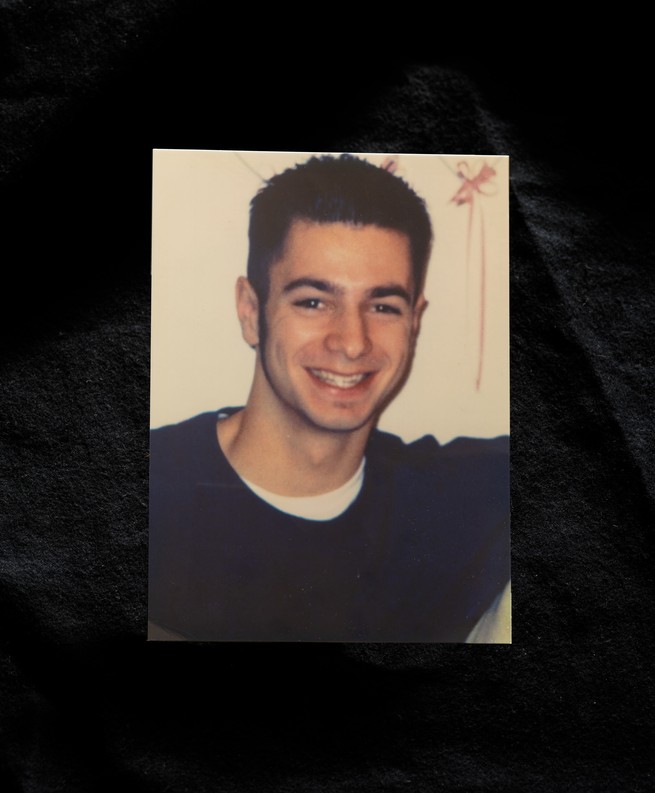
Last summer, I visited Milo in Sacramento. Nearly 17 years after her son’s death, her anger had not abated. She told me she relives her last moments with him every single night as she lies in bed, wishing that somehow she could have prevailed upon him to stay home that night. “I think I am surviving because I am mad,” she said. “You hear every day [that] you have to forgive, and I understand that, because it is about being set free, but maybe I am not supposed to be set free.” She wants Carroll to serve every day of her sentence.
Carroll herself told me that she deserves the full force of Milo’s condemnation. “What could I say? If it wasn’t for me—I was the one meeting up with him.” She broke off, crying. Lam, however, disagreed. In 2019, he told the parole board that he was the one to blame for Seivert’s death, stating, “I’m even more responsible than the shooter.” He had given Ly the gun months earlier, and, he told the board, his actions on the night of the murder were intended to prove to Nicole that “I was worthy of her.”
Morgan Gire, who until recently headed up the unit in the Sacramento DA’s office in charge of reviewing S.B. 1437 petitions, declined to comment on Carroll’s case specifically. But he told me that situations like hers were “tricky.” “Is holding them accountable for what they set in motion reasonable? That argument has gone on for 200 years,” he said. “The real question is the degree of her free will and amount of influence this guy was exerting over her. Are some of these women making poor decisions, or are they just being cold and callous and honestly don’t care if the person lives or dies?”
What is just in this case may be impossible to say with certainty. But it’s worth noting that Carroll is the only defendant still serving out her original sentence for Seivert’s murder. In 2017, Cooc and Dich succeeded in having their convictions reduced to second-degree murder because of their lesser culpability. They are both now free. In 2018, then–Governor Jerry Brown reduced Lam’s sentence by 10 years, praising his exemplary record while incarcerated. (Lam’s sister is married to Anthony Rendon, the speaker of the California State Assembly; according to CalMatters, he personally delivered the commutation petition to Brown.) Lam was released last October. Brown even commuted Ly’s sentence; he became eligible for parole in April 2020. Carroll, too, had filed a commutation petition. Brown took no action on it.
Soon after S.B. 1437 went into effect, Carroll’s lawyer, Juliana Drous, who also represented Anissa Jordan, filed a petition in the Sacramento County Superior Court arguing for Carroll’s immediate release. What followed was more than a year of limbo, as Drous unsuccessfully opposed repeated motions by prosecutors to delay the proceedings while the battle over the law played out in appellate courts.
From the September 2017 issue: Innocence is irrelevant in the age of the plea bargain
On January 27, 2020, more than a year after the signing of S.B. 1437, Sacramento County Superior Court Judge Donald Currier finally issued an order setting a resentencing date for Carroll. Nearly six months later—after further delays following the shutdown of the court system due to the coronavirus pandemic—Drous and the prosecutor, Stefanie Mahaffey, made their arguments as the judge listened behind a plexiglass barrier. From prison, Carroll watched by videoconference, the lower half of her face obscured by a mask.
Mahaffey acknowledged that S.B. 1437 had eliminated the “natural and probable consequences” rule. She argued, however, that it didn’t matter. Carroll, she said, had intended for Seivert to be brutally, perhaps fatally, attacked—she had “lain in wait with implied malice,” to use the term of art in California law. Drous countered that there was no evidence that Carroll had harbored such malicious intent—rather, the jury had relied on the “natural and probable consequences” rule to convict her. With that rule now null and void, Carroll ought to go free.
Judge Currier listened intently throughout the arguments, his face expressionless. At the end of the proceedings, he told the parties that he would issue a written decision within weeks.
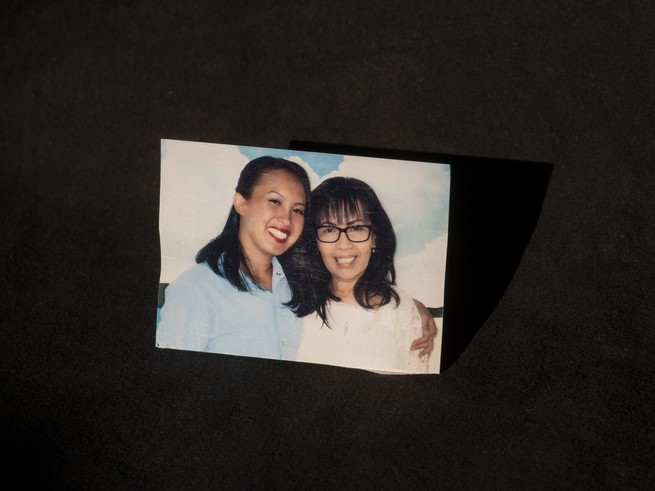
Iam a criminal-defense attorney who has seen too many of my clients go to prison for lengthy terms that seemed draconian to me. The American criminal-justice system is inclined toward harsh punishments that can rob people of their freedom because their lives are reduced to a single terrible decision. Nicole Carroll has already paid a steep price for her role in Matthew Seivert’s murder: She has now spent nearly half her life in prison. The reformers who drafted S.B. 1437 believe offenders like her deserve to be released—that a series of poor choices made by a troubled girl should not mean that she should be incarcerated for the rest of her life.
I am also a single mother with my own son. Now when I consider the rationale behind the felony-murder doctrine, I think back to my conversation with Stepheny Milo. “People say, ‘Everyone deserves a second chance,’” she told me. “Where is my son’s second chance?” The victim’s mother in Anissa Jordan’s case also lost her only son. In a letter to the court, she wrote, “I have to manage to stay invisibly ok to onlookers but deep down in my soul I just scream with pain and absence of mine only son. Tell me, how does one really deal with the loss of a child?”
For the moment, at least, the legal landscape in California reflects the complexity of the felony-murder debate. The question of S.B. 1437’s validity seems settled—no appellate court has adopted prosecutors’ arguments against it, and the state supreme court seems unlikely to weigh in. What is less clear, however, is how courts should decide cases such as Carroll’s, when prosecutors don’t challenge S.B. 1437 but nevertheless find a way to convince a judge that the defendant ought to remain in prison anyway. The outcomes vary case by case, determined by the underlying facts, the skill and tenacity of the lawyers on both sides, and the philosophies of the judges deciding them.
In August, Judge Currier issued an opinion adopting the prosecutor’s reasoning and denying Carroll relief. “At the hearing, it became clear, beyond a reasonable doubt, that defendant Carroll was aware of the possibility that the victim would die in the assault. She was the instigator of the plan, she lured the victim to the scene of the crime, she concealed her purpose, the others were hidden initially and waited for opportunity and a position of advantage, then made their attack,” he wrote.
Drous has filed an appeal and says she is cautiously optimistic about Carroll’s chances. Michelle Peterson, a veteran appellate attorney who has won several S.B. 1437 appeals, agrees. “There’s no evidence this teenaged girl was consciously disregarding the possibility that Lam’s friends were so violent that one would pull out a gun and kill the victim—there’s no evidence it ever occurred to her,” she says. The attorney general has taken the opposite position. In a brief filed on February 2, the state argued that Carroll was an integral part of the planning and execution of the fatal attack. As she waits for the court to rule, Carroll remains in prison.

This article is part of our project “The Cycle,” which is supported by a grant from the John D. and Catherine T. MacArthur Foundation’s Safety and Justice Challenge.