
A Detroit food stand is gaining popularity. Now it’s closed and owner faces charge
Owner of Doppy’s Fire Hot Dogs accused of resisting police
DETROIT – A Detroit food stand was gaining popularity and online fame, but now it’s closed as one of its owners faces a felony charge.
What started as a busy Sunday for a viral hot dog stand in Southwest Detroit quickly escalated into a confrontation with police and a felony charge.
Police make arrest at unlicensed street food business in SW Detroit
Within minutes, body cam video shows the encounter shifting from a question about permits to an arrest.
The owners of the stand, neighbors, and customers said the situation could have been handled differently.
“It’s like he didn’t wanna hear anything she had to say,” said Jermaine McCleskey, who lives in Southwest Detroit.
Jason Hernandez owns Doppy’s Fire Hot Dogs with his girlfriend, Nayeli Ruiz, who was arrested. He said there “could’ve been a different way of controlling it.”
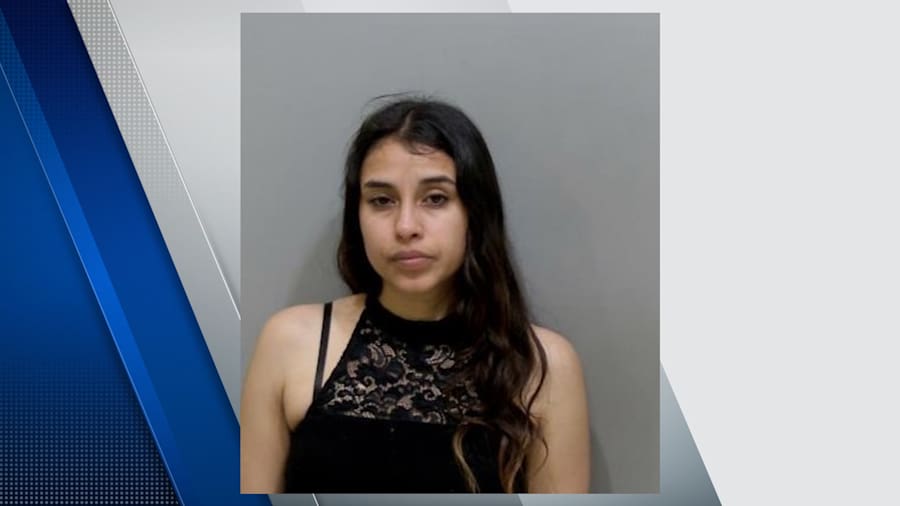
The stand has gained popularity in Southwest Detroit and on TikTok for its Mexican-style hot dogs.
“It’s been viral on TikTok. Even food reviewers have come and check them out,” McCleskey said.
But police said the Sunday crowd at Springwells near Whittaker was illegally assembled, with food being sold without a license.

“No no no, it’s closed for business. There’s no waiting,” an officer told the group in body cam video.
Assistant Chief Chuck Fitzgerald said a sergeant working block detail on Sept. 14, 2025, was alerted to a large gathering. He observed a vending operation set up on church grounds with folding tables, a barbecue, and a line of people down Springwells.
“He was trying to discuss it with [Ruiz]. She didn’t want to hear it. He told her he’s going to detain her. She resisted again. She ultimately [was] detained and placed in the back of a scout car,” Fitzgerald said.
Fitzgerald added the case could have easily ended without an arrest.
“When someone asks for identification or permit, there’s a very good chance this young lady would have walked away with just shutting her business or her operation down,” he said. “We don’t know at this point because she didn’t cooperate at all with law enforcement … He wasn’t there to cause her any harm. He was there to find out if she was permitted and then, if she wasn’t, walk her through the steps and how to get permitted.”
Fitzgerald also stressed the food is a safety risk and getting a permit is not a difficult process.
“It’s 100% a health risk, a health issue,” he said. “I can’t wheel my stove down to the corner and start selling food. It doesn’t work like that. You have to get your health department license. You have to have other people come inspect. You have to have a state license to sell food.”
“I think they should have given her a warning and if she did it again, then yeah,” said Maria Contreras, another Southwest resident.
Police said four others were also ticketed, noting that vendors are not allowed to have more than two workers. No customers were cited.
Ruiz was charged with resisting and obstructing a police officer, a state felony carrying a penalty of up to two years. The illegal street vending itself, Fitzgerald clarified, is a ticket-level offense.
“This is a simple thing. Shut it down. You don’t have a license, you don’t have a permit. What she did turned it into something bigger,” Fitzgerald said.
“When can I tell my side of the story, because I do have video,” Ruiz said during her arraignment.
Despite the charges, her boyfriend Hernandez said they’ve always had a good relationship with officers.
“I’m a little sad with how things went down. We’ll be back,” he said, adding that they’ve even served Detroit police free of charge in the past.
But prosecutors said Ruiz told the crowd in Spanish she would not shut down her stand and refused to comply with police commands. They also said body camera footage does not support her claims of being assaulted.
Ruiz was released on a $10,000 personal bond and is scheduled for a probable cause hearing via Zoom on Sept. 26, 2025, and a preliminary examination in-person on Oct. 3, 2025.
Hernandez told Local 4 the business is already working toward getting the necessary permits.
Bucks County community rallies around ‘Santa Scott’ after fire destroys family home
By6abc Digital Staff and Amanda Pitts 
Tuesday, October 28, 2025
Scott Diethorne and his family lost everything when flames tore through their home on Auburn Road late Saturday night.
FAIRLESS HILLS, Pa. (WPVI) — A Fairless Hills man known throughout Bucks County as “Santa Scott” is being lifted by the same community he’s brought joy to for more than four decades after a fire destroyed his family’s home over the weekend.
Scott Diethorne and his family lost everything when flames tore through their home on Auburn Road late Saturday night.
Diethorne, his wife Nancy, two of their nine children, and one of their 13 grandchildren were not home at the time as they had gone out to celebrate a birthday.
“We were debating whether to go or not because we were a little tired, so it was like 8:30 and we said, ‘Fine, let’s go,'” Diethorne said. “Good thing we did because we probably wouldn’t have made it out.”
Tragically, the family’s two Italian mastiffs, Tio and Ozzy, and their parrot, Emerald, didn’t survive.
Neighbor Brian Brennan said he rushed to the home when he spotted the flames.
“I ran immediately over here. There were people knocking on the door,” he said. “By the time I made it to the front door to the side the whole front yard was filled with black smoke.”
For more than 40 years, Diethorne has donned the red suit as “Santa Scott,” spreading Christmas cheer at Charlann’s Farm, Fairless Hills Garden Center, Kisses for Kyle, and Miss Philly Grill.
“The whole reason I do Santa is because I want everybody to be happy,” he said. “Forget about your troubles for a couple of minutes with me, you know, have the kids walk away thinking that everything’s gonna be all right when we all know what it’s really like.”
Now, the man who’s spent years giving to others says accepting help doesn’t come easily.
“The community has helped us so much, and… I’m not a guy who takes help very easy,” Diethorne said, tearing up. “I can’t thank anybody enough. I mean, this is beyond what I could’ve imagined. I’ve got people dropping clothes off, and my clothes ain’t easy to find!”
In the days since the fire, neighbors and strangers alike have raised more than $100,000 and donated clothing, supplies, and even Santa suits from other performers.
“The outreach is beyond anything I could ever comprehend,” Diethorne said. “Thank you, you don’t know how much it means to me because I was looking at a long uphill… It’s still gonna be an uphill climb, but that’s gonna help.”
His daughter, Sara Sokalski, said the support has been overwhelming.
“It’s really hard for them to accept the help; it’s so beautiful that so many people want to help,” she said. “My parents and my siblings who still lived here, they’re not gonna have normal for a very long time… those words of encouragement for moving forward from this are also gonna mean a lot to them as they try to navigate a new normal that’s gonna take a long time.”
Diethorne said his wife, who is terminally ill, remains his top priority. Even through the heartbreak, Diethorne says he’ll find a way to spread Christmas cheer again this year.
“I’ll be there, I’ll figure it out even if I have to do jeans and a red t-shirt – we’re gonna do it,” he said.
“The problem is, I don’t wear an extra slim,” he joked. “I just wish the whole world could be like our community here, you know, and there would be no trouble.”
The cause of the fire remains under investigation, though officials say it began in the attic. Diethorne believes it was likely electrical.
He Helped Send Her to Prison. Now They’re Friends
Rashmi Airan was a rising star at UNC-Chapel Hill and Columbia Law School before she was sent to prison for fraud. Now she and the prosecutor who investigated her case share their story with law students.
by John DrescherApril 30, 2025

| https://trinitymedia.ai/player/trinity-player.php?integrationType=wordpress&postHashV2=1628253f71f8e0235bc98b00c9d819da53dcebef&pageURL=https%3A%2F%2Fwww.theassemblync.com%2Fpolitics%2Fcourts%2Fprosecutor-lawyer-unc-patel-capone%2F&ver=6.9&contentHash=43f368e2057f5b0f97c2b477fd4e737aee7f8f8254f4a34d3ab855dc14cb2433&unitId=2900013883&userId=4b67ec11-09a4-4c3a-b418-2c2b30f1a6d5&isLegacyBrowser=false&version=20251212_1b5c4477fc57b37d654d828e7b6c06c6fd1c3895&useBunnyCDN=0&themeId=140&isMobile=0&unitType=tts-player |
Rashmi Airan was a force of nature as a UNC-Chapel Hill student in the early 1990s.
She was a first-generation Indian-American who pledged Chi Omega, a prominent, traditionally white sorority. She participated in a sit-in at then-Chancellor Paul Hardin’s office to push for higher wages for the university’s housekeeping staff. She ran for student body president and lost narrowly, but still succeeded in establishing one of the main planks of her campaign, a peer mentoring program.
Airan was going places. And she did. Just not always places she expected.
On April 14, she returned to Chapel Hill to speak to UNC law students about the crimes she committed as the closing attorney for a developer who was converting apartments into condos in South Florida. She pled guilty to conspiracy to commit wire, mail, and bank fraud, and spent six months in federal prison a decade ago.
📨 STATEWIDE
Stories that matter. Stories shaping North Carolina.
Join thousands of North Carolinians in-the-know about their state. Sign up, the newsletter’s free. Every Monday, Wednesday, and Friday.Sign Up!
At her side in Chapel Hill was the man who built the criminal case against her, former career federal prosecutor Joe Capone.
Airan and Capone first laid eyes on each other in April 2014 when Airan, then 42, was arraigned in federal court in Miami. She despised him, she said. The very mention of his name used to make her shake. When she was charged, she maintained that she’d done nothing wrong, and that Capone was treating her unfairly.
Capone braced for a hard fight. But their relationship didn’t play out the way it usually does with defendants and prosecutors. The former adversaries are now allies. How Airan and Capone became friends—from “target to teammate,” as she says—is a story of pride and ambition, of loss and shame, and ultimately, of redemption and rebirth.
An Inner Voice
Even though Airan, now 53, grew up in Miami, she was Tar Heel born and bred. Her father came from India to the U.S. to earn a master’s degree at UNC-Chapel Hill. She calls Chapel Hill “my happy place,” and says walking the brick sidewalks of the old, leafy campus gives her peace.
After receiving her bachelor’s degree in speech communication, she went to Columbia Law School, one of the most selective in the country, and graduated with honors. She worked for a law firm in San Francisco, then returned to Miami, where she was an assistant county attorney and a private-practice lawyer for several years before starting her own firm in 2008. She married a firefighter and was the main breadwinner for her family, which included two young children.
“If there was an award given for least likely to go to prison, it would’ve been given to me,” she said during a 2017 talk.

When a developer approached her about handling his legal work, she welcomed the opportunity. The Kensington at Royal Beach was a condo conversion project struggling to attract buyers. So the developer came up with incentives: Buyers could purchase a condo with no money down, no closing costs, and no mortgage payments for two years.
The developer concealed the incentives from the lenders who financed the transactions, which is illegal. Airan was the closing attorney and failed to disclose the incentives to the banks. The incentives could have encouraged buyers to take on more debt than they could afford.
Mortgage fraud is not a sexy crime to prosecute, Capone said. The work is complicated and tedious. After the housing bubble, which was inflated by easy-to-get mortgages, exploded in 2008, Congress wanted the federal government to better monitor the industry. It created the Federal Housing Finance Agency and an Office of Inspector General. Capone worked in the inspector general’s office and was sworn in as a special prosecutor to handle mortgage fraud.
Capone believed that he had ample evidence that the developer and Airan had committed crimes. At first, Airan fought that notion—hard. When the charges were formally read to her at her arraignment, she was surrounded by family members and steadfastly maintained her innocence.
But eventually, she acknowledged—first to herself, then to the world—that she suspected that what the developers did was illegal. She now urges people to listen to that inner voice.
“At a minimum, I should have walked away,” Airan told The Assembly. “I didn’t ask for help. I didn’t ask anyone for a second opinion.”
She said she made a quick initial rationalization that became a pattern of deception, including altering and backdating documents.
In speeches and podcast interviews, she’s mentioned a dangerous brew of factors that led to her participation in the fraud. She wanted to keep an important client. She wanted to provide for her family. She was proud and thought she could handle any situation. There was cultural pressure to succeed as a first-generation Indian-American. She wanted the right friends, the right house, and the right car. She wanted to feel important, to have stature in the community.
“At a minimum, I should have walked away. I didn’t ask for help. I didn’t ask anyone for a second opinion.”Rashmi Airan
Several months after she was indicted in 2014, she had a spiritual awakening and decided to cooperate with Capone. “I owned it and realized Joe was just doing his job,” she said.
She wanted to tell friends and colleagues herself. She created a spreadsheet and started calling them. Some she’d known since elementary school.
She told the whole story. She says she “faced my shame.” She believed she’d disgraced her family and let everybody down. She expected people to shun her, but overwhelmingly, her friends and colleagues forgave her and supported her.
“I don’t think there’s anything special about me except that I owned it,” she said on a podcast.
In December 2014, she pleaded guilty. The U.S. Attorney’s Office released a statement that said Airan “facilitated the inclusion of material misrepresentations in the closing documents, including the HUD-1 settlement statements.” She faced a maximum of five years in prison. No sentencing date was set.
For the next six months, she spent hundreds of hours helping Capone with the case against the other defendants. Her sentencing was set for June 2015. She was scared. Her children were 8 and 9 years old. She wanted house arrest; the judge could give her five years in prison. The government asked for 24 to 30 months in prison.
Shortly before the hearing at the courthouse, Capone walked into a side room where she was waiting with her lawyers, and he told her she would be OK. She and Capone embraced. “I really felt like Joe believed in me and supported me,” Airan said.

The judge sentenced her to a year and a day in prison. She would be eligible for early release with good behavior and continued cooperation with the prosecution.
She reported to prison in central Florida in August 2015 and served six months as inmate number 05-121104. In a first-person column for The Washington Post, she remembered waking up at 5 a.m. for the morning count.
“My mind flashes to the childhood me, a little Indian girl who wore pigtails, strove for my parents’ approval, and always focused on getting the best grades,” she wrote. “How did that person wind up in a women’s federal prison?”
She taught her fellow inmates math, English, and Spanish. One of them credited Airan for helping her pass her high school equivalency test. She also taught a class on weight loss, nutrition, and fitness.
“Put her in the scenario and she becomes the superstar,” Capone said. “She jumps in and takes charge.”
She called her kids every night, she later wrote in a LinkedIn post. She and her daughter developed a routine.
“You’re my Wonder Woman,” Airan would say.
“You’re my Wonder Mama,” her daughter would respond.
‘A Very Human Story’
Capone, now 64, is retired and living in northern Virginia. He was a prosecutor for 30 years. Even when people acknowledge their wrongdoing and cooperate, he said they typically want to put the episode behind them after they serve their sentence.
Not Airan. After leaving prison, she wanted to tell her story, warn others of her mistakes, and encourage people through their struggles.
She reconnected with Scott Peeler, a UNC friend with whom she’d lost touch. They’d run against each other for student body president; when she qualified for a runoff election and he didn’t, Peeler endorsed her. He remembered her at UNC as “brilliant, a leader, dedicated to making a difference. She had a tremendous group of students who followed her, and for good reason.”
He didn’t know anything about Airan’s legal troubles and prison time. When they got together in New York City, where he practices law, her experiences floored him. “She really bared her soul,” he said. “It’s a strength of hers, a strength of character.”
Peeler knew Airan wanted to speak to groups. When he started teaching white-collar law at UNC Law School in 2020, he asked her if she’d like to visit his class. Airan said Capone would be willing to join her. Starting in the spring of 2022, the two have spoken every year to Peeler’s class of 20 to 25 students.

Peeler, Airan, and Capone say the two-hour class gives the second- and third-year law students an extraordinary view of what the prosecution and defense were thinking as a complicated white-collar case unfolded. They move through the case chronologically, with Peeler guiding the discussion and Airan and Capone giving their analysis. Students ask questions along the way.
While Airan now makes her living by giving motivational speeches (she spoke to UNC athletics department staffers in January), neither she nor Capone is compensated for speaking to Peeler’s class.
During the April 14 class, Peeler’s students asked some procedural, nuts-and-bolts questions, Airan and Capone said. But they also asked Airan questions about how she handled the personal side of the ordeal, including how she discussed it with her children.
Airan described her arraignment, when she pleaded not guilty and was handcuffed and shackled. “It was one of the most gut-wrenching moments to have my parents watch me,” she said.
Airan’s candor makes the class powerful, Peeler said. He represents people charged with white-collar crimes. Like Airan, many of them are driven and successful, often accumulating wealth and power. In a weak moment, the qualities that made them successful can hurt them.
When his students become lawyers, Peeler wants them to stay vigilant, be humble, and be willing to reach out for help.
“It’s a very human story of there-but-for-the-grace-of-God-go-I,” he said. “Rashmi was the best of us—is the best of us—and it happened to her.”
From Adversaries to Allies
A few hours after speaking to Peeler’s class, Airan and Capone sat beside each other in a booth at Breadman’s, a college town hangout that’s served students and Chapel Hillians since 1974. Airan chose the restaurant.
She’s in full Tar Heel mode: a Carolina-blue blazer, dark pants, and light-blue-and-white low-cut Air Jordans. She now serves on a university leadership council, and squeezed in a meeting with the alumni president before heading to Breadman’s.
“Rashmi was the best of us—is the best of us—and it happened to her.” Scott Peeler
Just as Carolina students have done for 50 years, Airan and Capone order breakfast for lunch—an egg-white omelet with mushrooms and tomatoes for her, poached eggs, grits, and bacon for him. They banter as if they were old college friends. She gave him grief for putting jelly on his toast sloppily.
After she got out of prison, she looked up Capone, and they met at a Starbucks in Washington, D.C. He said he was “a little surprised. Most people I prosecute never want to see me again.”
She was cordial. She wondered if he would be interested in speaking to groups with her. He was still working for the federal government, and wasn’t sure if he could. But once he retired at the end of 2019, he was all in. They first spoke publicly together in Philadelphia in early 2020 at an event for an accounting firm.

“It went really well,” Capone said. “We said, ‘Let’s do it again.’”
Airan has produced a marketing document featuring biographical information on both of them and a summary of their shared journey. “The two have gained insight on what leads adversaries to eventually be allies,” it says, “and are proof that it can be done.” She’s working on a book and asked Capone to read the first 100 pages.
When she was being investigated, an uncle told her, “Beti (“daughter” in Hindi), you will one day understand that this is not happening to you, it’s happening for you.”
She didn’t get it at the time. She was too angry and confused. Now she does.
Her ordeal prompted her to look inward. Airan, who is Hindu, began to understand she had a higher purpose. For Hindus, every action, or karma, has a reaction or outcome. “This is my karma,” she said.
When she was practicing law, she was “always having to chase the next thing,” she said. “My definition of success and achievement is different than it used to be.”
“What you’re doing now is so much more powerful, more impactful,” Capone said.
“I was living a mediocre life,” she said. “My life has so much more meaning now.”
The conversation flowed easily. It was already 3:30 p.m., and Capone needed to start the often arduous drive back to northern Virginia. Near the restaurant door, where the faded Carolina basketball posters greet incoming patrons, the former inmate and the former prosecutor hugged goodbye.