
Jail officer inside bars instead of outside
Wanda English Burnett
Editor
Pictured in the red shirt is Darin Laird, a former Ripley County Jail Officer, who was sentenced on September 11 to serve two years in prison for trafficking with an inmate. He is flanked by Chief Deputy Sheriff Kurt Enneking, left, and Sheriff Jeff Cumberworth, right, with Ripley County Jail Commander, Bob Curl, behind him.
Darin Laird found himself on the other side of the law when he appeared in court on Wednesday, September 11. Laird, 42, had served as a jailer three months for the Ripley County Jail, but when he broke the law by trafficking with an inmate, he was faced with jail time. Laird trafficked contraband (notes between a girlfriend to her jailhouse boyfriend) on at least two different occasions between February 16, 2019 and March 9, 2019. At his sentencing hearing he said, “I made a bonehead mistake and I’m sorry I let you all down.” He was speaking to Sheriff Jeff Cumberworth, and the entire staff of jailers who were all in attendance at the sentencing.Deputy Prosecutor Shane Tucker didn’t give Laird any slack when Tucker asked for the full amount for each offense – 1) Official Misconduct, a Level 6 Felony and 2) Trafficking with an Inmate, a Class A Misdemeanor, which amounted to 730 (two years) days in jail. Tucker argued that Laird’s dangerous actions not only put other jail officers at risk, but also the other inmates and the public at large. Further, Tucker urged the Court that because of the times this had occurred and the well thought out plan Laird initiated to traffic the contraband, justified an aggravated sentence. Laird’s attorney John Dorenbush requested that the Court take into consideration that Laird had no additional criminal history and his employment history. Judge Jeff Sharp agreed with the State and said Laird had broken the trust of the sheriff and the people of the county. He said that the inmates, jailers, police officers, administrators, and the general public had been put in jeopardy by the actions of Laird. He asked the defendant if he knew what was in the notes he passed from a girlfriend of an inmate. Laird said he did not know what was in the note, he assumed it was a love note. However, the judge didn’t buy that answer and also brought up the fact that Laird was given nude photos of the girl passing the note, Courtney Miller, who also has a felony record.Court records say that Laird would meet Miller at a Versailles gas station and there she would give him notes to give to her boyfriend, Eric Schott, who is in jail.Judge Sharp said, “You were fully aware that Miller could go see Schott. He noted that the jailer knew that she (Miller) could visit with her boyfriend, if in fact it was only to tell him she loved him. The judge said he agreed no one in the criminal justice system has a tougher job than a jailer. He went over several reasons why it is such a hard job, including the low pay. However, he said Laird’s behavior was inexcusable. He went on to say anytime a crime is committed, people are a victim and it’s worse when committed by a correctional officer.Laird said, “I made the worst mistake of my life.” Sheriff Cumberworth told the Osgood Journal that Laird had indeed made the worst mistake of his life, and he will come down hard on any other jailer who makes the same decision. “It’s something I’m not going to tolerate,” he said. He noted there is another jailer that will be going to court soon concerning the same type of situation. “It’s disappointing. I go through the applications carefully, and they don’t have a criminal background, I just don’t understand why they would take the chance,” he noted. “I make it clear to them when they are hired that they cannot bring any type of contraband i.e. notes, cell phones, anything to an inmate. They agree they won’t and then this happens. It is disheartening.”After the sentencing of Laird, all of the jail officers were brought together where the sheriff again told them they will face the same fate as Laird if they choose to bring contraband into the jail.The sheriff noted that the day after the hearing Laird was taken to the Indiana Department of Corrections where he will serve his sentence. In reference to Laird’s sentence, Prosecuting Attorney Ric Hertel stated, “Laird’s conduct was extremely dangerous and placed the safety and welfare of the other jail staff, inmates, law enforcement officers, and the community in jeopardy. Laird took advantage of the public’s trust by trafficking contraband to inmates while working as a jail officer. His conduct warrants the aggravated sentence he received.”
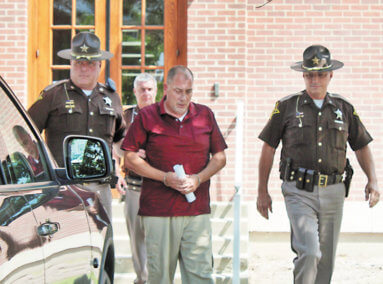
WANDA ENGLISH BURNETT PHOTO
Facing Domestic Violence Charges in Rhode Island
July 22, 2025 | John E MacDonald

Being accused of domestic violence in Rhode Island can flip your life upside down in an instant. One moment you’re in an argument or an emotionally charged situation, and the next you’re facing criminal charges, possible jail time, and a no-contact order that may prevent you from returning home or seeing your children.
The most important thing to understand? The legal system doesn’t wait. From the moment you’re arrested or investigated, the clock starts ticking on a case that can affect your freedom, your reputation, and your future.
This blog is here to help you understand what happens next, what to avoid, and how to protect yourself with the right legal strategy.
What Happens After a Domestic Violence Arrest in Rhode Island?
Once the police are called to a domestic incident, they typically have little control over the narrative that unfolds. If they find any evidence of violence or threats between household or family members, an arrest is often mandatory under Rhode Island law. This applies even if the alleged victim doesn’t want to press charges.
After the arrest:
- You’ll be booked and brought before a judge, usually within 24 hours.
- A No Contact Order is automatically issued, which prevents you from contacting the alleged victim.
- You may be released on bail or held depending on the nature of the charges and your record.
- Your arraignment (first court appearance) will be scheduled quickly.
Under RI General Laws § 12-29-2, domestic violence isn’t a standalone charge. It’s a classification applied to certain crimes like assault, vandalism, or harassment when committed within a domestic relationship (spouses, partners, roommates, co-parents, etc.).
The Single Biggest Mistake People Make After Being Charged
Trying to talk your way out of it is the worst thing you can do—even if the situation seems cut-and-dry.
Many people think they can clear things up by explaining their side of the story to police, the alleged victim, or even on social media. But this often backfires. Statements you make can be taken out of context and used by prosecutors.
To protect yourself:
- Do not contact the accuser, even if they initiate.
- Don’t post about your case online.
- Don’t attempt to negotiate or apologize.
- Save evidence privately and speak only with your attorney.
Anything you say can be used against you. Early legal guidance is crucial.
What If the Allegations Are False?
Unfortunately, false or exaggerated accusations do happen. In emotionally charged situations—especially involving breakups, custody disputes, or financial stress—it’s not uncommon for one party to weaponize the legal system.
But here’s the truth: even if the accuser later recants, prosecutors may still pursue the case.
In Rhode Island, the state can continue prosecuting based on:
- Police reports
- 911 calls
- Photographs
- Witness statements
That’s why a strong legal defense is so important. Your attorney can:
- Investigate inconsistent testimony
- Introduce messages, call logs, or security footage
- Cross-examine the credibility of the accuser
False allegations require a focused, strategic defense. Don’t assume the truth will speak for itself.
How Prosecutors Build (and Misbuild) Domestic Violence Cases
In domestic violence cases, prosecutors often rely on:
- Police narratives
- Photographs of injuries or property damage
- 911 audio
- Witness or accuser statements
- Digital evidence (texts, emails, social media)
But this evidence can be misleading or taken out of context. Your lawyer can challenge:
- How the evidence was collected
- Whether the statements are consistent
- Whether there’s a pattern of mutual conflict
Under the Rhode Island Rules of Evidence, all presented material must meet relevance and admissibility standards, and any errors in that process can work in your favor.
This means an experienced RI defense attorney can uncover and challenge evidence that was mishandled, misinterpreted, or should never have been allowed in the first place.
If digital messages were tampered with, if police reports contradict witness statements, or if the chain of custody is unclear, your attorney can file motions to suppress that evidence entirely.
In some cases, that means critical pieces of the prosecution’s case are thrown out—leaving them with far less to work with, or nothing at all.
What Should I Do if the Accuser Keeps Contacting Me?
This happens more often than you’d think. Even with a No Contact Order in place, alleged victims may text, call, or ask to talk “just to clear things up.”
But here’s the problem: the No Contact Order only applies to you.
If you respond, even politely or briefly, you could:
- Be charged with violating the order
- Lose your bail or bond
- Face additional penalties
What you should do:
- Do not respond
- Save any messages or call logs
- Share them with your attorney
To modify or lift a No Contact Order, your attorney must file a formal request with the court. Taking that step yourself is risky and often makes things worse.
Common Defenses in Domestic Violence Cases
Every domestic violence case is unique, but common legal defenses include:
- Self-defense – Especially in mutual conflicts where you were trying to protect yourself or others
- Lack of evidence – The prosecution must prove the case beyond a reasonable doubt
- False accusation – Motivated by anger, retaliation, or control (e.g., custody leverage)
- No intent to harm – Some cases hinge on minor injuries or property damage with no violent intent
- Alibi or mistaken identity – Involving third parties or misidentification
Your defense must be tailored to the facts. A Rhode Island criminal defense lawyer experienced defending domestic violence cases can identify the best legal path forward and craft a custom strategy.
Penalties and Long-Term Consequences if Convicted
Domestic violence convictions in Rhode Island can result in:
- Up to one year in jail (misdemeanor) or longer (felony)
- Fines and mandatory court costs
- Required batterers’ intervention counseling
- Probation, suspended sentence, or home confinement
- Loss of firearms rights
Beyond the courtroom, the impact can be devastating:
- Loss of professional licenses
- Impact on immigration status
- Limits on seeing your children
- Difficulty finding housing or employment
Under RI sentencing guidelines, judges have some discretion, but first-time offenders may still face mandatory counseling and long-term court oversight.
Where Can I Find a Domestic Violence Defense Lawyer in Rhode Island?
If you’re facing domestic violence charges, you don’t just need a Rhode Island domestic violence defense lawyer— you need someone who knows exactly how Rhode Island prosecutors handle these cases, what evidence they rely on, and how to push back before the damage is done.
John E. MacDonald has spent more than 30 years defending people charged with domestic violence and related offenses across Rhode Island. He knows how these cases are built—and how to dismantle them.
From the moment your consultation starts, you can expect focused, courtroom-tested strategies based on decades of real results.
Your first step is a completely free, fully confidential 60-minute consultation designed to give you clarity and control when you need it most.
Call (401) 421-1440 today to schedule your consultation. The sooner you act, the better your chances of protecting your rights, your record, and your future.