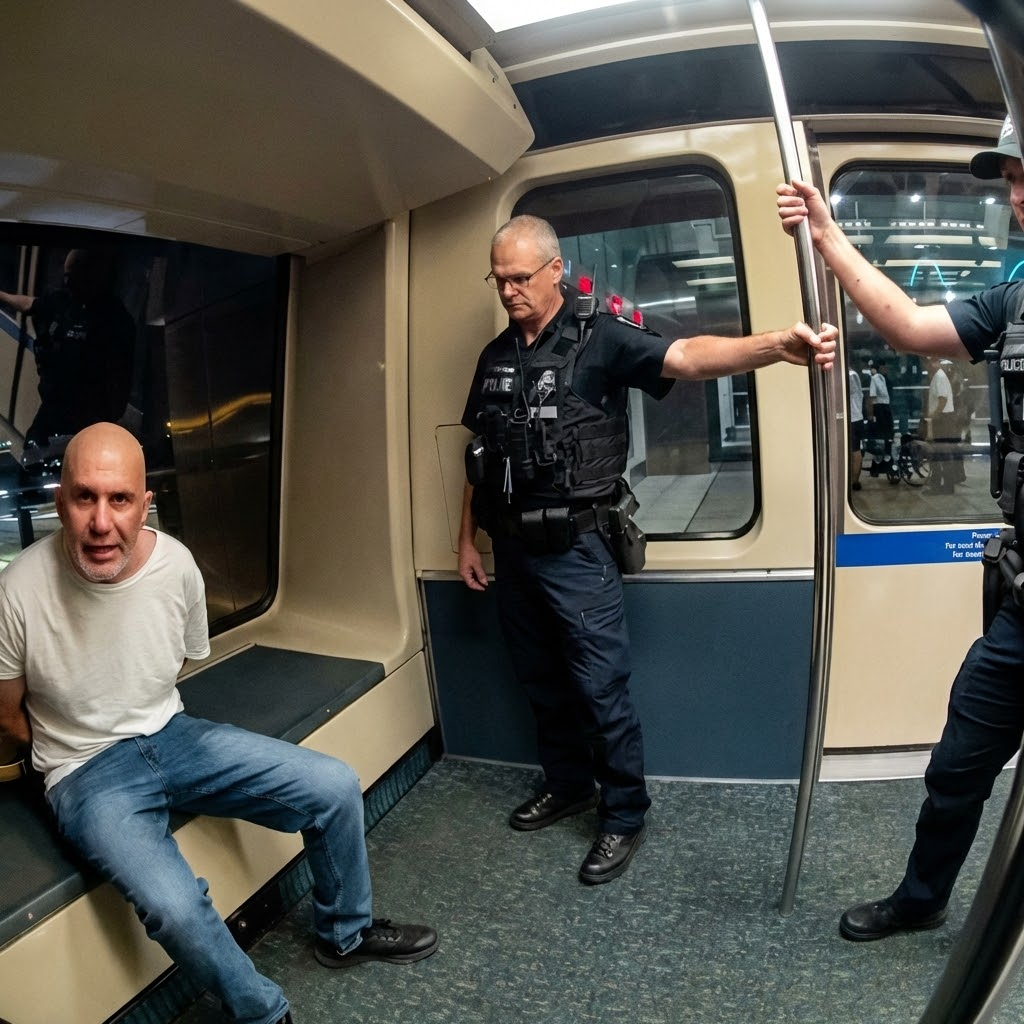
Our “Gunpoint-at-the-Airport” Ordeal
By now you have probably heard about our being handcuffed at gunpoint by the police at Santa Barbara Airport. Our registration number had mistakenly shown up on a stolen aircraft list.
Being detained at gunpoint, handcuffed and placed in two separate police cars, left us shaken enough that we had misgivings about flying home that afternoon—especially using the IFR system that had set us up for this ordeal in the first place. Sleeping at night hasn’t been easy either. Our minds keep replaying the events.
| John speaks with Warren Morningstar, AOPA Executive Producer (Video)Martha recounts incident with Russ Niles, Editor-in-Chief AVweb (Podcast)John’s report on the incident (PDF) |
This could, of course, have happened to any pilot. The important point is to turn this into a learning opportunity for everyone involved so this doesn’t happen to innocent pilots again.
Chief Sanchez Apologized
I should note that the Chief of Police at Santa Barbara has called to apologize for our “short detainment”. I explained that we neither asked for nor expected an apology, but I was very appreciative. On the other hand, I explained, it wasn’t the detainment that I objected to. It was that so many guns were trained on us. In fact what bothered me most was not the treatment I had received, but seeing Martha have guns being pointed at her and seeing her being handcuffed.
Chief Sanchez explained that police are not trained to do anything else when they detain an airplane but to treat it as a high-risk traffic stop. The problem is that a high-risk traffic stop involves aiming guns. I said that I understood that the officers followed the procedure for a high-risk traffic stop to the letter. My question is whether that procedure should have been used.
Treating It As a High-Risk Traffic Stop Was Not Necessary

In my view it will be very rare when high-risk traffic stop procedures are appropriate for aircraft.
The aircraft are being intercepted because they are in the IFR/flight-following system. The behavior of these aircraft is very predictable. They have announced to the world who they are, how to reach them, and when and where they are going.
Once on the ground at an airport, they will announce on the radio their destination on the airport. They will taxi to the FBO, and if it is a 172, like we were flying, they will usually be directed to a remote parking spot. The pilot then will tie the airplane down, lock the doors, and walk away from the airplane. The police can then simply walk up to the occupants and talk to them without fear of their attempting to flee. Once the airplane is parked, there is no way to go anywhere. They don’t even have access to a car yet. The suspects will have immobilized themselves.
If, on the other hand, the police set up an interception in a remote area instead of at the FBO, any truly guilty suspect would most likely spot the police cars, as we did, before they pulled into the parking area, realize what is happening, and simply take off from the taxiway before the interception took place. This remote interception procedure only results in abusing the compliant innocent while giving the guilty the opportunity to flee.
For an aircraft flying to a remote airport in the middle of the night, it is possible more extreme measures would be required, but it is unlikely that aircraft would have been using the IFR/flight-following system and be reported. So this situation is unlikely to come up.
Making Sure Procedures Are Changed In The Future
Since this incident happened we have learned that it is not uncommon. And we have been given the details of two other recent cases where innocent pilots have been intercepted as a result of the registration number of a stolen aircraft being re-assigned by the FAA. However, in neither one of those cases were guns drawn and aimed at the pilots.
There are several failure points that result in these mistaken aircraft interceptions happening. Each failure point can and should be corrected.
- The FAA should not re-assign numbers of stolen aircraft unless the system is changed to protect the users of the aircraft the number is re-assigned to. The registration number on our aircraft, N50545, had been previously assigned to a 1968 C150 that was stolen. According to the owner, the C150 was never found, but the FAA re-assigned the number to our C172 anyway.
- El Paso Intelligence Center (EPIC) should check the FAA database before notifying agencies that a stolen aircraft in the IFR system is inbound. Plus, the notifications should distinguish between suspected drug smugglers, terrorists and aircraft thieves. It would have taken only about a minute on www.FAA.gov for them to search the registration number in question to learn that number had been re-assigned to a different aircraft.
- There needs to be a system for correcting the stolen aircraft database and better coordination between agencies. The aircraft we were flying had been intercepted 18 months ago for the same reason, on a trip by a Cessna employee between the Cessna factory and Wichita, KS. Yet nobody bothered to remove the aircraft from the stolen aircraft list.
- Police departments should be given Standard Operating Procedures and training regarding meeting suspicious aircraft. Aircraft are different from cars. Plus, police departments should take the 60 seconds or so required to determine that the suspect aircraft has not had the registration number re-assigned and is the correct make and model.
One thing that still bothers me about this case is that the Santa Barbara Police Department is still treating this case as if it were no big deal. I guess it isn’t a big deal if you are on the aiming end of the gun. And I have to admit that nobody was hurt and we and the police returned to our homes that night. Their reports to the press characterize us as” laughing afterwards” and “completely understanding”. The truth is that we were completely cooperative, and what we understood is that it is never wise to argue with a law enforcement officer. There will always be plenty of time for argument later on if you survive the incident.
We were not insulted or offended personally. We just feel that drawing guns on people is dangerous business—not to be done unless it is absolutely necessary. And it will continue to happen to other pilots unless the system is changed.
Know your Right if you Arrested
A person is arrested when a police officer or a citizen takes him into custody or otherwise substantially deprives him of his freedom of action so that he may be held to answer for a crime or an offence. The police in India do not have any power to detain anybody for questioning unless he is arrested with or without warrant.
Warrant of Arrest
It is a written order issued by a Court to a police officer to arrest and produce an offender or to search his premises for a particular thing. A police officer who executes the warrant shall notify the substance thereof to the person to be arrested and if he demands, shall show him the warrant. He is expected to bring the required person before the Court without unnecessary delay.
Valid Warrant
A warrant of arrest should be (i) in writing (ii) signed by the presiding officer of the Court and (iii) should bear the seal of the Court. It should also contain the name of the accused, his address and indicate the offence with which he is charged. If any of these factors is absent, the warrant is not in order and an arrest made in execution of such a warrant is illegal. Warrants are of two kinds:
i) Bailable
ii) Non-Bailable
A bailable warrant is a Court’s order which contains a direction that if the person arrested executes a bail with sufficient sureties for his attendance before the Court, he may be released from custody. In that case it shall further state the number of sureties, the amount of the bond, and the time for
attending the Court. (Section 71 Cr.P.C.) In case of a non-bailable warrant the direction for bail will not be endorsed on the warrant.
Arrest without Warrant
A police officer has power to arrest a person without warrant if he is suspected of having committed a cognizable offence. Normally in non-cognizable offences a police officer cannot arrest a person without a warrant from a Magistrate.
In the first Schedule of the Criminal Procedure Code (Cr.P.C.) offences have been classified and enumerated as cognizable and non-cognizable. The more serious offences such as murder, rape, robbery, theft, waging war against the State etc. are cognizable.
When can a person be arrested without a warrant?
A person can be arrested without a warrant:
1. If he is concerned in a cognizable offence or if there is a reasonable suspicion, complaint or information that he has committed a cognizable offence;
2. If he possesses implements of house breaking;
3. If he possess stolen property;
4. If he is proclaimed an offender;
5. It he obstructs a police officer on duty’
6. If he escapes from a legal custody;
7. It he is a deserter from the army, navy or air force;
8. Where he is out of India, if he commits an offence punishable under any extradition law or under the Fugitive Offenders Act;
9. If he is released convict who breaks the restrictions imposed by the Court on his movements;
10. If he is suspected of preparing to commit a cognizable offence; 11. If he is habitual criminal;
12. If he, after committing a non-cognizable offence in the presence of a police officer, refuses to give the police his name and address or has given him a false name and address;
13. If he is required by a police officer of another police station who suspects that he has committed a cognizable offence;
How is Arrest made?
Arrest is complete when there is submission to custody by word or action, and in such a case touching or confining of the body of the person arrested is not necessary, but mere surrounding of a person by the police does not amount to arrest. (Section 46).
What happens if you resist arrest?
If you forcibly resist arrest, the police officer can use all means necessary to effect the arrest. (Sec 46). He can even cause your death provided you are charged with an offence punishable with death or me imprisonment. However, he is not justified in using force more than necessary to obtain the arrest (Sec.46). Therefore, unnecessary restraints or causing physical inconveniences tying of hands and feet are not permissible if there is no necessity for doing so.
What are your rights when you are arrested?
If you are arrested:
1. You must be informed of the reasons for your arrest (Fundamental Rights : Article 22 and Sec.50 Cr.P.C.)
2. You have a right to see the warrant if you are arrested under warrant (Sec.75 Cr.P.C.)
3. You have a right to consult a lawyer of your choice. (Fundamental Rights: Article 22 of the Constitution);
4. You must be produced before the nearest Magistrate within 24 hours (Fundamental Rights Article 22 of the Constitution);
5. You must be told whether you are entitled to be released on bail. (Sec.50 Cr.P.C.)
Can you be handcuffed?
According to the latest ruling of the Supreme Court, normally an arrested person should not be handcuffed unless he is violent or he is desperate character or he is likely to attempt to escape or to commit suicide. Arrest is not a punishment. Hence unnecessary restraints are not permissible, if there is no necessity for doing so.
Search of a place entered by a person sought to be arrested Sec.47 of Cr.P.C. compels all persons to afford to the police facilities for search in a place for a person sought to be arrested. Police officers have power to break open any door or window to carry out a search and to liberate himself or any person who is detained inside a premises.
Search of an arrested person
A Police officer has the right to search a person only after he is arrested. After the search the police officer must keep in safe custody all the articles taken from the person and give him a receipt for the same. A search of an arrested female should be done with strict regard to decency. A woman can be searched only by another women. (Sec.51)
Examination of arrested person by medical practitioner
A police officer not below the rank of a sub-Inspector may require an arrested person to be medically examined if he feels that this may provide evidence to prove the offence. (Sec.53)
1. He may use reasonably necessary force to have the medical examination performed.
2. The accused person can make a request to the Magistrate that he had not committed the offence.(Sec.54)
3. A woman has a right to demand that she be examined by a woman doctor. (Sec.53 A(2)54)
4. In case of torture in police custody, this provision of law must be taken advantage of and the victim should demand in the Court that he be medically examined to prove torture by the police.
Detention of an arrested person
Article 22 (2) of the Constitution lays down that every person who is arrested and detained in custody should be produced before the nearest Magistrate within a period of 24 hours of such arrest exclusive of the time necessary for the journey from the place of arrest to the Magistrate’s Court. However, Sec.167 of the Cr.P.C. vests the power in the Magistrate to authorize the detention of the arrested person for more than 24 hours of the investigation cannot be completed within that period. In no circumstances can the accused be detained in custody for a moment more than twenty four hours without a special order of a Magistrate who can order his detention for a term exceeding 15 days on the whole. At the end of the 15 days he must be produced before the Magistrate. If there are adequate grounds for further detention in judicial custody (jail), he can pass an order to that effect, for a period not exceeding 15 days. But the total period of detention cannot exceed 60 days, whether the investigation of offence against him has been completed or not. The order of a Magistrate sanctioning the detention for an indefinite period is illegal. If the accused is not able to furnish bail during the stage of investigation he may be detained in judicial custody beyond 60 days. In case of a non-bailable offence the arrested person may be kept in jail until the trial is over.
Search Warrant
Search warrant is issued by the Magistrate for the following purposes:
1.For the recovery of a document or thing which may not be produced in the court otherwise;
2.For search of a house suspected to contain stolen property, forged documents, etc;
3.Seizing any publication banned by the government;
4.For discovery of a person wrongfully confined.
A search warrant gives the power to the police officer to search the required place and to seize the objectionable article known as “Mudammal”. Police may use force to effect a legal entry provided that they have come, demanded entry and are unreasonably refused. The police officer executing the warrant may search any person in or about such place if that person is reasonably suspected of concealing on his person any article for which search is made. If the person to be searched is a female, then the search shall be made by another woman with the strictest possible decency.
Procedure to be followed
The officer making a search shall:
1.Call upon two or more respectable residents of the locality (called Panches) to attend and witness the search. Failure to attend is an offence under Sec.187 I.P.C.
2.Make the search in their presence. So, the search would be illegal if the panches: are kept outside while the search takes place inside the building;
3.Make a list of all things seized and of all places in which they are found. (The list is called the panchanama);
4.Get the list signed by the witnesses – Panchas
5.Permit the occupant of the place to attend the search and give him a copy of the list of things signed at his request;
6.Panches are not required to attend the court as witnesses unless specially summoneded by the Court.
Rights of the occupants of the premises searched
1.The accused himself cannot be compelled to produce any document or property which is likely to involve him in any criminal charge. Hence police have to get a warrant issued by a Court of Law;
2.The police have no general power to enter or search your premises without your consent;
3.The court may specify in the warrant a particular place only to which the search will extend;
5.It is important that the warrant is read and the directions are taken note of before the police are allowed to make inspection;
6.If the police have no legal authority to enter your premises you can refuse the entry;
7.If they have no legal authority to remain, you have a right to insist that they leave;
8.If they refuse you have the legal right to use reasonable force to remove them. (Sec.97, of I.P.C.)
Bail
Bail means releasing an arrested person from legal custody until his trial. Bail gives the freedom to seek advice from friends to consult a lawyer, to trace witnesses and to collect evidence for one’s defence and to continue his job. When bail is not granted, the arrested person will be on remand and will be kept in custody to facilitate the investigation and to obtain evidence. Provisions regarding bail can be classified into 2 categories: i.e.,
1.Bailable cases
2.Non-Bailable Cases.
Bailable Cases
In the case of bailable offences, granting of bail is a matter of legal right. This means that bail cannot be refused and shall be granted by a police officer in charge of a police station having the accused in his custody. The release may be ordered on the accused executing a bond, even without sureties.
Non-Bailable Cases
In non-bailable cases, only the Court can order release of the accused person on bail. However, if the police officer or the Magistrate is of the opinion that there is no sufficient material against the accused and that the complaint needs further investigation he may also release the accused on bail.(Sec.437 (2) Cr.P.C.)
Normally bail is not granted when the accused person appears, on reasonably grounds, to be guilty of an offence punishable with death or imprisonment for file. But women, children under 16, and sick people can be released on bail by a Magistrate even if charged with offences punishable with death or life-imprisonment. An accused person is entitled to be released on bail as soon as reasonable grounds for guilt cease to appear, between the close of the case and the delivery of judgement. A person released on bail may be taken into custody by an order of the Court, if his conduct subsequent to release is found to be prejudicial to a fair trial Sec.48 Cr.P.C. or if he does not observe the conditions of the bail.
Power of the Court to grant bail
The discretionary power of the Court to grant bail is judicial power and is given by established principles. Before granting bail the Court must consider the seriousness of the charge, the nature of the evidence, the severity of the punishment prescribed for the offences and in some cases the character, means and the status of the accused.
If you are arrested, how to get released immediately from police custody?
In warrant cases, find out the directions endorsed in the warrant and execute a bond with sureties (Sec.71):
1.If the offence charges is bailable and the arrest is made without warrant, ask the police officer in charge of the police station to grant you bail after executing a bond.
2.The police officer has the discretion to release a person on his executing a bond without sureties. (Sec. 436 of Cr.P.C.)
3.If you are not granted bail immediately you have the right to telephone your advocate, a friend or a relative. Give your advocate the names and addressed of the possible sureties. If you don’t have an advocate inform your friend or relative
4.The name of the Court where you will appear;
5.The time the Court starts; and request him:
6.To take to the Court anyone else who is prepared to stand surety;
7.To contact an advocate if possible.
If you can deal with these matters before you go to the Court, you may be saved an unnecessary remand in custody.
Granting of Bail by the Magistrate
If a person is arrested for a non-bailable offence, and there exists a reasonable ground to believe the guilt of the person, he may not be granted bail by the police officer. In such cases the accused person must give a written application to the court to grant bail. The court must grant bail unless he is charged with a crime punishable with death or life-imprisonment. In such cases only the sessions or the High Court can grant bail.
Common police objections to bail
1.The accused will not appear at his trial;
2.He will interfere with witnesses or material evidence;
3.He will commit further offences while on bail;
4.Police enquiries are not complete;
5.Further charges might follow;
6.Stolen properties have not been recovered;
7.The co-accused are absconding;
8.The weapons with which the crime was committed has not been recovered.
Normally the police make an application for the remand of the accused. In such an application they give their reasons for further detention of the accused in custody. The reasons given by the police must be refuted to the extent possible.
Application for Bail
1.If the accused can afford an advocate he can make an application and represent the accused before the judge;
2.If the accused cannot afford an advocate he may make a written application to the judge. For this he must get an application form from the prison staff and complete it as fully as possible giving sufficient reasons to convince the judge of the need of granting bail.
The following special grounds for release must be mentioned in the application:
1.Condition and state of accommodation; whether there is a possibility of eviction in case bail is not granted;
2.Whether he is likely to lose his job;
3.How refusal of bail would create hardship to the dependent members of the family;
4.How keeping in custody would affect the poor state of health and treatment.
Refusal of Bail by the Magistrate
If bail is refused, the Magistrate must record the reasons for the same. Such a record is necessary to make a proper appeal for bail in higher Courts.
Appeal
If application for bail is rejected by the Magistrate, the accused person can appeal to a Sessions Court or High Court. Disagreement with the objections raised by the police in granting bail or the fact of no objection raised in the Court must be incorporated in the application for bail. If one’s application is rejected, one may try again in one’s next Court appearance.
Conditions for Bail
The Magistrate may grant a bail:
1.Without any condition
2.Subject to special conditions;
3.Subject to bond with or without sureties.
Special conditions usually state that the accused person must report to the police station at specified times or surrender his passport. One can challenge in a Court any unreasonable condition imposed by the Magistrate. If the Court refuses to change the conditions, the accused person can reject them. But in that case he will not be released until his appeal is heard and disposed of in his favour.
Bond and Sureties
1.An accused person may be released on personal bond with or without sureties;
2.Sureties are people who guarantee a sum of money for appearance of the accused in the Court on the appointed day and time.
3.Those who stand as sureties must be present in the Court and if asked must guarantee the Court under oath that they are prepared to act and have sufficient funds;
4.They can file affidavits before the Court stating the fact to show that they have sufficient funds to pay the surety and that they are even otherwise fit to be sureties;
5.The Magistrate has the power to reject the surety without giving any reason. If the sureties are not in the Court, the arrested person will be kept in custody until the police have interviewed them and found them to be satisfactory;
6.Sureties must be over 18, have a permanent address and have sufficient money to cover the amount of surety after payment of all their debts. The sureties may carry to the Court documents such as ration cards, rent receipts, provident fund slips, salary slips and income tax challans.
7.The police and the Magistrate have no right to reject sureties on ground of their personal character, political opinions, criminal records or sex, unless they are professional sureties.
Bail after Conviction
If an accused person is found guilty, the Magistrate will pass the sentence after considering his past record. If the convicted person wants to appeal against his sentence in a higher court, the Court which passed the sentence must release him on bail.
1.When the sentence is for imprisonment for a term net exceeding 3 years, or;
2.When the offence for which the person is convicted is a bailable one and the person is already on bail. The release will be for a period that will enable the convict to present the appeal and get the orders of the appellate Court. Once a person files an appeal against his conviction, the appellate Court may suspend the sentence and release him on bail or on personal bond.
Anticipatory Bail
When a person has reason to believe that he may be arrested for a non-bailable offence, he may apply to the High Court or to the Court of Session for a direction that in the event of such an arrest he may be released on bail. If such a person is arrested without a warrant by a police officer and if he is prepared to give bail, he must be released on bail. In case a warrant is issued against the accused by a Magistrate, it. The purpose of the provision is to relieve a person from disgrace by being detained in jail for some days before he can apply for bail when he is implicated in a false case by a rival.
Recent Observations and Recommendations of the Supreme Court on Bail
1.The Bail system prevalent in our country is oppresive and discriminatory against the poor, since the poor would not be able to furnish bail on account of their poverty. The court, by ignoring the differential capacity of the rich and the poor to furnish bail and treating them equally, produces inequality between the rich and the poor.
2.The bail system should be thoroughly reformed so that it should be possible for the poor to obtain pre-trail release as easily as the rich without jeopardising the interests of justice.
3.The Court and the police must abandon the antiquated practice of release only against bond with sureties, and if the accused has ties in the community and there is no substantial risk of nonappearance, he may be released on his personal bond without monetary obligation, subject to penalty in case of breach.
4.The amount of bond the Court fixes to release the accused on personal bond should not be based merely on the nature of the charge but on the financial capacity of the accused and the probability of the absconding.
5.When the accused is released on personal bond, the Court or the police should not insist upon inquiring into his solvency as a condition of acceptance of his personal bond.
KNOW YOUR RIGHTS AGAINST TRAFFICKING:
A Victim of Trafficking is a Person Who is:-
1.Transported against her/his will.
2.Forced into any form of sexual trade or forced labour or bonded labour.
3.Taken out & away from their home and sexually exploited.
4.Sold for any purpose.
5.Made to travel to an unknown place on false promise of work, marriage, or better livelihood with unknown/known person.
6.Duped, forced, kidnapped, abducted, blackmailed, deceived for any kind of gain.
Person who is a foreigner (eg. Bangladeshi, Nepali Etc.) being exploited, held against her/his will, forced into prostitution, etc.
Person, who is a minor and being transported, traded, sexually exploited and detained against her/his will.
DEFINITIONS
(a) “Trafficking in persons” shall mean the recruitment, transportation, transfer, harbouring or receipt of person, by means of the threat or use of force or other forms of coercion, of abduction, of fraud, of deception, of the abuse of power or of a position of vulnerability or of the giving or receiving of payments or benefits to achieve the consent of a person having control over another person, for the purpose of exploitation. Exploitation shall include, at a minimum, the exploitation of the prostitution of others or other forms of sexual exploitation, forced labour or services, slavery or practices similar to slavery. servitude or the removal of organs…
Article 3: Protocol to Prevent, Suppress and Punish Trafficking in Persons, Especially Women and Children, Supplementing The United Nations Convention Against Transnational Organised Crime.
Traffic in human beings and begar and other similar forms of forced labour are prohibited and any contravention of this provision shall be an offence punishable in accordance with law.
Can You Get Arrested at the Airport?
The possibility of being arrested at the airport exists, and this is a concern for many travelers. It is important to understand that airports are high-security environments where law enforcement agencies have the right to check passengers and their luggage for dangerous items or illegal substances.
If you have an open arrest warrant or are suspected of committing a criminal offense, you may be detained at the airport security checkpoint. Having an Interpol red notice can also affect your detention if you are trying to enter a country that has an extradition treaty. These airport arrests have severe criminal charges and the punishment varies according to your case.
Can You Get Arrested at the Airport If You Have a Warrant?
If you have a warrant issued against you, you can be arrested at the airport, and there is a high probability that you may be detained during security screenings, awaiting further legal proceedings. The warrant can be issued in different countries and is related to serious crimes that concern both local and international offenses.
When you check in for a flight or go through airport security screenings, your information is automatically checked against various databases that law enforcement agencies have access to. These databases contain information about outstanding warrants or red notices that may indicate your involvement in criminal cases.
If the screening process reveals that you have an outstanding warrant, for example, in connection with a violation of laws in another country or based on an international Interpol red notice, you may be detained at the airport. This can happen even if you do not suspect that there are outstanding arrest warrants against you, as the information may not be known to the person but is already recorded in international databases.
In case of detention in such a situation, it is important not to panic and immediately contact an experienced criminal defense attorney who specializes in such cases. The criminal defense attorney will help you understand the situation, explain your rights, and provide support during the legal process. Seeking legal counsel is particularly important as it can significantly reduce the risks of serious consequences, such as extradition or prolonged detention without a court order.
What Happens When Someone Gets Arrested at an Airport?
What happens when someone gets arrested at the airport? Usually, the process of checking documents and confirming information about the outstanding arrest warrant begins. Airport security personnel or law enforcement can arrest you if it is confirmed that the person is under an arrest warrant. The person is then taken to the local police station for further legal proceedings.
In such cases, it is important to contact experienced criminal defense attorneys for legal representation, especially if the arrest is related to international warrants or an Interpol red notice. Your legal defense team will help you understand your rights and ensure proper legal protection.

Temporary Arrest
Temporary airport arrests can be applied by immigration officials or customs enforcement agencies when there are suspicions about your identity or documents. For example, if the security system checks raise doubts about the authenticity of your passport or visa, or if you are suspected of international crimes. One of the main reasons for temporary detention is the presence of an active warrant or Interpol red notice, which signals an international wanted list.
During such arrests, you may be temporarily held at the airport detention center to clarify all the unique circumstances of your case. This does not necessarily mean an arrest, but you will be restricted in your movement until all checks are completed. Temporary airport detention allows law enforcement officers to obtain additional information from databases such as Interpol or national law enforcement agencies. This is especially true if your person is suspected in connection with international criminal cases like drug trafficking.
After being detained at the border, the person is taken for court proceedings, where the issue of his or her further detention is considered within 60 hours. If an extradition request from Interpol has not yet been received, the prosecutor files a motion for temporary arrest for up to 40 days. The court has 72 hours from the moment of detention to consider this issue and make a decision: either to detain the person for the specified period or to release him or her if there are no grounds for further detention.
Contact us now!
Your situation requires immediate action. Contact our lawyers for a free consultation at info@intercollegium.com
and learn what legal tools can help you remove the notice and protect your rights.Get a call

Can you Get Arrested at the Border?
Detention at the border can occur for a variety of reasons, including if a person is found to have illegal drugs or if found carrying prohibited items during an inspection. Often, a person may be detained while attempting to cross the border or while presenting invalid documents.
Another reason for an airport arrest may be the existence of outstanding warrants or an Interpol red notice, which signals the need to detain a person for further extradition. In such cases, airport police or law enforcement officers at the border can immediately take measures to arrest the person, and the fate of the detainee is decided through the court.
Which prohibited items can lead to airport arrests?
Some examples of prohibited items that can get you arrested at the airport by TSA officers include weapons, explosives, flammable materials like crackers, chemicals or toxic substances, and corrosive materials. You can also check the Transportation Security Administration (TSA) website to familiarize yourself with their guidelines and avoid further complications.
Call Interpol Lawyer
If you find yourself in a situation where you may be arrested at the airport, you should remain silent and immediately contact professional Interpol lawyers for a more favorable treatment. Only an experienced criminal defense attorney can provide timely assistance, explain your rights, and protect you from the potential consequences that follow an airport arrest.
Do not risk your freedom – it is better to contact an experienced lawyer who specializes in international law and airport arrest cases for a strong legal defense strategy tailored to your needs. Call now to get a consultation and protect your interests today.