



‘It’s organised looting’: UK in grip of a shoplifting epidemic, say store owners
This article is more than 2 years old
Shop thefts have more than doubled in the past three years, costing retailers £953m a year, according to the British Retail Consortium
In recent months, David, the manager of a Leeds Co-op store, and his staff have been threatened with razors, knives, screwdrivers, needles and hammers by shoplifters who have become more brazen and aggressive.
“It feels like these offenders can simply come in and take what they want, and do what they want,” the 36-year-old said. “Not one or two items – they come in with bags, sacks or clothing, which can conceal hundreds of pounds’ worth of stock – coffee, meat, wine, laundry gel, anything that can be re-sold. It is looting. They are known in the city centre as repeat offenders … They know the police don’t have the resources or can’t attend quickly enough.”
Co-op said it had recorded its highest-ever levels of retail crime, shoplifting and antisocial behaviour in the six months to June, with almost 1,000 incidents each day. It claimed that police failed to respond to 71% of serious retail crimes, and that bosses were considering whether it was safe and commercially viable to keep some branches open.
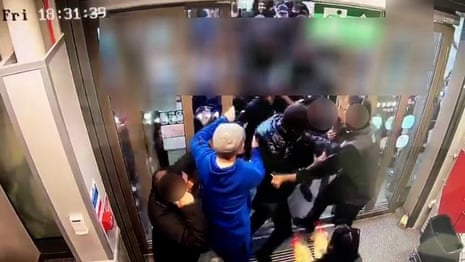
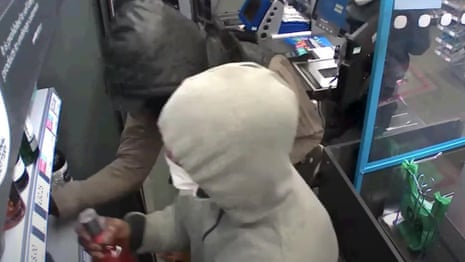
Paul Gerrard, the chain’s director of public affairs and a former customs officer, described some of the shoplifting as “organised looting”, saying gangs would climb over kiosks and brazenly empty shelves into rucksacks, construction bags and even wheelie bins.
“We’ve had people come in with trolleys that they fill up with product and walk out. This is akin to organised looting on the high streets of the UK,” he said.
“I think there’s a real danger that businesses – I don’t just mean a couple, I mean all businesses – will look at some shops and think that is not commercially viable, because we’re spending so much to keep colleagues safe, to try to keep the product safe, that actually, whatever profit that we do make is being spent on that.”
The rise in shoplifting comes amid a cost of living crisis – and poverty campaigners say some theft is born of desperation.
Earlier this week, Laurence Guinness, the chief executive of the Childhood Trust, told the Big Issue: “I have spoken to many children, some as young as seven, who have resorted to taking food from shops because they are hungry.”
But supermarket bosses and retail experts claim the organised criminal gangs are also taking advantage of threadbare policing.
Some of them have Facebook groups saying ‘I’m off to Matalan, what do you want?’
David, Co-op manager, Leeds
Earlier this week Dame Sharon White, the chair of John Lewis Partnership (JLP), which owns John Lewis and Waitrose, described shoplifting in the UK as an “epidemic”. Writing in the Telegraph on Sunday, she said high streets in some areas had already become “shells of their former selves”.
Shop thefts have more than doubled in the past three years, reaching 8m in 2022 and costing retailers £953m, according to the British Retail Consortium (BRC). The trend has not been limited to Co-op or larger supermarkets. The Association of Convenience Stores (ACS), the voice of more than 33,500 shops, said it has recorded its highest-ever levels of shoplifting over the last year, with 1.1m incidents reported to the police.
In Cambridge, Ronnie, a convenience store owner, said in the last week alone shoplifters had stolen five £7.99 steaks, 15 packets of chicken and lamb, 25 chocolate bars and fruit chews, 15 cans of energy drink and six bottles of wine. The 38-year-old said shoplifters terrorised his small business every other day, costing him about £300 a week.
“There’s not enough powers for us to stop them so it’s an ongoing battle,” he said. “We have a business to run, and if everyone starts stealing, then we won’t be profitable to survive and then there won’t be a shop in the community.”
He said his staff were faced with abuse “day in, day out”, especially if they confronted shoplifters. The BRC reported that more than 850 incidents of violence or abuse against staff were recorded each day, while the ACS said 87% of convenience store workers had experienced verbal abuse over the past year.
Co-op has claimed that even when staff apprehend shoplifters, officers attend only 20% of incidents. According to an FoI request submitted by the chain, which has a portfolio of more than 2,000 stores, some forces do not respond to almost nine out of 10 serious incidents.
The company said it had been forced to spend more than £200m to counter criminal behaviour, with measures such as body-worn cameras and headsets for staff and “dummy” packaging for items such as £6 boxes of Ferrero Rocher chocolates and £6 jars of Kenco coffee to deter thieves from looting or “bulk-shoplifting”.
It has also hired undercover guards, often former police officers, who can detain shoplifters until police arrive. But Gerrard often feels their efforts are in vain because officers don’t always attend.
“We then have to let the shoplifters go, which actually is worse than intervening in the first place because that means they know, and they’ll tell all their mates, that even if they catch you the police don’t turn out. The point here is that the risk for an offender is minimal,” he said.
“You tell colleagues not to intervene because we know that’s a trigger for violence and abuse. Some of these stores are now becoming… not commercially viable.”skip past newsletter promotion
Sign up to First Edition
Free daily newsletter
Our morning email breaks down the key stories of the day, telling you what’s happening and why it matters
Enter your email address
Marketing preferences
Get updates about our journalism and ways to support and enjoy our work.Sign up
https://www.google.com/recaptcha/api2/anchor?ar=1&k=6Le7mFsrAAAAAD07aRCTHZe9u0EfvOiNe8Y0DMMV&co=aHR0cHM6Ly93d3cudGhlZ3VhcmRpYW4uY29tOjQ0Mw..&hl=vi&type=image&v=PoyoqOPhxBO7pBk68S4YbpHZ&theme=light&size=invisible&badge=bottomright&anchor-ms=20000&execute-ms=30000&cb=x9tuea3amuymPrivacy Notice: Newsletters may contain information about charities, online ads, and content funded by outside parties. If you do not have an account, we will create a guest account for you on theguardian.com to send you this newsletter. You can complete full registration at any time. For more information about how we use your data see our Privacy Policy. We use Google reCaptcha to protect our website and the Google Privacy Policy and Terms of Service apply.
after newsletter promotion
Gerrard said one store in London had been hit two or three times a day by the same gang of three men, who come back as soon as stock is replenished. “When my colleague reported one of the incidents as it was happening, they were told by the police operator: ‘We won’t get there in time so in future just ring 101.’ And this is an armed robbery taking place because they had weapons.”
Lucy Brown, JLP’s director of security, said: “UK retailers spend around £1bn a year in lost stock, plus a further £700m a year in measures to prevent crime.
“Not only is that driving up prices for genuine customers, it’s money that’d be better spent on things like product innovation, or supporting British farmers and suppliers.
“Criminals will target items that are easy to conceal, and that are quick and easy to resell on the black market.”
For Waitrose, that included alcohol, meat, tobacco substitutes and health and beauty products such as razor blades and toothbrush heads, she said. At John Lewis, it was wearable tech, fragrances and branded fashion.
Gerrard said there had been a 41% rise in incidents in Co-op stores in the first eight months of this year, which he believed was linked to reselling.
“While individuals who are stealing are not stealing for their own consumption, they’re stealing for resale, I think it must be true that the cost of living crisis has created a bigger potential market to sell stolen goods into, in particular food goods.”
James Lowman, the chief executive of the ACS, described the levels of theft as “unprecedented” and said official crime figures “barely scratch the surface” due to underreporting.
Gerrard said goods were resold at car boot sales, pubs, clubs and even in other shops. He refused to elaborate but added: “That product that is being stolen from us and Tesco and others is being resold in both informal and formal settings.”
Back in Leeds, Co-op manager David, who has worked for the chain for 20 years, said he had witnessed shoplifters flogging goods in plain sight. “They will take that stock and go only 200 yards down the road, sit on a bench and start selling it. It’s blatant.”
In recent weeks, a gang of four men looted his store, with each offender ransacking a different aisle. “At that point, there’s nothing our teams can do, they feel powerless,” he said.
On that occasion, the men got away with 40 boxes of laundry detergent, 20 jars of coffee, and up to 35 steaks and packets of lamb and pork. A fourth man who climbed behind the kiosk grabbed 20 bottles of spirits. The police attended days later to review CCTV.
David said he felt protected by Co-op’s safety measures, but that there were days he felt frightened and demoralised by the police’s ineffectiveness against the gangs.
“They’re hitting us, they’re hitting Tesco, Sainsbury’s, John Lewis. Some of them have Facebook groups saying: ‘I’m off to Matalan today, what do you want?’ These people are dangerous, they’re a menace to society, but they also make the working experience for our colleagues just not very nice.”
Walmart’s Out-of-Control Crime Problem Is Driving Police Crazy
The retailer’s aggressive cost cutting has unintended consequences.
By Shannon Pettypiece and David Voreacos | August 17, 2016
Photographs by Johnathon Kelso for Bloomberg Businessweek
 Officer Ross: “I’ve got all my bad guys in one place.”
Darrell Ross—Officer Walmart to his colleagues in the Tulsa Police Department—operates for up to 10 hours a day out of the security office of a Walmart Supercenter in the city’s northeast corner. It’s a small, windowless space with six flatscreen monitors mounted on a pale blue cinder-block wall, and on this hot summer day, the room is packed. Four Walmart employees watch the monitors, which toggle among the dozens of cameras covering the store and parking lot, while doing paperwork and snacking on Cheez Whiz and Club Crackers. In a corner of the room, an off-duty sheriff’s officer, hired by Walmart, makes small talk with the employees.
As soon as Ross walks in the door, around 2 p.m., he’s presented with an 18-year-old who tried to leave the store with a microwave oven. Ross focuses his gaze and talks in a low voice to the young man, who just graduated from high school and plans to go into the military. He also attempts to calm the boy’s mother, who rushed to the store and is worried that her son won’t be able to enlist if he gets a criminal record. “You need to start taking responsibility for your actions,” Ross tells the teenager. “You’re a man now.” He tells the mother that because it was the boy’s first offense, he won’t be arrested—but if he messes up twice more, he’ll be charged with a felony. Ross slips a pair of reading glasses out of his bulletproof vest and writes the young man a summons to appear in court.

Before he can finish the paperwork, Walmart security employees catch another shoplifter. They bring in a middle-aged woman with big sunken eyes and pale cheeks, her hair tied in a messy bun. Employees caught her using phony gift cards. She rattles off excuses: The cards were given to her by a friend, she’s just gotten out of the hospital, she’s dehydrated. At one point she pretends to vomit into a trash can. Picking up the odor of pot, Ross takes a look in her handbag and finds marijuana roaches, along with a small scale and a pill bottle full of baggies. A computer check reveals five outstanding warrants for her arrest.
It’s not unusual for the department to send a van to transport all the criminals Ross arrests at this Walmart. The call log on the store stretches 126 pages, documenting more than 5,000 trips over the past five years. Last year police were called to the store and three other Tulsa Walmarts just under 2,000 times. By comparison, they were called to the city’s four Target stores about 300 times. Most of the calls to the northeast Supercenter were for shoplifting, but there’s no shortage of more serious crimes, including five armed robberies so far this year, a murder suspect who killed himself with a gunshot to the head in the parking lot last year, and, in 2014, a group of men who got into a parking lot shootout that killed one and seriously injured two others.
Police reports from dozens of stores suggest the number of petty crimes committed on Walmart properties nationwide this year will be in the hundreds of thousands. But people dashing out the door with merchandise is the least troubling part of Walmart’s crime problem. More than 200 violent crimes, including attempted kidnappings and multiple stabbings, shootings, and murders, have occurred at the nation’s 4,500 Walmarts this year, or about one a day, according to an analysis of media reports. Sometimes they’re spectacular enough to get national attention. In June, a SWAT team killed a hostage taker at a Walmart in Amarillo, Texas. In July, three Walmart employees in Florida were charged with manslaughter after a shoplifter they chased and pinned down died of asphyxia. Other crimes are just bizarre. On Aug. 8, police discovered a meth lab inside a 6-foot-high drainage pipe under a Walmart parking lot in Amherst, N.Y.
“It’s ridiculous—we are talking about the biggest retailer in the world. I may have half my squad there for hours”
All this is still happening more than a year into a corporate campaign to bring down crime—a campaign Walmart says is succeeding. Chief Executive Officer Doug McMillon, who took charge of the giant retailer in February 2014, has made reducing crime a top priority. The company’s new strategy primarily involves shifting employees within stores—moving them from the storeroom and aisles to store exits, where some of them spot-check receipts. It’s also stationing people at self-checkout areas, installing eye-level security cameras in high-theft areas (particularly electronics and cosmetics departments), and using data analytics to detect when people try to get credit for things they didn’t buy (thieves love to find discarded receipts in the parking lot, then go into the store, gather up items on the list, and “return” them for cash). To cut down on calls to police, Walmart has been rolling out a program where first-time offenders caught stealing merchandise below a certain value can avoid arrest if they agree to go through a theft-prevention program. At some higher-crime stores, the company is also hiring off-duty police and private security officers. According to Walmart Stores executives, it’s all starting to work.
Police chiefs and their officers on the ground say that’s just not so. Ross likes to joke that the concentration of crime at Walmart makes his job easier. “I’ve got all my bad guys in one place,” he says, flashing a bright smile. His squad’s sergeant, Robert Rohloff, a 34-year police veteran who has to worry about staffing, budgets, and patrolling the busiest commercial district in Tulsa, says there’s nothing funny about Walmart’s impact on public safety. He can’t believe, he says, that a multibillion-dollar corporation isn’t doing more to stop crime. Instead, he says, it offloads the job to the police at taxpayers’ expense. “It’s ridiculous—we are talking about the biggest retailer in the world,” says Rohloff. “I may have half my squad there for hours.”

Walmart knows police departments are frustrated. “We absolutely understand how important this is. It is important for our associates, it is important for our customers and across the communities we serve,” says Judith McKenna, Walmart’s chief operating officer for the U.S. “We can do better.”
But when? That’s what law enforcement around the country wants to know. “The constant calls from Walmart are just draining,” says Bill Ferguson, a police captain in Port Richey, Fla. “They recognize the problem and refuse to do anything about it.”
There’s nothing inevitable about the level of crime at Walmart. It’s the direct, if unintended, result of corporate policy. Beginning as far back as 2000, when former CEO Lee Scott took over, an aggressive cost-cutting crusade led many stores to deteriorate. The famed greeters were removed, taking away a deterrent to theft at the porous entrances and exits. Self-checkout scanners replaced many cashiers. Walmart added stores faster than it hired employees. The company has one worker for every 524 square feet of retail space, a 19 percent increase in space per employee from a decade ago.
In terms of profit, all this has worked: Sales per employee in the U.S. have grown 23 percent in the past decade, to $236,804. For criminals, however, the cutbacks were like sending out a message that no one at Walmart cared, no one was watching, and no one was likely to catch you.
Fixing the problem comes down to money. When McMillon became CEO, he established an ambitious program to fix up long-neglected stores, starting with making them cleaner and stocking them better. Then, in early 2015, came a push to crack down on shoplifting. Experts say that should have additional public safety benefits: Less petty crime typically means less violent crime.

Police departments inevitably compare their local Walmarts with Target stores. Target, Walmart’s largest competitor, is a different kind of retail business, with mostly smaller stores that tend to be located in somewhat more affluent neighborhoods. But there are other reasons Targets have less crime. Unlike most Walmarts, they’re not open 24 hours a day. Nor do they allow people to camp overnight in their parking lots, as Walmarts do. Like Walmart, Target relies heavily on video surveillance, but it employs sophisticated software that can alert the store security office when shoppers spend too much time in front of merchandise or linger for long periods outside after closing time. The biggest difference, police say, is simply that Targets have more staff visible in stores.
“Target doesn’t have these problems,” says Ferguson. “Part of it may be the lower prices at Walmart or where Walmart is located, but when I walk into Target I see uniformed security or someone walking around up front. You see no one at Walmart. It just seems like an easy target.” A Target spokeswoman declined to comment on the two companies’ security policies.
A more apt comparison may be shopping centers, which like Walmarts are sprawling and attract thousands of shoppers a day. Unlike Walmart, shopping centers tend to invest heavily in uniformed security patrols and off-duty police. “Shopping centers all have security; they know it’s an expense, but one they know pays dividends because people feel safer going to their stores,” says J.R. Roberts, an independent consultant and a former director for risk management at Valor Security Services, a provider of security to shopping centers. “It doesn’t make any sense why Walmart wouldn’t apply this the way every mall does in the U.S.”
“They simply lack the retail business background to understand how important security is”
Walmart developed its current anticrime measures with the help of Read Hayes, director of the Loss Prevention Research Council, a kind of think tank funded by big retailers. Hayes’s specialty is the shopping environment, the retail aisles; he’s now searching, he says, for the right mix of new electronic surveillance and visual cues to tell would-be thieves they might get caught. “They need to recognize it, believe it, and be threatened by it,” he says. “My mantra is: See it, get it, fear it.”
Hayes says Walmart is serious about bringing down crime. “They aren’t ignoring it,” he says. “They are right in the thick of it. But it’s a titanic company. It’s going to take a while. Go hang out in a Walmart. It’s just amazing. Sometimes, what happens in a store like a Walmart can be scary.”
No one disputes that. The question is whether Walmart is moving as fast as it can. Its executives “could clean it up in a matter of a year were they to be given the financial support from the board,” says Burt Flickinger, managing director of retailing consultant Strategic Resource Group. Eight of the nine nonfamily members of the Walmart board come from academia or nonretail companies, including former PepsiCo CEO Steven Reinemund and Yahoo! CEO Marissa Mayer. Three officers are members of the Walton family, including the chairman of the board, Gregory Penner, a venture capitalist who is the son-in-law of fellow board member Rob Walton, a son of Walmart founder Sam Walton. “The board doesn’t want profits to fall,” says Flickinger. “They simply lack the retail business background to understand how important security is.”
No board member agreed to be interviewed for this story, but the company disputes that it puts profit before people. “Safety and security is a priority of our leadership team,” says McKenna. She says the company has the right level of security at its stores and is always evaluating its strategy and staffing.
Flickinger says getting dramatic results wouldn’t be complicated. It would just cost a lot. He, like many other Walmart watchers, thinks McMillon is heading in the right direction with the changes he’s making, including spending $2.7 billion on higher wages and training to boost morale and attract higher-caliber employees. It just isn’t nearly enough, he says. He estimates the number of crimes at Walmart’s U.S. stores could be halved with the addition of 250,000 part-time employees on top of the more than 1 million full-time and part-time retail workers the company already has. Even that much new hiring wouldn’t get the company to the number of employees per square foot it had in 2006. The cost would be about $3.25 billion a year, or about a quarter of Walmart’s profit last year of $14 billion.
Flickinger argues that Walmart can’t afford not to invest heavily to expand its workforce if it wants cleaner, more orderly, better-performing, and ultimately safer stores. “It pays for itself,” he says. “To get back to that high-performing level of the late 1990s, it’s going to take a lot more money.” Walmart rejects this view, saying it has all the workers it needs and merely has to better train them and continue redeploying workers according to its plan.
Security experts say there’s another way to reduce crime: Hire much more security, including more off-duty, uniformed police. At $35 an hour, a typical rate in many cities, 12 hours of police coverage a day would cost each store about $150,000 a year. Multiply that by the company’s 3,500 Supercenters—the largest stores and the sites of most of the serious crime—and it would cost half a billion dollars a year.
Walmart decides on the security budget for each store based in part on a database of how much crime happens on its properties. The company doesn’t share those figures. It also works with an outside data analysis company, Cap Index, which assigns each store a risk score, based on a determination of the likelihood of different types of crimes occurring there. The index relies on data including neighborhood demographics, local housing values, national and local crime statistics, and internal company records of theft. These scores range from zero to 2,000, with 100 being the average for a given county or state. A score of 1,000, for instance, would mean a crime is 10 times more likely to occur at a particular store than at a statistically typical address in that county or state. Walmart says it performs regular crime audits of its security measures and adjusts spending for each store. It won’t reveal the risk score for any individual store.
According to laws in every state in the U.S., Walmart has a duty to protect its customers from violent crime while they’re on store property. Under an area of the law known as premise liability, victims and their lawyers have argued in hundreds of lawsuits that Walmart failed to provide enough security. To prevail, plaintiffs must prove that a violent crime was reasonably foreseeable based on a history of violent crimes at a particular Walmart. “They’re not easy cases,” says Memphis attorney Bruce Kramer, who has sued Walmart multiple times on behalf of clients who were the victims of violent crimes occurring on company property. “Proving what the duty is and the foreseeability issue is always difficult. You have a certain mindset of jurors who say, ‘Why are you holding the business responsible for the acts of this criminal?’ ”
Walmart’s lawyers typically argue that the company couldn’t have foreseen the crime in question and that it took reasonable steps to keep customers safe. It tries at every opportunity to keep its crime database secret. Even in litigation, when it must produce company records under court seal, its lawyers have wrangled for months or even years to limit access to its records, arguing the information is proprietary. “Nothing compares to the way Walmart litigates cases,” says attorney Christopher Marlowe. He fought Walmart for several years over a lawsuit he filed in 2010 on behalf of a woman who was abducted outside a store in DeFuniak Springs, Fla., and repeatedly raped. Marlowe said in a court filing that he learned only in 2013 of the database, which documented “precisely the sort of incidents” he sought for more than two years. Walmart’s lawyer, he said, “led everyone to believe that crime data retrieval was a great mystery—a query of inconceivable proportions.” Walmart denied liability in the case. The company eventually settled for an undisclosed sum.

Dennis Buckley found a way to get Walmart moving faster on crime: shaming and threats. A blunt former fire chief, Buckley is the mayor of Beech Grove, Ind., an Indianapolis suburb with a population of 14,000. He’d been swamped with complaints from his police chief about the daily calls to Walmart. He demanded action from Walmart’s local lawyer, as did the City Council. Nothing happened. Then, in June of last year, Buckley reached his limit. He received news that a local woman had been killed and her grandson seriously injured in a car crash caused by a Walmart shoplifter fleeing police. Later that day, he learned his town had become a laughingstock. A YouTube video of a fight at the Beech Grove Walmart was going viral. It showed two women, one riding a motorized scooter, the other accompanied by a 6-year-old boy, in a furious fistfight that turned into a profane wrestling match in the shampoo aisle. The video also contained glimpses of jeering bystanders recording the action on their phones. By the time Buckley saw the video, it had been viewed millions of times.
Enraged by the circus atmosphere around the video, he denounced Walmart on Facebook and in the local media. “The Beech Grove Walmart is NOT a good corporate partner,” he posted. The YouTube video “was embarrassing to the City of Beech Grove and the people who live in our beautiful city. Walmart should be ashamed of itself once again for failing to control the people who enter their store.”
Regional Walmart executives asked for a meeting with Buckley and Craig Wiley, the city attorney. “You could tell by their body language that they came to the meeting with a very conciliatory tone, and they were going to get their arms around the problem,” Wiley says. Walmart promised to hire security and extend a fence on the rear of its property, which barred an easy exit for shoplifters into a retirement community. It said it would skip calling the cops for first-time offenders shoplifting merchandise valued below $50 if the shoplifter completes the company’s theft-prevention program.
Buckley was pleased. But in the weeks following the meeting, Walmart dragged its heels. Buckley went public again, this time appearing on national cable news. “Walmart Beech Grove is draining our police resources,” he told Fox Business Network. “It’s the string of terrible events that have been occurring down there over the past two months that have led me to instruct our police chief to declare the Walmart a public nuisance.”
That meant the threat of a $2,500 fine for every call to the police. Walmart now pays for off-duty police to man the store, and the pressure on the local police has eased. A year later, Buckley is pleased, but it still irks him that he had to go to such measures to get Walmart to act. “Cities really need to put their thumb down and get them to the table,” he says. “It’s taken a long time, but they can really be good partners if they want to be.”

The Tulsa Supercenter hasn’t had its happy ending. The store has seen several changes mandated by Walmart headquarters, including more visible security monitors, greeters at the doors, and changes to the self-checkout section, but Officer Ross says it’s business as usual. The mentality hasn’t changed; criminals still think of this store as theirs. And Ross knows the answers aren’t always simple. Three hours into his shift, security employees bring in a young woman who’d been wandering around the store with an older man. They’d spotted her slipping on a pair of $15 gray sneakers, then attempting to leave without paying. The woman, in capri leggings and a hoodie, is brought to Ross. She turns her head and reveals an enormous black eye on the left side of her face. Ross moves toward her, and she instinctively flinches—a telltale sign of domestic abuse, he later says. He tucks his hands inside his bulletproof vest and relaxes his broad shoulders, making himself seem a bit smaller, a bit less intimidating. “Is he the one who did this to you?” he asks, motioning to her eye. She knows who he’s talking about. She says yes, and her eyes well with tears.
The dingy office, filled with jokes and light banter seconds before, falls silent. This little corner of the giant store has turned into a counseling center. As mascara and tears streak down her red cheeks, the woman apologizes for stealing. She talks about how she’s been an alcoholic for most of her 29 years, how her three kids live with their dad because she knows she can’t care for them. She says her current partner beat her two days ago because she took her kids to the pool and had “too much fun.” She’s going to counseling for her alcoholism. She was planning to go cook dinner for her children at their father’s house after she left Walmart.
The woman with the phony gift cards and marijuana quietly tells her that she too was in an abusive relationship. They talk in murmurs. Ross writes the younger woman a summons to appear in court. It’s her first offense. She walks out with no shoes, because no one can find the ones she left in the shoe department. That’s all right, she says, “I can deal with it.” As she leaves, Ross worries her abuser is waiting for her in the parking lot.
Later that day, after the sun has set and the air has cooled, the store grows quiet. In the parking lot, a private security SUV with a flashing yellow light on top sits near the exit. Driving the car is a small, elderly man whose tufts of gray hair are barely visible over the steering wheel. Private security jobs like this tend to go for $10 an hour in Tulsa. The “T” on the Walmart sign has burnt out. Stray cats scrounge around. In the far reaches of the lot, people hunker down in their campers, vans, and U-Hauls for the night. It’s nearly midnight in Tulsa, and for a few hours it looks like the local cops may get a break from Walmart.
