



Why You Shouldn’t Get Legal Advice from TikTok and Social Media
By: Attorney Lindy Laurence
In today’s digital age, accessing information through social media platforms like TikTok, Instagram, and Facebook is incredibly easy. However, relying on these platforms for legal advice can have serious consequences. In this blog post, we discuss the risks of getting and taking legal advice from TikTok, social media, and other unverified sources.
TikTok and the amplification of fraud
TikTok has been known to amplify various trends, from dance challenges to celebrity reactions. However, it has also played a role in promoting tax fraud which is definitely not as fun as the “Floss Dance”. This summer, users posted videos on how to (illegally) claim tax refunds from the Australian government, and the idea quickly gained traction.
This scheme resulted in the largest tax fraud in Australian history, and its simplicity is alarming. Individuals registered for an Australian Business Number, similar to a US EIN, and used it to claim goods and services tax refunds through a government portal. The Australian Tax Office astonishingly disbursed A$4.6 billion ($2.97 billion) in fraudulent refunds to 56,000 claimants, each receiving around A$50,000.
The method of dissemination becomes almost irrelevant when the fraud is as straightforward as filling out a form and clicking “submit”. Although TikTok served as the platform, any social media post would have sufficed.
Part of the blame lies with influencers who spread the misinformation and assured followers that the worst-case scenario would be repaying the government, effectively framing the fraud as a short-term loan opportunity. However, most of the blame falls on the Australian Tax Office for its lack of oversight. The scheme was so simple that many claimants didn’t realize their actions were fraudulent.
US business owners are also vulnerable to scams
Business owners in the United States are similarly vulnerable to scams and bad advice. Take, for example, the massive fraud that surrounds the Employee Retention Tax Credit. The Employee Retention Credit (ERC) is a refundable tax credit designed to encourage companies to keep employees on their payroll. The relief was passed as part of the CARES Act in 2020 to help US businesses and employees stay afloat during the pandemic. But there has been a boom of third-party companies creating aggressive marketing campaigns to con taxpayers into claiming relief they don’t qualify for.
The IRS has received over 3.6 million claims since the program started, and is evaluating hundreds of criminal cases related to the credit. While these investigations and audits may seem drastic, these measures by the IRS are necessary to protect small businesses from the deceptive practices of credit mills (before things get too far out of hand, like in Australia). By implementing stricter regulations and taking action against fraudsters, the IRS aims to safeguard the integrity of the employee retention tax credit program and ensure that it benefits those who genuinely qualify for it.
Here are 5 reasons why you shouldn’t get legal advice from TikTok and social media:
- They are not your lawyer or tax professional. If a person on the internet proposes a suggestion for a business, the person speaking doesn’t have access to your business documents or accounting, so they don’t know your specific situation. Without a one-on-one consultation between you and a professional, the things they suggest should not be taken as specific advice.
- They might not actually be a professional.One of the major risks associated with seeking legal advice on TikTok and social media is the lack of expertise and qualifications of those providing the information. Unlike lawyers who undergo years of rigorous education and training, influencers on these platforms may not possess the necessary knowledge or credentials to provide accurate legal advice. Relying on their advice can lead to misinformation, misunderstandings, and potential legal troubles.
- They are oversimplifying complex situations. Legal issues are often complex, and their analysis requires a deep understanding of the law. However, due to the limited time constraints of social media platforms, advice given in these spaces tends to oversimplify legal matters. Complex legal problems cannot be adequately addressed in short video clips. Since everyone’s legal situation is different, attempting to navigate a unique and intricate legal scenario based on oversimplified advice can jeopardize your business and potentially have irreversible consequences.
- They may not live in your jurisdiction, so different laws may apply to you. Another danger of obtaining legal advice from unverified sources is the inconsistency and misinterpretation of laws. Every jurisdiction has its own set of laws and regulations, and what may apply in one region may not be applicable elsewhere. Unreliable sources might generalize or misconstrue legal principles, leading you astray and causing unnecessary complications in your situation.
- They cannot be held responsible for what happens if it goes poorly.Seeking legal advice from untrustworthy sources can also have ethical implications. Lawyers adhere to a code of ethics that includes maintaining client confidentiality, avoiding conflicts of interest, and providing competent representation. Unverified individuals on social media may not uphold these ethical standards, potentially exposing your private information or misleading you for personal gain. Unfortunately, individuals on TikTok and social media who dispense legal guidance often operate outside the boundaries of accountability. If their advice leads to negative consequences, it is virtually impossible to hold them responsible.
Conclusion
While social media platforms like TikTok offer entertainment and connection, don’t rely upon them as a source for legal advice. Instead, it is essential to consult with licensed attorneys who specialize in small business and tax law, like those of us at Rational Unicorn! Our expertise, qualifications, and accountability will ensure that you receive accurate and targeted advice, and can take action to protect yourself from potential legal pitfalls. At Rational Unicorn, we may not be the best dancers, but we do spotlight real legal experts who provide reliable and trustworthy guidance that is based on your unique and individual situation. Reach out today and connect with us!
Why You Shouldn’t Get Legal Advice from TikTok

Lately, it seems like you can learn anything on TikTok. It’s easy to find new recipes for the holidays, throwback millennial dance trends, and… reliable legal advice? On #LawyerTok, attorneys are telling stories, explaining legal “loopholes”, and even giving out tips on how to deal with law enforcement. We looked into this trend to see if you should trust the legal advice you find online.
Legal Guidance vs. Legal Advice
Did you know that there is a difference between receiving legal guidance and receiving legal advice?
To put it simply, legal guidance tells you what you could do, but legal advice tells you what you should do.
The ethical guidelines for practicing lawyers are clear, and they must provide information that is current and accurate to potential clients. So when an attorney agrees to give legal advice, they establish an attorney-client relationship. That allows them to discuss the specifics of a situation and give the best possible recommendation for your needs.
On TikTok, though, lawyers can only provide legal guidance. This means they can explain what the law is and how it is enforced, but not how you should act in your situation. Importantly, they are not responsible for the decisions you make based on that information.
What’s Funny Isn’t Always What’s True
The most popular videos on TikTok might seem over-the-top, but with lawyers, that’s for good reason. The same set of rules that dictates how an attorney talks to their future clients also dictates how they can talk about former clients. This means most of these content creators have to make “adjustments” to the story details that protect the identity of their clients — and the integrity of their practice.
Does this mean every video is a lie? Of course not!
We scrolled through video after video, and the truth is that plenty of #LawyerTikTok stories are educational and reveal facts about local ordinances that may surprise you. But when a story sounds too good to be true, it probably is. When it’s time to get specific about your case, it’s a good idea to log off and ask an expert.
Know Your Civil Rights
It’s important to understand your civil rights, so you can be empowered before a potentially challenging situation arises. With a mobile app like TurnSignl, users have access to live legal guidance for encounters while driving, like a traffic stop or after an auto accident.
However, anyone can learn more about their civil rights by reading through local rules & regulations, available in the app and widely available from other online resources like the ACLU and Know Your Rights Camp.
Being empowered and knowing your rights is the easiest way to achieve the best possible outcome in any legal situation. For an attorney in your passenger seat every time you hit the road, download the TurnSignl app today on iOS or Android.
‘TikTok lawyers’: Officials warn of false legal advice causing an alarming trend
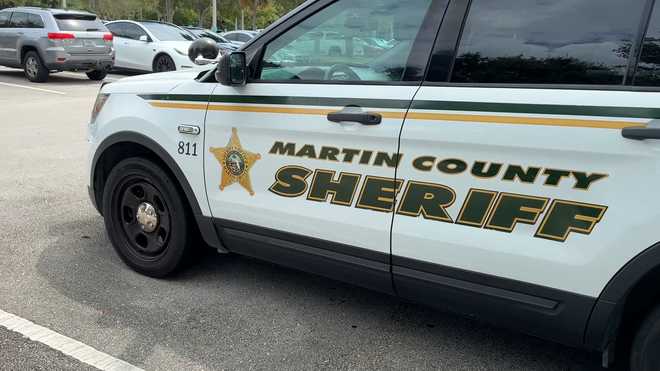
The Martin County Sheriff’s Office is seeing what it fears is becoming an alarming trend, and social media could be to blame.

Play Video

Updated: 5:25 PM EDT Sep 3, 2025
MARTIN COUNTY, Fla. —
The Martin County Sheriff’s Office is seeing what it fears is becoming an alarming trend, and social media could be to blame.
Martin County Sheriff John Budensiek said his deputies encounter people every week who refuse to comply with them during traffic stops.
He said the stops would normally be a verbal warning or a traffic citation, but instead end in an arrest.

Hearst OwnedCourtesy: Martin County Sheriff’s Office
The MCSO shared bodycam video with WPBF 25 News showing a recent traffic stop. Deputies were attempting to pull over a vehicle for having illegal blue lighting on the wheels and undercarriage of the vehicle when they watched the driver and passenger get out and switch places.
The deputies began questioning the driver and passenger before both were asked to get out of the vehicle. However, the video shows the driver repeatedly asking the deputy if he has probable cause and refusing to comply before he was eventually arrested.
Budensiek said the video is just one of many recent examples of drivers not knowing the law and refusing to comply with deputies based on what they think are their rights.
“These individuals are acting as if they are their own lawyers. They don’t understand the law, they don’t understand what they can and can’t do, and so they spend time debating our deputies on the side of the road, and in many cases, they’re getting themselves arrested,” Budensiek said.
He said he worries social media might be the reason, citing videos where someone claims to be a lawyer, advises people on their rights during a traffic stop, or people videoing themselves being pulled over and arguing with law enforcement about their rights.
“It’s bad advice. These are just antagonists that are trying to get clicks on TikTok. They’re accomplishing nothing except providing unnecessary drama for deputies,” he said.
Budensiek said they see this happening with all types of traffic stops, including when a deputy asks the driver for their license, proof of insurance and registration.
“We see deputies going back and forth to these individuals. Well, why do you want this? What was your probable cause for pulling? They’ve already explained that, and rehashing that doesn’t help,” he said.
Hearst Owned
In some cases, where other factors are involved, he said these back-and-forths have become even more common.
“They smell marijuana, the individual doesn’t have a driver’s license, last night’s case, the driver switched places with the passenger, so they’re doing a little bit more of an investigation than just issuing a traffic citation and letting you go,” Budensiek explained.
He said deputies have the right to investigate.
“They have probable cause to investigate beyond the traffic stop, and that’s where we’re seeing a lot of issues where people don’t want to comply. They feel like they can just argue and then mysteriously that the traffic stop is going to end, or they’re going to bully our deputies out of doing their job. That’s not going to happen here in Martin County,” he said.
Unlike an arrest, search, or obtaining a warrant, when it comes to asking someone to get out of their vehicle, Budensiek said deputies don’t need probable cause.
“The deputy needs a lawful reason to ask you to step out of your car, but that’s pretty easy to articulate. If they’re standing along a roadway with lots of traffic, if they can’t see into your car, or they feel like their own life is in jeopardy, they can ask you to stand out of your car,” he said.
Budensiek said it’s not worth arguing about.
He said what might start as a normal traffic stop can land someone in jail for refusing to comply.
“The deputy is not going to stand there for 10 minutes and argue with you. They’re going to ask you to do something lawful. You’re going to comply or you’re not. If you don’t comply, you’re going to go to jail,” he added.
Not only does he say these arguments are taxing for deputies, but Budensiek also notes that traffic stops are already stressful and dangerous for them.
“If you look at law enforcement trends, law enforcement shootings specifically during traffic stops, you’ll see oftentimes these back-and-forth arguments and the offender at that point is just buying time, trying to figure out what they’re going to do and how they can best assault the officer,” Budensiek said.

Hearst OwnedCourtesy: Martin County Sheriff’s Office
He said deputies risk their lives during these traffic stops.
“Our deputies are not going to stand there, they don’t know who you are, they’re not going to stand there and have that debate with you and jeopardize their personal safety and our public safety because somebody doesn’t want to follow the law,” he told WPBF.
Budensiek said the best thing to do when pulled over is to comply and not rely on information seen on social media.
“Yes, it might not be the best thing, getting a citation or getting the warning, but the deputies are out there doing what we’ve asked them to do, enforcing the law and keeping our public safe,” he said.
If the person being pulled over feels as though the deputy violated their rights, Budensiek said that person has every right to later file a complaint or take legal action.
“Our deputies are not out there shooting from the hip or playing fast and loose. They know the law, they’re following the law to the best of their ability, and they’re doing it in order to keep you safe and to keep our county safe,” Budensiek said.
Under federal law (Pennsylvania v. Mimms (1977)), law enforcement, during a lawful traffic stop, can order a driver out of their vehicle as a reasonable safety measure without needing additional suspicion of criminal activity.
The Supreme Court later ruled that law enforcement can also order passengers out of a vehicle during a lawful traffic stop to ensure officer safety and control the scene.
