Arrest wiped from record after AI leads police to wrong suspect in Lee County
LEE COUNTY, Fla. —
A wrongful arrest has now been wiped from a Lee County man’s record.
Gulf Coast News first exposed the injustice months ago.
The arrest happened after artificial intelligence facial recognition led police to the wrong suspect.
“They say in life, everything happens for a reason. I can’t for the life of me figure out this one,” Robert Dillon, the man wrongfully arrested, told Gulf Coast News earlier this year.
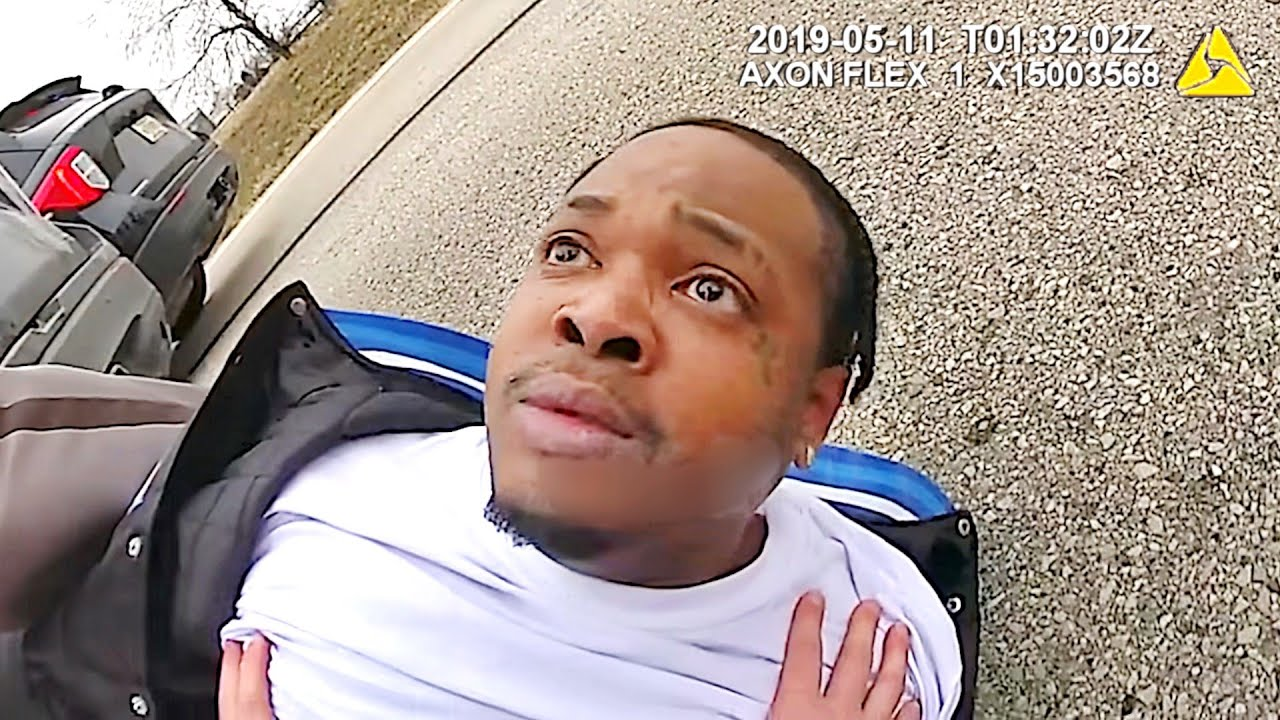
WRONGFUL ARREST CAPTURED ON BODY CAMERA: ‘HOW DID THIS HAPPEN?’
One year ago, right outside his home in San Carlos Park, Dillon was arrested for a crime he never committed. His stunned reaction was captured on the body camera of the deputy who’d knocked on his door.
“I’m thinking, ‘How in the hell did this happen. How did this happen?'” Dillon recalled.
Dillon was accused of trying to lure a child at a fast-food restaurant more than 300 miles away in Jacksonville Beach.
Investigators there submitted restaurant surveillance photos of the suspect to an AI-assisted facial recognition program, which identified Dillon as a 93% match.
Beyond that, and a witness who picked his photo out of a lineup, there was no evidence tying him to it.
As Dillon first explained months ago, he’s never been to Jacksonville Beach.
“Out of the blue. They pick some guy that lives six and a half hours away and says, ‘This is you.’ It blew my mind,” Dillon said earlier this year.
CASE DROPPED, ARREST WIPED FROM RECORD
Once Dillon and his attorney provided evidence to show that he did not commit the crime, the state attorney’s office in Jacksonville dropped the case.
When Gulf Coast News first reported on it, a spokesman for the state attorney’s office said they were submitting paperwork to the Florida Department of Law Enforcement for the case to be stricken from Dillon’s record.
Now, the spokesman confirmed Dillon is no longer in their system. His arrest mugshot — and his case file — are nowhere to be found online.
OTHER WRONGFUL ARRESTS AFTER POLICE USED A.I.
“This is a technology that’s really dangerous, because it often gets it wrong. But police often treat it like it has to be right,” Nate Wessler said of facial recognition programs.
Wessler is an attorney with the American Civil Liberties Union. He focuses on government and police use of new technology, like the facial recognition in Dillon’s case.
“Now that we know about it, we want to dig deeper,” Wessler said of the case. “This is a real miscarriage of justice. And it’s the latest in a series of wrongful arrests we know of around the country after police relied on incorrect results from face recognition technology.”
In 2020, Robert Williams was wrongfully arrested in front of his home by Detroit police. His wife and two daughters watched it happen.
“I can’t really put it into words. It was one of the most shocking things I’ve ever had happen to me,” Williams said in an interview with the ACLU after his arrest.
A surveillance photo of a man stealing from a watch store was run through face recognition technology by investigators and identified Williams — who was nowhere near the store at time — as a possible match.
Wessler was part of the legal team that sued the city of Detroit on Williams’ behalf.
“The way to avoid this kind of travesty of justice is to either take this technology out of the hands of police, or lock it down really seriously with a set of policies and restrictions,” Wessler said.
DETROIT PD CHANGES POLICY AFTER WRONGFUL ARREST
Williams’ lawsuit led to a settlement, which included not only a payout for him but also sparked a policy change within the Detroit PD.
In Williams’ case, much like Robert Dillon’s, police relied on two pieces of evidence: the face recognition match and someone picking his photo out of a lineup.
Now, in Detroit, more evidence is required to make an arrest.
“When you go straight from a face recognition result right to a photo lineup, there’s a high, high likelihood of tainting the reliability of that lineup,” Wessler explained. “You’re going to populate it with an innocent lookalike, plus five people who don’t look much like the suspect. And now you’ve just created this totally suggestible situation, where even a well-meaning witness is going to be tricked.”
MONTHS LATER, ROBERT DILLON STILL HOPES TO GET JUSTICE
Robert Dillon is relieved the arrest is off his record, but he wants to file a lawsuit to fight back against the injustice.
After all, he said he can never get back the sleepless nights wondering if he’d serve time for a crime he never committed.
“You cannot wrongfully imprison somebody. No matter who you are. Everybody’s got rights,” Dillon said.
Gulf Coast News reached out to the Jacksonville Beach Police Department again, but they still refuse to answer any questions about their investigation.
DOWNLOAD the free Gulf Coast News app for your latest news and alerts on breaking news, weather, sports, entertainment, and more on your phone or tablet. And check out the Very Local Gulf Coast app to stream news, entertainment and original programming on your TV.
A license plate camera got it wrong. Police arrested the father instead
A Redmond father was handcuffed in his driveway after a Flock license plate camera linked his car to his son’s felony warrant. He says the system flawed.
- Next up in 5Debris flow devastates town of Stehekin
- REVEALED: Three Ways Purdue Boilermakers ACHIEVE National Title—Is Season TITLE or BUST?
Author: Sharon Yoo
REDMOND, Wash. — Redmond police officers surrounded the home of Thor Andrews Sr. on an August afternoon, moving quickly toward him in his driveway before placing him in handcuffs. Drone footage captured by the department shows the encounter lasting only seconds before Andrews is restrained.
But officers had the wrong man.
According to police records, the arrest stemmed from an alert generated by a Flock Safety license plate reader nearby in Redmond. The system had flagged Andrews’s silver 2012 Ford Fusion as being “associated” with his son, who shares his name and was wanted on a felony warrant.
The vehicle, however, is registered to Andrews Senior, not his son. And records show Redmond police were aware of that detail.
“They hurt my shoulder, hurt my elbow, my wrists,” Andrews said in an interview. “I was explaining to them: you have the wrong person.”
Flock cameras, which scan plates and cross-reference them with database information, have been adopted by dozens of law enforcement agencies across Washington. Redmond city council installed them several years back in the hopes of reducing the number of stolen vehicles making their way through the city.
After his arrest, Andrews said he became uneasy driving his own car, worried another automated alert could send officers to his door. “I’m really distraught about even driving this vehicle and wondering who is going to show up,” he said. “It’s uneasy, to tell you the truth.”
Redmond police said in a written statement that officers acted on information provided by Flock and detained Andrews briefly while they worked to confirm his identity. Once they determined the warrant belonged to his son, they released him. The department said Andrews became agitated during the encounter and continued yelling at officers.
Concerns about the accuracy, security and sharing of data from Flock systems have been growing in cities across the country. On Tuesday, the Redmond City Council officially voted to temporarily disable all Flock cameras while it reconsiders the city’s contract. On Nov. 4, City Council asked asked Redmond PD to take Flock cameras offline. Council members cited data breach risks, questions about how information may be accessed by federal immigration agencies and what they described as a growing trust deficit with the vendor.
“The vendor has not proven trustworthy in areas around the country,” Council Member Melissa Stuart said during the public meeting. “And it does not have the trust of the community.”
For Andrews, the issue goes beyond a mistaken arrest. He worries about what could happen if another automated alert misidentifies him, especially if he is with family.
“What if my grandson had been in the vehicle,” he said, “and they thought I was reaching for something, still thinking I was Thor Jr.? It could have gone a very different way.”
Redmond City Council plans to discuss the future of Flock in its city in further detail next on Nov. 18.