The Police Dog Who Cried Drugs at Every Traffic Stop
Cops laugh about “probable cause on four legs” but the damage to innocent lives is real.
Share on FacebookShare on XShare on RedditShare by emailPrint friendly versionCopy page URL Add Reason to Google
Don’t blame Karma. The police dog simply followed his training when he helped local agencies impound vehicles that sometimes belonged to innocent motorists in Republic, Washington, an old mining town near the Canadian border.
As a drug detection dog, Karma kept his nose down and treated every suspect the same. Public records show that from the time he arrived in Republic in January 2018 until his handler took a leave of absence to campaign for public office in 2020, Karma gave an “alert” indicating the presence of drugs 100 percent of the time during roadside sniffs outside vehicles.
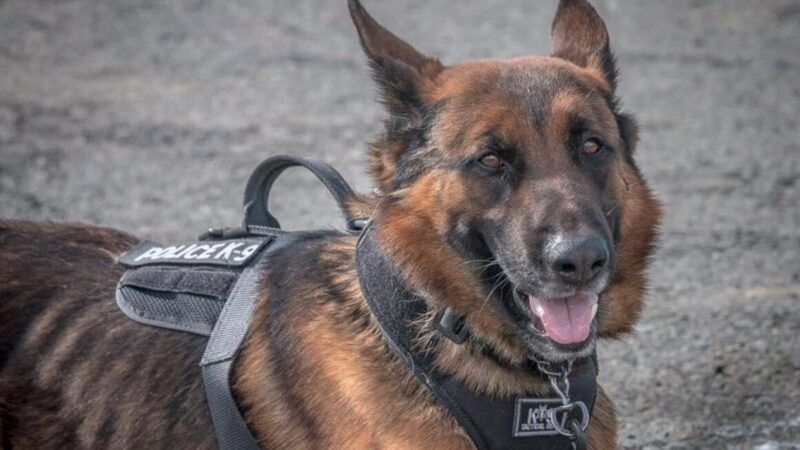
Whether drivers actually possessed illegal narcotics made no difference. The government gained access to every vehicle that Karma ever sniffed. He essentially created automatic probable cause for searches and seizures, undercutting constitutional guarantees of due process.
Similar patterns abound nationwide, suggesting that Karma’s career was not unusual. Lex, a drug detection dog in Illinois, alerted for narcotics 93 percent of the time during roadside sniffs, but was wrong in more than 40 percent of cases. Sella, a drug detection dog in Florida, gave false alerts 53 percent of the time. Bono, a drug detection dog in Virginia, incorrectly indicated the presence of drugs 74 percent of the time.
Despite the frequent errors, courts typically treat certified narcotics dogs as infallible, allowing law enforcement agencies to use them like blank permission slips to enter vehicles, open suitcases, and rummage through purses.
The Institute for Justice, a libertarian public interest law firm, shows a financial motive for the snooping in its 2020 report, Policing for Profit. Local, state, and federal agencies have raked in more than $68.8 billion in proceeds since 2000 through a process called civil forfeiture.
The money making scheme, which allows the government to seize and keep assets without a criminal conviction, often starts with a police search, which requires probable cause, which often comes with a K-9 sniff. Institute for Justice clients in Wyoming, Oklahoma, and elsewhere all lost cash and had to fight to get it back after police dogs gave false alerts outside their vehicles.
‘Probable Cause on Four Legs’
Some handlers jokingly refer to their K-9 partners as “probable cause on four legs.” But Wendy Farris, a real estate agent from Great Falls, Montana, did not laugh when Karma gave an alert outside her red Toyota Prius on August 17, 2018.
Her ordeal, which led to a civil rights lawsuit in the U.S. District Court for the Eastern District of Washington, started with a birthday party invitation. Farris promised her grandson that she would attend his celebration in Oregon, so she packed her car and hit the road.
Rather than drive directly to the event, she made plans to visit a friend near Republic. While there, the friend’s estranged daughter called for help, explaining that she was living on the streets in California and wanted to come home.
Farris agreed to go with her friend on a rescue mission—more than 1,300 miles round trip with few breaks—leaving both women exhausted and sleep-deprived when they returned to Washington with the contrite daughter. Despite the fatigue, Farris remained determined to attend her grandson’s party, so she got back in her car and headed south alone.
Predictably, she almost immediately felt drowsy and decided to park in a safe spot and rest at the junction of U.S. Route 20 and state Route 21 in Republic. A Ferry County sheriff’s deputy found Farris asleep behind the wheel and ordered her to submit to a field sobriety test. Farris, who had no prior arrests and doesn’t drink, had not consumed any drugs or alcohol (which a blood test later confirmed) yet the deputy arrested her on suspicion of driving while intoxicated and called a K-9 unit to the scene.
That’s when Karma showed up with his handler, Loren Culp, who served as Republic’s police chief until the city dissolved its department in November 2020. Culp led Karma on a leash around Farris’ vehicle twice. Then Culp paused and pointed to a rear panel with the palm of his hand, and Karma sat down—his trained final response indicating the presence of drugs.
The alert gave Culp and the deputy probable cause to impound the vehicle, while Karma got to chew on his favorite toy as a reward for his work. The only unhappy person at the scene was Farris, who knew her car contained no alcohol, drugs, drug residue, paraphernalia, or weapons. A search at the impound yard turned up $4,956 in cash but nothing illegal.
Rather than release Farris and apologize, the county locked her up and held her over the weekend without charges. She eventually got her cash and vehicle back, but she missed her grandson’s party. Instead of birthday cake and ice cream, she got jail food and a bill for hygiene supplies.
Motorist Fares I. Said met a similar fate after an encounter with Karma. When a Washington State Patrol officer clocked Said going 70 mph in a 55 mph zone, the officer pulled him over. When Said acted “suspicious and evasive” in answering questions, the officer called Culp and asked for K-9 backup.
Karma circled the Jeep and sat down. Based on the alert, the police impounded the vehicle. A search later produced “several $100 bills” but no drugs or paraphernalia. Said, who lived at the time in Lynnwood north of Seattle, was innocent but got stuck with impound fees and an eight-mile walk back to town.
Social Media Darling
Overall, the police found drugs in 29 percent of the vehicles that Karma flagged during his time in Republic. Other vehicles contained paraphernalia, bringing Karma’s combined score to 64 percent.
The result would be respectable (better than a coin toss!) if it were based on a random sample of vehicles. But the police do not work that way. When they deploy a drug dog at a traffic stop, they often have prior knowledge or suspicion that a search will produce something interesting.
Many motorists in Republic made things easy for officers. One SUV driver admitted to using heroin and having needles in her vehicle. The owner of a Ford Expedition confessed to meth and marijuana use, and the arresting officer seized drug paraphernalia from the man’s pockets prior to Karma’s arrival on the scene.
In nearly every case, officers had probable cause to conduct searches without a narcotics sniff. Yet Culp led Karma on a leash around the vehicles anyway, and then bragged on Facebook about the dog’s uncanny ability to find drugs.
“Once again Karma’s nose knows where the drugs are,” Culp wrote on his Facebook page following a November 2018 stop.
What Culp failed to mention was that prior to Karma’s involvement, the driver had led police on a chase, crashed his Toyota RAV4 at the Ferry County Fairgrounds and fled on foot—leaving his girlfriend behind. Search and seizure of the vehicle were inevitable even without Karma’s nose.
The real confirmation of the dog’s detective skills would have come from walking around a drug-free vehicle and not giving a trained final response. Karma failed this test every time. When he had a chance to stop the impound of an innocent owner’s vehicle, his success rate was zero percent.
Born To Please
False alerts, which create problems for people like Farris and Said, sometimes have nothing to do with a dog’s nose. Brain scientist Federico Rossano, who studies animal communication with humans at the University of California, San Diego, says dogs have an innate sense of loyalty that can override their sense of smell.
“The tendency of producing signals even when they detect nothing comes from the desire to please the human handler,” he says.
Essentially, intelligent animals pick up subtle cues from their handlers and respond. Rossano says the communication often occurs by accident without anyone being aware.
Clever Hans, a horse celebrated in the early 1900s for his math ability, provides the most prominent example. The proud owner truly believed that Hans could solve arithmetic problems, but skeptics later proved that the horse merely was responding to facial expressions and body language from his human companion.
A 2011 study from the University of California, Davis, shows how cues can influence drug detection dogs. When human handlers believed that narcotics were hidden in test areas, their canine partners were much more likely to indicate the presence of drugs—even when no drugs actually existed.
Police participants did not like the implications. But rather than using the findings to improve their training techniques, they denounced the study and refused further cooperation.
They preferred a 2014 study from Poland, which eliminated the potential for false positives. Rather than simulating real-world conditions, researchers ensured that every test included measurable quantities of narcotics.
Participating dogs had no opportunity to sniff drug-free vehicles and communicate a lack of odor. The only correct answer was an indication for drugs. Karma could have aced such a test simply by sitting down every time. He would have looked like a prodigy, but a broken dial stuck on “alert” would have achieved the same result.
Something like this might have happened with Karma. Culp reports on Facebook that his dog passed his training with “zero misses” in 2018 and again in 2019. Culp cites the perfect scores as evidence of Karma’s skills, but law enforcement consultant Mary Cablk sees a red flag.
“That’s a problem,” she says. “It shouldn’t be like that.”
Cablk, who studies narcotics detection at Desert Research Institute in Nevada, says effective training must mimic real-world conditions as much as possible. If dogs have certain error rates in the field, they should have similar error rates in experimental environments.
“In training if a dog is perfect and never misses, and never is recorded to make a mistake, then there are a couple of problems,” Cablk says. “Either the training is not rigorous or the recordkeeping is bad.”
Courts tend to overlook the complexities when evaluating evidence from a dog sniff, but Cablk recently testified in a Utah case that put K-9 teams on alert. Rather than accepting all training programs as equal and infallible, a federal judge looked deeper and raised serious concerns about shortcuts in Utah.
Other jurisdictions could benefit from this type of scrutiny, although increased oversight would not affect Culp and Karma. Both have moved on to new opportunities. After losing in 2020 as the Republican gubernatorial nominee, Culp filed paperwork to challenge Rep. Dan Newhouse to represent Washington’s 4th Congressional District. Meanwhile, Karma moved to private security with Spokane-based Phoenix Protective Corporation.
Republic no longer has a K-9 team or police department, yet the lessons remain. Some dogs are reliable, but courts should recognize that particular sniffs from particular dogs might not be good indicators of probable cause.
Circumstances change from case to case, and nothing should be automatic. K-9 teams should not give the same response 100 percent of the time, and neither should the judges who hold them accountable.
UPDATE 6/16/2021: After the publication of this article, former Republic Police Chief Loren Culp claims to have “discovered” new records that only he knew about and had access to. These newly released “records”—at least 50 of which included no detailed information about the majority of cars supposedly searched—claim that Karma the drug sniffing dog was involved in numerous incidents in which the dog did not alert its handler about the presence of drugs. Even adding the results of these documents into Karma’s performance record, the dog alerted for drugs 87 percent of the time during vehicle sniffs at traffic stops. Furthermore, three other vehicle alerts led to the discovery of small amounts of marijuana, which is legal to possess in Washington. Culp decided to count these as successful alerts, even though he used Karma to search the vehicles of innocent people and found nothing illegal.
41 Times Cops Were At The Right Place At The Right Time To Serve Instant Karma

 Kornelija Viečaitė and Justinas Keturka
Hardly anyone wants to be pulled over by the police on a highway, or anywhere else for that matter. Yet, over 50,000 drivers are pulled over in the U.S. every day. That’s more than 20 million motorists each year. Sometimes, drivers make an honest mistake, like having a broken light, a broken windshield, or a license plate one day past its expiration date.
Other times, however, people do pretty dumb and reckless things on the road, and some of them get punished by the sweet lady named Karma. We recently came across an online thread where people were sharing the most satisfying stories about drivers who are the epitome of “Play stupid games, win stupid prizes.”
After one Redditor asked, “Police Officers of Reddit, what’s the best case of ‘instant karma’ you delivered to a [jerk] driver on the highway?” answers from all people poured in, not just cops.
#1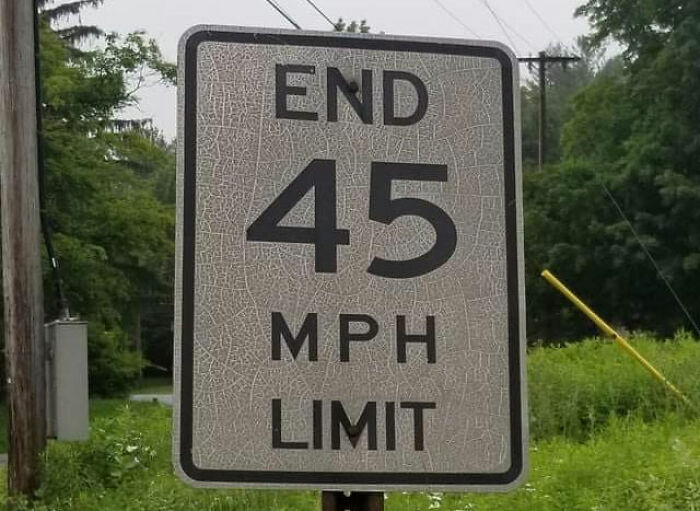 My personal fave :
Local cops had a scam – they put a 45mph limit sign on an interstate where the limit was 55 ( late 1970’s). And would pull over out of state cars- ticket plus a cash “bond”. Want to see the judge ? Sure , he’s my brother in law…
Cop pulls over a mid 20’s black man driving a nice sedan with out of state plates. The young man comments that this is illegal. He is invited (in cuffs) to see the judge. The judge fined him $50. He refuses. The judge sentences him to 5 days in jail. No phone call, no lawyer, nothing.
5 days later the young man leaves.
And returns a week later with a number of his co-workers. And arrest warrants for the sheriff and the judge.
The young man was an FBI agent en route to his new assignment.