How Portland Police Came to Be Armed With Military-Grade Rifles and What Happened as a Result
AR-15 rifle operators outnumber the 146 Portland officers who are certified to respond to mental health crises.
By Tess Riski
For two decades, the Portland Police Bureau has armed its officers with AR-15 semi-automatic rifles, the result of a tough-on-crime policy that equipped officers with firearms most people associate more with mass shootings than community policing.
In response to a records request from WW, the bureau revealed last week that it owns 238 Colt AR-15 rifles.
Today, 168 Portland police officers—about 20% of the force—are trained to operate the semi-automatic weapon, which allows for greater accuracy and the ability to shoot with precision from upward of 100 yards, or about a city block away.
That means AR-15 rifle operators outnumber the 146 Portland officers who are certified to respond to mental health crises through the Enhanced Crisis Intervention Team—established following the city’s settlement with the U.S. Department of Justice. (Both certifications are voluntary, though ECIT certification requires 20 fewer hours of training than AR-15 certification. Some officers are trained in both.)
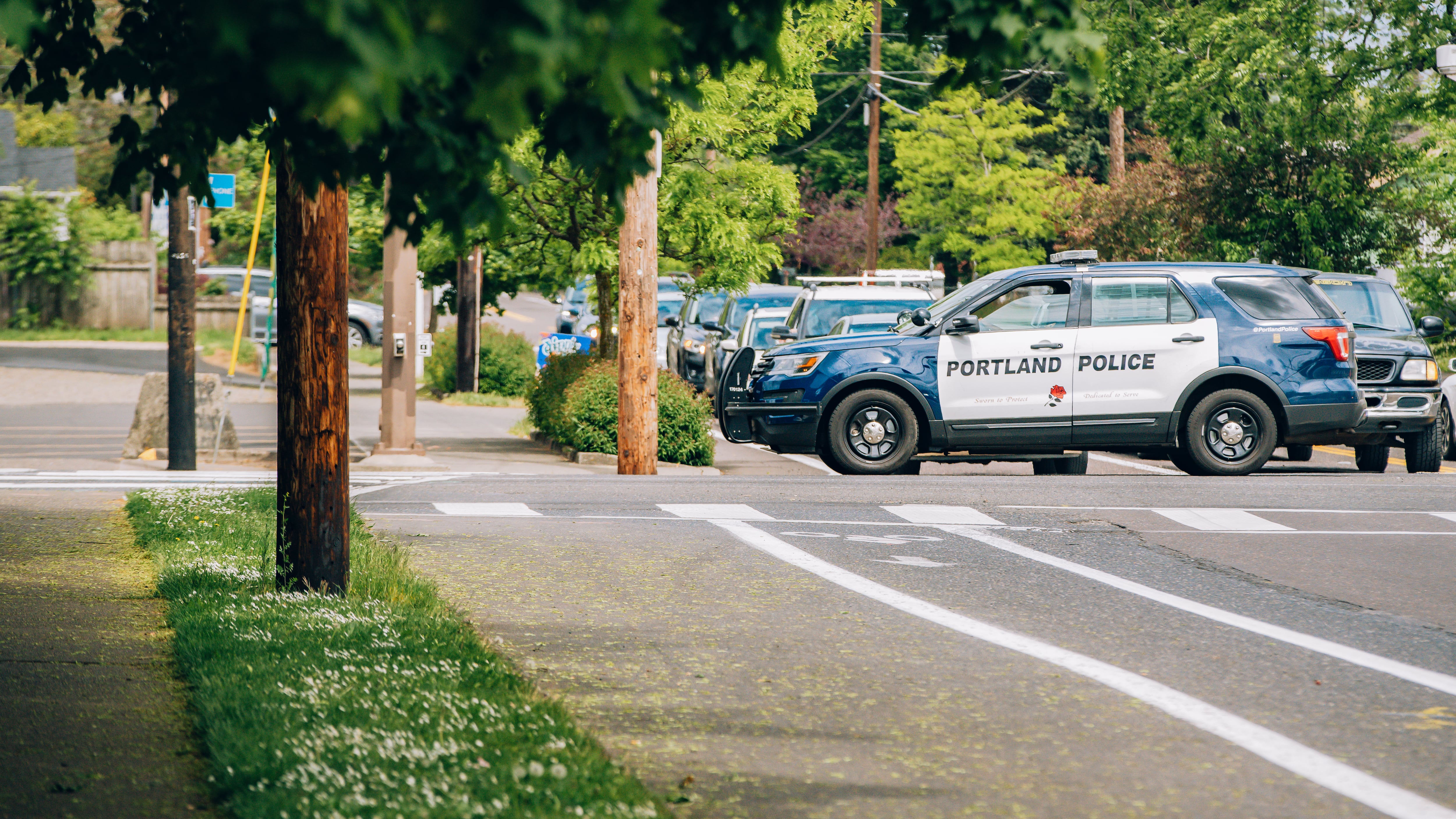
Portland patrol officers who get certification carry AR-15 rifles in their squad cars, stored in a locked case known as a “clam shell.” In other words, every time the city dispatches a beat cop to an incident, it’s rolling the dice that the officer responding may be packing military-grade firepower.
The event that prompted Portland patrol officers to carry these weapons dates back to a 1997 bank robbery that happened nearly 1,000 miles away, in Los Angeles.
During the “North Hollywood Shootout,” as it’s known, a pair of armor-clad bank robbers unloaded seemingly endless rounds of ammunition using high-powered rifles. A swarm of Los Angeles Police Department officers struggled to overtake the gunmen as they waited for a SWAT team to eventually arrive. By the end of the ordeal, both robbers were shot dead. Twelve officers were injured.
The shootout prompted police departments nationwide to beef up their arsenals.
Michael Gennaco, the former chief attorney of the Office of Independent Review for Los Angeles County who helped found OIR Group, which compiles reports on officer-involved shootings in Portland, recalls the shootout, which he says was “like Halley’s comet: One incident can result in an overreaction.”
“It was an effective marketing tool by those who sell AR-15s,” Gennaco says.
In 1997, then-Portland Police Chief Charles Moose formed the “Long Gun Option Committee,” police archives show. (A few years later, Moose went on to serve as the police chief in Montgomery County, Md., where he led the manhunt to apprehend the “D.C. Snipers” in 2002.)
In 1998, Moose asked the City Council for $310,000 to purchase 166 AR-15 .223-caliber semi-automatic rifles, according to news reports from the time. The Oregonian’s editorial board advocated for them, too.
“More and more police departments across the country are adding powerful semi-automatic rifles to their arsenals. Portland should be among them,” the paper wrote in February 1998. “In trained hands, rifles are highly accurate, easier to use and safer than shotguns. An AR-15 rifle, for example, can hit a dinner plate five blocks away. A handgun is reliable up to only about 25 yards.”
In 1999, the bureau purchased 225 AR-15 rifles. By 2004, PPB had trained 149 officers to operate them.
To date, PPB has used AR-15 rifles in about a dozen fatal shootings, including the January 2010 death of Aaron Campbell, a Black man who was unarmed when Officer Ron Frashour shot him in the back. That shooting also prompted then-Chief Rosie Sizer to convene an AR-15 review level committee.
The committee recommended “significant changes” to AR-15 training, according to the OIR Group’s 2012 report, authored by Gennaco and two others. At that time, and still today, a Portland police officer must volunteer and apply to become an AR-15 operator.
But in 2011, the committee implemented a more expansive review of applicants’ use-of-force histories and training records, according to the OIR report. It also required a recommendation from an officer’s supervisor, which is still the practice today, and increased the training hours required to what they are now: a 60-hour certification course and mandatory in-service training.
Officer Andrew Hearst had that training.
On Feb. 9, 2017, Hearst was resolving a parking dispute in the Lents neighborhood when he heard a sergeant on the police radio send out a call for an officer certified to use an AR-15. The reason? An armed robber was on the run in East Portland.
Hearst heard the sergeant repeat his request for a rifle about five minutes later.
“‘Are they still looking for a rifle?’” he recalled thinking. “I was surprised that we hadn’t found one yet.”
Soon after, Hearst fatally shot 17-year-old Quanice Hayes, who was Black. Police found a replica gun 2 feet from his body. One month later, Hearst was called before a Multnomah County grand jury to defend his actions.
His testimony about what happened that February morning provides a window into what police officers are trained to do when they’re told someone has a weapon.
His explanation is especially relevant to the Robert Delgado case because his choices led to the same result: an officer equipped with an AR-15 rifle shot someone carrying a fake gun.
As Hearst approached the scene, he removed his gun from its locked rack in his patrol car and loaded a round into the chamber, according to grand jury transcripts. He had received descriptions of the suspect and the pattern on the alleged weapon: a desert camo frame with a black slide.
Hearst’s designated role was to provide “lethal cover.” Per bureau policy, when an AR-15 operator is called to a scene, “their primary responsibility would be to use deadly force if it was needed,” Sgt. Derrick Foxworth Jr. testified in 2017.
Hearst soon found himself within 15 feet of Hayes. “There was no doubt in my mind the person that I was looking at had a gun,” he later told grand jurors. As Hayes sat on his knees with raised arms, Hearst fired three deadly shots. Hearst claimed he saw Hayes reaching for his waistband.
“Because you carry the AR-15, did you believe any other officers were in a position to use deadly force at that time, or did you believe that was your responsibility?” Multnomah County prosecutor Don Rees asked.
“I believed it was my responsibility,” Hearst responded. “I don’t know of any other rifles present or any other pistols out that could provide that type of cover.”
“To be clear, you didn’t see, as I understand your testimony, you did not actually see a gun in his hand at the time that you pulled the trigger in your rifle; is that correct?” Rees asked.
“That’s correct,” Hearst responded. “I did not see.”
Rees asked: Why not wait until you see a gun pointed at you before firing your weapon?
“I can’t wait,” Hearst answered. “Because if I let him get his hand on his gun, he will be able to pull that gun out and shoot me or my co-workers before I’m able to react to it.”
The grand jury declined to charge Hearst. This March, four years after Hearst killed Hayes, the city awarded the Hayes family $2.1 million in a wrongful death lawsuit.
Guns on the School Bus: A Clear and Present Danger
What do you do when there’s a gun on a school bus? If you don’t know, you’re not alone.
 Jen Pottheiser
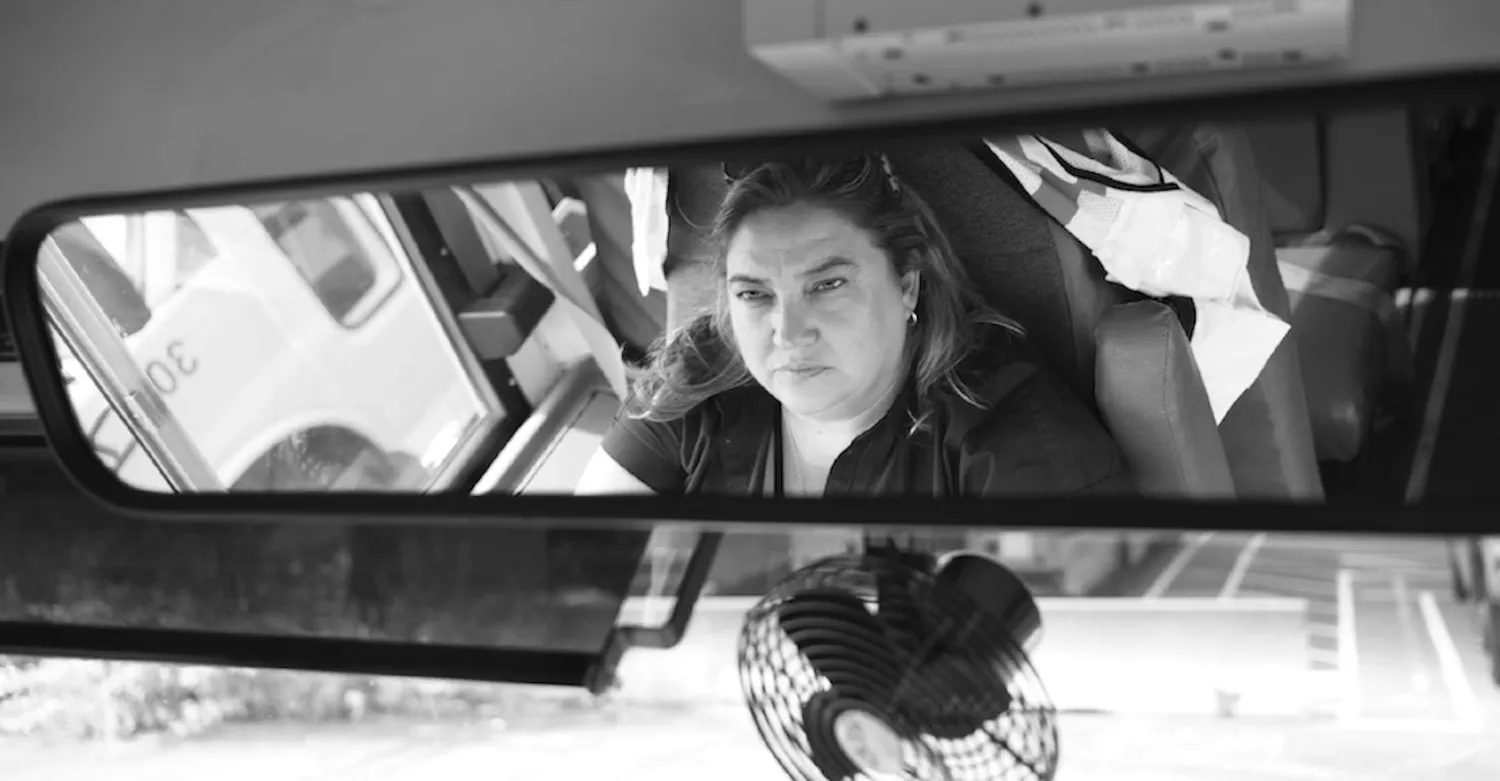
Maria Reed is a bus driver in New Jersey and president of the Bridgewater-Raritan Transportation Association
By: Cindy Long, Senior Writer
Published: September 14, 2022
Share


Key Takeaways
- Although there is little research on gun violence on school buses, educators agree it is frighteningly easy for students to sneak guns on buses.
- There is no training for bus drivers on dealing with active shooters.
- The country needs to address access to guns before they get onto buses or into schools.
The student was sobbing when she showed up in Adena Barnette-Miller’s morning homeroom at Ripley High School, in West Virginia. The girl’s entire body trembled, the blood completely drained from her face. As Barnette-Miller gripped her in a tight hug she struggled to find out what was wrong.
Finally, the senior was able to speak through the tears. A boy had pulled out a gun on her bus. Before he could start shooting, another student was able to grab the gun from him. About 20 children on the bus, including elementary, middle, and high school students, were mere moments away from being shot.
The girl was in shock, the horror of the incident slowly sinking in. Her two younger sisters were riding the bus with her. As she struggled to protect them, she texted her mom who worked at the middle school to alert the principal and police. She was running on pure adrenaline.
“It took a while to find out what in the world was happening … but the fact is we were about 15 seconds away from a mass shooting on a school bus,” says Barnette-Miller in disbelief. “All those kids, I know. I went to school with the parents of all those kids on the bus. … I think of the fact that if it hadn’t been for the one who grabbed the gun, three of four children in that one family would be gone. Three beautiful kids. Gone.”
The small, rural community would have been devastated, she says, and they’d have been the ones the country would send thoughts and prayers to instead of policy and change.
“There’s no way to bring those babies back once they’re shot,” she says, tears springing to her eyes.
A Fight Almost Turns Deadly
There had been an argument, and the boy with the gun was angry. Police later found out that he and his brother had stolen the firearm from a neighbor.
It’s a situation that could easily happen anywhere, at any time, in any school system—especially now that gun culture is so prevalent.
Barnette-Miller says Jackson County, where Ripley is located, is “real” West Virginia. Many people don’t have running water or cell service, and hunting and guns are pervasive.
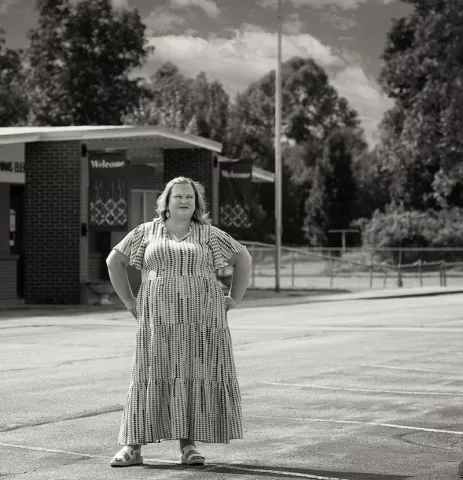
“I’m not anti-gun. I was raised around guns. I’m from a family of hunters and military veterans,” Barnette-Miller says. “But when a family friend showed up with an AR-15 to go hunting, my grandfather kicked him off his land. He said, ‘We only allow hunting weapons here, and that’s not for hunting.’”
“There is a big difference between a gun that shoots a deer and one that murders people,” she adds.
As of August, mass shootings—where four or more people, not including the shooter, are injured or killed—averaged more than one per day in 2022. And not a single week had passed without at least four mass shootings, according to the Gun Violence Archive.
Though mass shootings get a lot of attention and cause widespread fear, they account for a fraction of gun deaths in America. Most are suicides or individual homicides.
According to the gun violence prevention group Sandy Hook Promise, children living in poverty—both urban and rural—are more likely to die due to gun violence than their more affluent peers. Black youth are four times more likely to be killed by a gun than their White peers, and about one in five LGBTQ+ youth have been threatened or injured with a weapon on school property.
There is little research on gun violence on school buses, but educators agree that it is frighteningly easy for a student to smuggle a gun onto a bus.
School Bus Drivers are Worried
Maria Reed, president of the Bridgewater-Raritan Transportation Association, in New Jersey, says, “We have about 25 district drivers, and many of us have talked about how a student could easily bring a gun onto the bus, and we just don’t know what we’d do if someone was waving a pistol at us or shooting at random.
“We used to worry about hijacking of school buses, but now it’s gun violence. And kids with guns are getting younger and younger,” she adds.
As a starting place, Reed would like school bus drivers to receive active shooter training and to have a faster way to call for help.
“Back in the 1990s, buses had panic buttons that functioned like a 911 call to police. Newer buses don’t have them,” she says.
Another option would be for drivers to have a special “gun-on-the-bus” code to call out on the radio, which would alert authorities.
“Many of us have talked about how a student could easily bring a gun onto the bus, and we just don’t know what we’d do if someone was waving a pistol at us or shooting at random.”
“Some districts around the country have offered training on what to do if a bus was hijacked,” she says. Her district also trains drivers in how to evacuate the bus in case of fire or flooding. The drivers then train the students on how to jump out the back door and gather on one side away from the bus.
Active-shooter training should be just as routine, Reed says. She is also advocating for bus drivers and students to receive training on how to identify students who are struggling emotionally and how to notify the school.
“The older kids might see something on social media, or hear something that was said in the cafeteria or hallway, like, ‘I’m going to bring a gun and shoot it all up,’” Reed says. “If someone says something to an adult, an incident could be avoided.”
Research supports that approach. Studies have found that in four out of five school shootings, the attacker told someone about their plans.
Training is Only Part of the Solution
Sandy Hook Promise aims to give students a pathway to reporting problems before they turn into tragedies.
The group offers the Say Something training to schools at no cost.
The program teaches middle and high school students to recognize the warning signs that someone could be at risk of hurting themselves or others and trains students in how to say something to a trusted adult.
The program aligns seamlessly with schools’ existing social and emotional learning curriculum, instruction, and programming.
Barnette-Miller is grateful that her district offers the training, but she says that’s only one part of the answer.
“This is a society problem,” she says. “It should be harder to get a gun than it is to buy a pack of cigarettes. We’ve got to do more.”
Guns Threaten Rural and Urban Districts Alike
Arlington County, Virginia, is one stop away from Washington, D.C. on the subway and has a population 10 times the size of Jackson County. It’s like comparing country mouse and city mouse, but when it comes to guns, the two districts have strikingly similar concerns.
An increase in fights and violence in Arlington schools has educators worried, including local school bus driver Ivis Castillo.
“We worry daily that kids could bring a gun on the bus,” she says. “Especially high schoolers and middle schoolers.
Fights break out, and we don’t know how far it can go. Often everything is all planned out, and the students have more friends waiting at the bus stop to attack. It is a very real threat.”
“This is a society problem. It should be harder to get a gun than it is to buy a pack of cigarettes. We’ve got to do more.”
Castillo says she is firmly in favor of standing up for our freedoms, but she believes we must do more to prevent gun violence. Training for active shooters on the bus would be helpful, but it’s not a long-term solution.
The ultimate goal, she says, should be to stop guns from getting onto the bus or into schools in the first place.
“Metal detectors at schools just make it feel like prison,” Castillo says. “Why do students have guns in the first place, why mass weapons? We need to get to the root of the problem, the prevalence of guns, the access. Why is this happening?”
She adds, “There are mental health problems in every part of the world, in every income level, in every kind of government. But the U.S. is the only one dealing with so many shootings. We need to ask why.”