
‘Modern slavery’: Trapped in Iraq, Nigerian women cry out for help
Nigerian women recruited to work as domestic helpers in the Middle Eastern country say they face severe abuse.
Sometimes when the pain hits, Agnes* has to pause for several seconds to ride out the excruciating wave. It feels like someone has tied a rope to her insides and is pulling and twisting it, the 27-year-old Nigerian domestic worker says, making it hard to bend or stand up straight.
Agnes’s ordeal started in March in the Iraqi city of Basra when her boss raped her at gunpoint. She fell pregnant, and the man then forced her to undergo a painful abortion. It was so difficult, Agnes said, that she could not sit for three days. Since then, the severe abdominal pains won’t go away, and there’s no one to take her to a hospital.
Recommended Stories

list of 4 items
- list 1 of 4Nigeria president orders release of minors charged over protests
- list 2 of 4Village in Nigeria ‘gripped by fear’ after dozens kidnapped
- list 3 of 4In Nigeria’s crude capital, a plan to win the war against oil theft
- list 4 of 4Dozens killed in stampede at youth festival in Nigeria
end of list
“I just want to go home and treat myself, but I can’t do that,” Agnes said on a phone call from Basra, where she is holed up in a hostel belonging to the recruiting firm that hired her from Nigeria last year. “The man has refused to pay my salary. I don’t know if I am pregnant, but I have not seen my menstruation since then. I just want to go home and check myself and see what’s happening inside me,” she added, her voice breaking.
Al Jazeera is not mentioning Agnes’s real name because she fears reprisals from the staff of the so-called recruiting agency. She is one of hundreds, if not thousands, of people who are caught in a transnational labour network that often sees women from Nigeria and other African countries deceived into domestic servitude in Iraqi cities, activists said.
In Nigeria, the women are hired by a ring of local “agents” who sell them a dream of good pay and good conditions abroad. They get the women to agree, process visas and send them off to recruitment firms in Iraq for a commission of about $500 per woman, according to activists familiar with the system.
Advertisement
Once there, the Iraqi firms ask the women, called “shagalas” (meaning “house worker” in Arabic), to sign two-year contracts and assign them to families or labour-intensive institutions like spas, where they are often expected to work more than 20 hours a day for monthly pay of $200 to $250. In many homes, the women are subject to inhumane treatment: They go days without food, are beaten and are not provided living quarters.
Some, like Agnes, also face sexual abuse and rape. Several women told Al Jazeera stories of victims who had faced so much abuse and torture that they ended up dead although these cases have not been independently confirmed.
“It’s a form of modern slavery,” said Damilola Adekola, co-founder of Hopes Haven Foundation, a Nigerian NGO that helps track women in Iraq and other Middle Eastern countries where abuse of African domestic workers is rife. “These Iraqi agents and the families [the women work for] often tell them, ‘We’ve bought you, so you have to work.’ The contracts they sign go against any type of international law because there’s no medical care and they have to work obscene hours.”
These women often lack knowledge of what a normal workplace should be like because the Nigerian recruiters target women from rural communities who are usually uninformed about the dangers, Adekola added. Although some have diplomas, they often don’t know about the realities of post-war Iraq or that Baghdad is not a country. “Once they hear they can get on an airplane, they just jump at the opportunity,” he said.

A chance to ‘hustle’ abroad goes badly
A native of Nigeria’s Ekiti, a small state northeast of the commercial capital, Lagos, Agnes was working as a domestic worker at home when she heard of an opportunity that could take her abroad.
Sign up for Al Jazeera
Breaking News Alert
Get real-time breaking news alerts and stay up-to-date with the most important headlines from around the globe.Subscribe

By signing up, you agree to our Privacy Policy
protected by reCAPTCHA
She paid 100,000 naira ($64) to a local recruiting agent, a family friend whom she trusted, believing that she would be able to make much more money to send home to her ailing mother and nine-year-old son.
Soaring inflation in Nigeria has crippled the naira since 2019. The result has been that Nigerians, young and old, are leaving the country to seek better opportunities. According to an Afrobarometer report this month, more than half of the 200 million population indicated they want to leave the country due to economic hardship with most looking at Europe, North America and the Middle East.
Advertisement
For Agnes, domestic work anywhere else and with the promise of pay that was three times what she normally earned, was an answered prayer. She left for Basra from Lagos airport in September 2023 and arrived at the Iraqi recruitment firm she had been “sold” to after a day’s journey.
Once in Iraq, Agnes’s dreams of a comfortable life abroad turned into a nightmare. Her first shock was at the recruitment firm in Iraq. The firm assigned her a first home to work at, but Agnes was badly treated. She wasn’t given food regularly although her boss would force her to work all day, and her phone was seized, she said. When she complained and refused to work, the Iraqi man returned her to the agents, demanding a refund. Angered that she’d caused a loss, two employers from the firm descended on Agnes, she said, hitting her, punching her and smashing her mobile.
“I had to use a bandage on my eye for three days,” Agnes said. In a photo taken days after the beating and seen by Al Jazeera, Agnes’s right cheek is red and swollen. The firm then forced her to go to a second home, which is where she said the rape took place.
Now, Agnes is back in the firm’s hostel, penniless. After the pains in her abdomen rendered her unable to work, she said the boss who raped her abandoned her there and refused to pay six months of her salary.
“If I knew what this country is like, I wouldn’t have come here. If I knew it’s not safe and there is no respect for life, I wouldn’t have come. I just thought I could also come here and hustle. Please help me get out of here,” she pleaded.
Although she has a place to sleep and she, as well as dozens of women at the hostel, get some noodles and rice daily to cook, Agnes is fearful. The agency has refused to send her back to Nigeria, insisting that she has one more year to work on her contract, despite her debilitating pain.
Agnes said she tries not to aggravate staff of the firm to avoid beatings. Several women there have either been beaten or have been locked up for days without food because their bosses complained of their conduct, she said. Al Jazeera is not revealing the name of the company in order to protect the women, but we did seek official responses regarding the firm from the Iraqi Ministry of Interior, which is in charge of Iraq’s police. We have not yet received a response.
Trafficking of Africans rife in Middle East
Despite several laws against labour trafficking, the practice is rife in post-war Iraq. The country is both a source and destination country for trafficked victims with an estimated 221,000 people currently in slavery-like conditions, according to a November report from the International Organization of Migration (IOM). Most documented victims are from Iran and Indonesia.
The experiences of African female domestic workers in Iraq are largely undocumented, but the challenges they face have been going on for years. Black people have historically been seen as slaves in the country and still face discrimination today.
In 2011, news reports documented how dozens of Ugandan women were tricked by local agents into believing they would be working on United States army bases when the country was under American occupation after the fall of Saddam Hussein’s government. Instead, the women were “sold” to Iraqi firms for about $3,500 and forced to work in dire conditions. Eventually, some escaped with the help of US army staff, but others were never accounted for.
Advertisement
Similar cases of exploitation are being reported across the Middle East, where hundreds of thousands of migrant workers from African and Asian countries are at higher risk of trafficking, according to the IOM.
Under the “kafala” system, which is legal in countries like Lebanon, employers pay for the documentation and travel costs of the foreign workers and use that as leverage to abuse them by confiscating their passports or seizing their pay, reports have shown. The system doesn’t give the worker the right to seek out another employer but does allow employers to transfer contracts to others. Recruitment agencies often use the legal system to employ many workers and then auction the contracts online for huge amounts of money.

It’s unclear to what extent Iraqi authorities investigate agents hiring and “selling” African workers or the individuals who maltreat these women. Authorities however appear to be investigating one case that has garnered widespread attention on Nigerian social media.
Eniola, 28, had, like her counterparts, jumped at the opportunity to earn more money abroad as a domestic worker and arrived in Baghdad in February 2023. However, her boss forced her to work most of the day and allowed her only three to four hours of sleep. When she complained, the woman routinely tortured her with tasers or hit her with an iron rod. She doused her with hot tea or water on several occasions too.
In videos Eniola sent to Al Jazeera, her fingers, which appear to be broken, are bandaged, and scars from burns and wounds dot her body. She found the courage to finally escape in August after more than a year of abuse. Al Jazeera is only using Eniola’s first name to protect her identity.
“She had just beat me when she put some water on the fire and told me to enter the bathroom,” Eniola told Al Jazeera. She feared her boss wanted to pour hot water on her, so she fled. “I don’t know where I got the courage, but I ran outside.”
Bleeding, Eniola ran to groups of locals who, shocked by her wounds, helped her get to a police station where she handed herself in. She was never paid by her boss.
In a statement, Iraq’s interior ministry told Al Jazeera it was not aware of the two women’s cases, but vowed to investigate the matter.
An officer at the country’s Directorate for Residence Affairs in charge of residency violations, and where Eniola has been transferred, told Al Jazeera the abusive boss had been “invited by government agencies for questioning and was bieng investigated”.
On Tuesday, Eniola confirmed she was arraigned in court alongside her former boss, and a years’ worth of salary was handed to her. Eniola, only willing to go home, said she declined to press charges against the Iraqi woman. Authorities plan to force the boss to pay for her ticket home, she said, but it’s unclear when that will happen.
There are several other Nigerian women in detention for various offences: fighting with their bosses, overstaying their residence permits or “taking salaries and running away,” said the Iraqi official, who is not authorised to speak to the press.
Nigerian domestic workers Al Jazeera spoke to however say their Iraqi bosses have been known to take advantage of language barriers and some wrongfully accuse the women of crimes.
Nigeria fails to act quickly, activists say
Activists blamed Nigerian authorities for failing to regulate the industry and allowing groups of women to head to Middle Eastern countries for domestic work without proper documentation or a system to track them. Some reports also accuse staff of the Nigerian Immigration Service (NIS) of taking bribes from local agents and turning a blind eye at airports to clear cases of exploitation.
Advertisement
Al Jazeera put these allegations to the NIS via email. In a statement, the NIS said it would respond to the accusations but did not reply in time for publication.
“Immigration is never a crime, and we are not saying people should not find work abroad, but there should be a government system where these women are registered and taxed, even if it’s a small token,” Adekola of the Hopes Haven Foundation said. The organisation helped alert authorities to Eniola’s and Agnes’s cases.
“With that, the government can monitor the women’s information and work situation. If these employers torturing them know that the ladies are being monitored by their government, they’ll not try what they’re doing to them.”
Officials at the National Agency for the Prohibition of Trafficking in Persons (NAPTIP), the Nigerian anti-trafficking agency, first sounded the alarm about the exploitative recruitment drives to Iraq in May 2023.
Some rogue agents who take part in recruiting and “selling” the women are known by NAPTIP and are under investigation, an official who had not been authorised to speak to the media and who we are therefore not naming, told Al Jazeera.
Agnes’s and Eniola’s cases are being investigated, the official said but did not give a timeline as to when the women might be repatriated. Nigeria does not have an embassy in Iraq, and the official said the agency was liaising with the Nigerian consulate in Jordan.
In Basra, Agnes is still holed up in her recruitment agency’s hostel, hoping for a way out. She can hardly stand up from her bed, she said. This week, some women arrived freshly from Nigeria and Uganda, and have been sent to their assigned homes to work, she said. The women, Agnes added, were fearful after seeing her condition but were forced to go.
“I just want to go home because I’m not OK,” she said. “I’m barely alive. Please help me get out. I’m too young to die here.”
In 1983, Diane Downs said a stranger shot her 3 kids, but police decided she was lying
“The more she talked, the more things didn’t make any sense.”
9:30
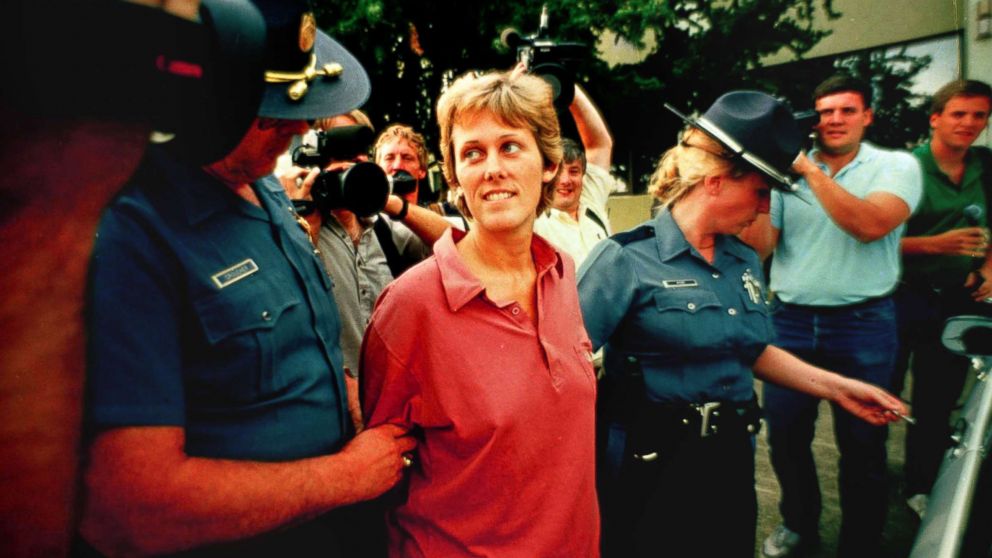
The night Diane Downs’ 3 children were shot in cold blood: Part 1When Downs brought them to the hospital, her daughter Cheryl was dead and her other two children, Danny and Christie, were badly wounded. Authorities were suspicious of Downs’ “flat” demeanor.
Suzanne Vlamis/AP, FILE
Late one May night in 1983, Diane Downs sped into an emergency room dropoff in Springfield, Ore., with a horrifying story to tell.
Her three small children, Christie, 8; Cheryl, 7; and Danny, 3, were inside her blood-soaked car, shot at close range.
In the frantic scene, hospital employees quickly determined that Cheryl was already dead and that Christie and Danny were clinging to life.
Downs had also been shot, in the left forearm, though her wound was not life threatening.
When police arrived at the scene, Downs, 27 at the time, told them a bizarre story of being flagged down by a bushy-haired stranger on a dark and deserted country road.
Doug Welch, then a detective with the Lane County Sheriff’s Office, remembers getting the call for what would turn out to be his first homicide investigation. He responded to McKenzie-Willamette Hospital and immediately interviewed Downs, a postal worker.
“It was an interesting interview. We found that Diane Downs was emotionally flat. She’d been shot in the left forearm,” said Welch. “[She said] she had been out visiting a friend who had a horse up in the Marcola area — she and the kids — and when it grew dark they headed home. She took a detour off of Marcola Road onto Old Mohawk Road to do some sightseeing.”
“By this time it was dark, and the kids were sleeping. And as she drove down the road, a man stepped out from the brush, the side of the road, and she stopped the car. And got out and ask what he wanted. And he replied, ‘I want your car.’ She said, ‘You’ve got to be kidding,’ at which time he pushed her aside and reached in with a gun and began shooting the kids– the three kids.”
Downs said she then faked throwing her keys to divert the gunman’s attention, pushed him out of the way, jumped back in her car and raced to the hospital with her badly wounded children. She says it was during the struggle with the stranger that she was shot in the arm.
Police Tell Public to Be on Lookout
Fearing there could be a gun-wielding killer on the loose, police released information to the public to be on the lookout.
But suspicions of Downs herself quickly began to surface.
“There were all kinds of red flags that went up as we took her statement, but we wanted her to give us a complete statement,” Welch said. “But there were a number of things… which didn’t make any sense.”
“Why would a mother sightsee when it’s dark out? Why does a mom with three sleeping children in the car stop for a stranger or anyone for that matter? Why is she wounded in the arm? And the kids– one is fatally shot and the other two are seriously injured.”
Welch said there were “a lot” of problems with her story and by the end of the interview, “we knew that she had been lying’.”
Diane Downs Gives Bizarre Interviews
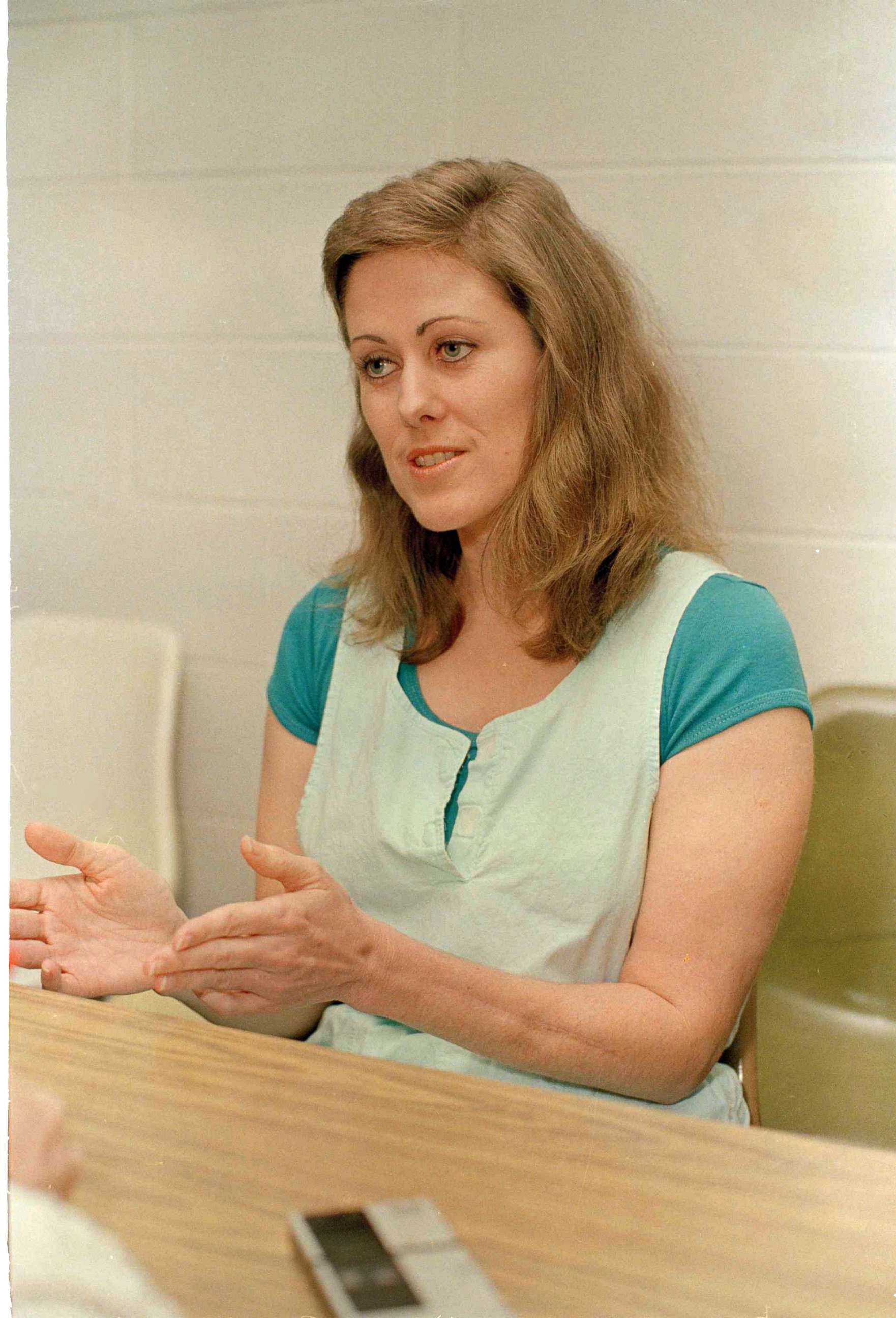
Within a month of the shootings, with her two surviving children still in the hospital, Downs began giving a series of bizarre interviews to the media.
“I have used the term verbal ‘vomit’ when talking’ about Diane because she talked a lot. Too much for her own good,” Welch said. “I think that’s one of the things that– ended up hurting her case. She didn’t know when to keep her mouth shut.”
While police increasingly suspected Downs, she adamantly denied any involvement when speaking to the media.
“Why would I have taken my kids to the hospital?” she said in an interview. “Wouldn’t I have made sure they were dead and then cried crocodile tears? That’s insane to think that I would do such a thing and then bring the witnesses in against myself — that’s crazy.”
Popular Reads

‘Bring her home’: Savannah Guthrie addresses her mother missing in possible abduction

Partial government shutdown expected to extend longer than anticipated
Minneapolis live updates: ICE arrest powers expanded, memo says
Anne Bradley Jaeger was a local reporter for ABC affiliate KEZI in Eugene, Ore., at the time. She remembers Downs’ demeanor in her interviews as peculiar.
“The more she talked, and she talked a lot and frequently, the more she talked, the more things didn’t make any sense. It was as if she thought that if she kept talking enough, that you would believe her,” Jaeger said.
Although police had found spent .22 caliber bullet casings at the crime scene, an exhaustive search of the area did not turn up the murder weapon. And Christie Downs, the only witness to the crime (her younger brother Danny was believed to have been asleep at the time), had suffered a stroke that impaired her speech and initially prevented her from telling police what she had seen.
Although Downs denied having ever owned a .22 caliber gun, ex-husband Steve Downs told police she took one with her when she moved to Oregon.
Meanwhile, Christie Downs was slowly beginning to tell what she remembered of the shootings. She said she had not seen a male stranger that night. A judge had already placed Downs’ two surviving children in protective custody.
A break in the case finally came when investigators discovered Downs’ secret diaries. They told of her obsession with a married man who didn’t want her kids around.
“We believe the motive for the shooting was to get Nick up here to Oregon to be with her. Diane considered the kids to be a burden or a hindrance to Nick’s arrival,” Welch said. “And as long as he said that he wasn’t going to be a father to anyone’s children, they had to go.”
Police Arrest Diane Downs
Police arrested Downs Feb. 28, 1984, nine months after the shootings. In May of that year, the trial against Downs began with yet another inconceivable twist.
The woman who was on trial for shooting her own children was pregnant again — and it was no accident.
In another one of her strange media appearances Downs spoke about the pregnancy.
“I got pregnant because I miss Christie and I miss Danny and I miss Cheryl so much,” she said. “I’m never going to see Cheryl on Earth again and I just, you can’t replace children, but you can replace the effect they give you. And they give me love, they give me satisfaction, they give me stability, they give me a reason to live and a reason to be happy, and that’s gone, they took it from me, but children are so easy to conceive.”
Jaeger says Downs told her she had picked someone on her postal route to seduce prior to her arrest. Jaeger remembers worrying that Downs’ pregnancy could affect the way jurors viewed her.
“She knew that, if she got pregnant, that people would look at her and say, ‘How could a woman who loves children this much and got pregnant have killed her children? Look at her,’” Jaeger said.
Star Witness at Downs’ Trial: Her Daughter
Prosecutors laid out the evidence against Downs, all leading up to their star witness. After months of physical and mental therapy, Christie Downs was finally able to take the stand and tell what happened to her that horrible night.
District Attorney Fred Hugi asked Christie if she remembered who shot her.
She replied simply: “My mom.”
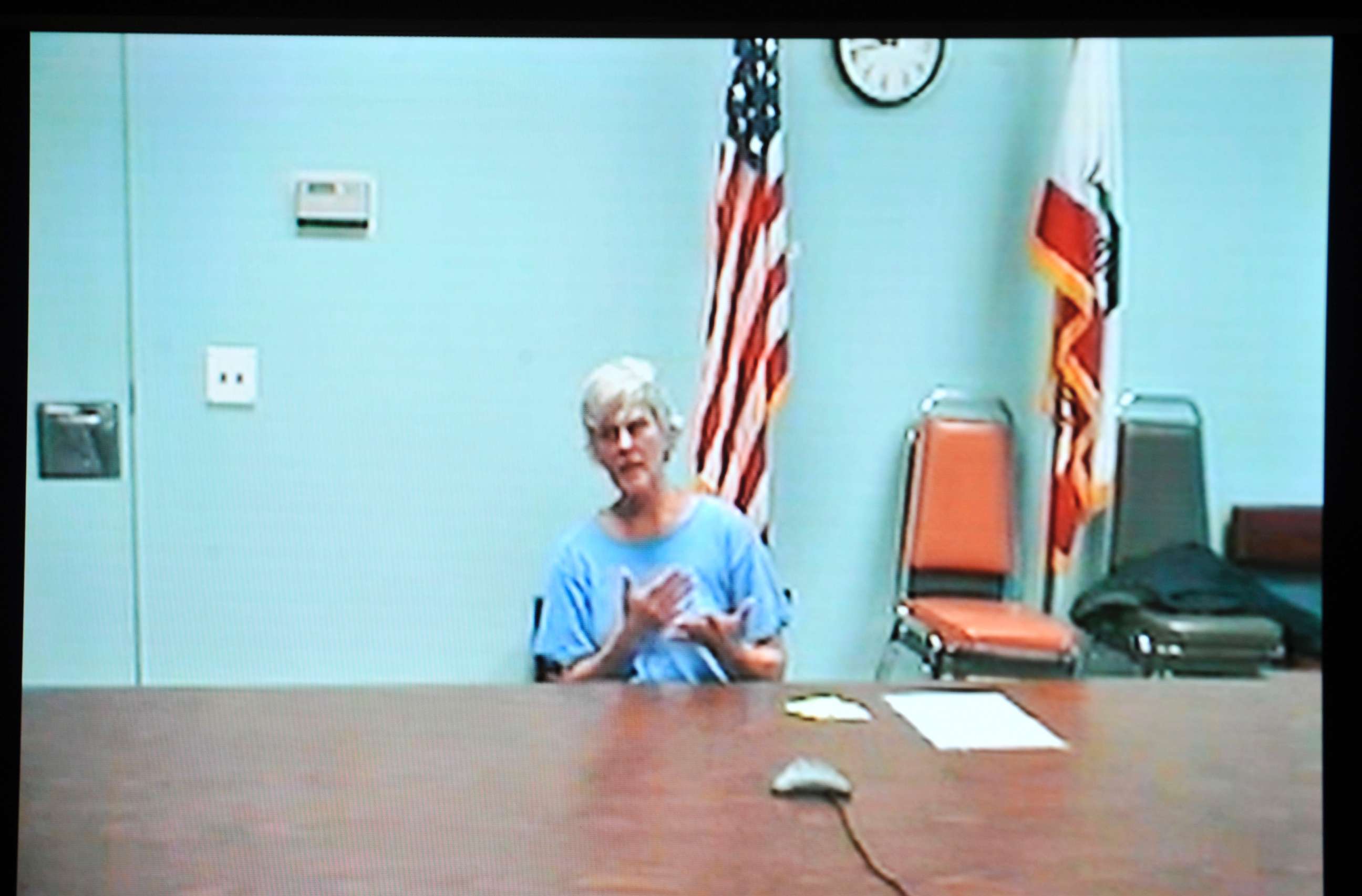
Downs was found guilty in June, and sentenced to life in prison plus 50 years.
Between the verdict and sentencing, the court recessed so that Downs could give birth to a girl she named Amy Elizabeth. The baby was taken by the state and delivered to adoptive parents. The girl was later renamed Becky Babcock.
In 1987, just three years into her sentence, Downs escaped from the correctional facility in Oregon where she was being held.
Within two weeks police had tracked her down to the home of another inmate’s husband just blocks from the prison. After being recaptured, she was transferred to a more secure facility.
Diane Downs remains in prison in California. She was denied parole in 2008 and again in 2010. She will be eligible for parole in 2020 and continues to proclaim her innocence.