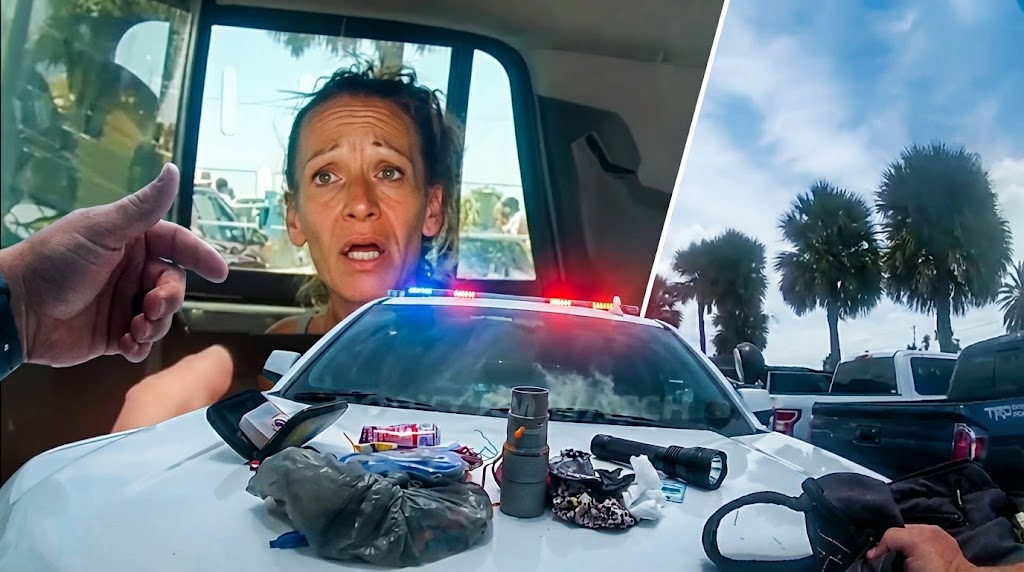
HOT WHEELS
Kids are driving Pinellas County’s car-theft epidemic.
It’s a dangerous — sometimes deadly — game.
Courtesy of Pinellas County Sheriff’s Office “Eagle” flight unit
Officers with guns drawn approach three teenage auto theft suspects on McMullen-Booth Road. An infrared camera tracked the stolen Kia Optima as it sped the wrong way, toward oncoming traffic.
Two cars approached a Clearwater intersection one August night in 2015.
Northbound in a Honda Odyssey, Amanda Hamilton practiced driving with her mother Margaret. They were on their way home in the family minivan just after 11 p.m. Amanda, 16, was getting her license the next day.
Headed west, Dontrell Davis — also 16 — drove friends around town in a Toyota Prius he had stolen that night from a Chinese food delivery driver who left it running. It was the third car he’d lifted that summer, and he wasn’t stopping for anything.
Not even a red light.
The Prius smashed into the front of the Odyssey, sending the minivan spinning, airbags bursting, debris flying. When it came to rest, the cabin filled with smoke, and the mother and daughter, shaking, worried it would explode.
The Prius was flipped onto its crushed hood, a 15-year-old passenger draped out a back window with blood on her face. She was rushed to the hospital for emergency heart surgery.
Dontrell had fled. Bruised lungs and a concussion didn’t slow him down.
Six days later, he stole another car.

■
Every four days, a kid crashes a stolen car in Pinellas County.
They blow red lights and fly through stop signs and speed the wrong way on skinny bridges, toward oncoming traffic. They push 100 miles per hour, ram police cruisers and nearly mow down children stepping off a school bus.
A stolen Lincoln Town Car almost took out a little boy riding his big wheel on Christmas morning. A stolen Ford pickup T-boned a police car, which burst into flames.
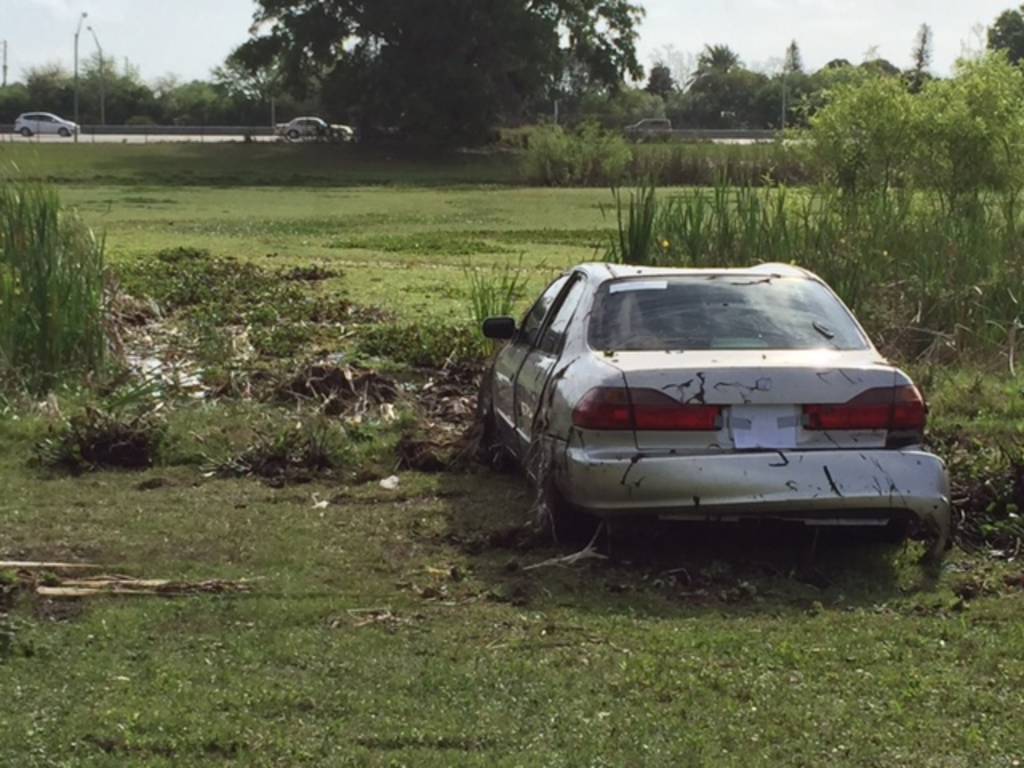
And one year ago, a stolen Honda Accord drove into a cemetery pond and sank to the bottom, drowning three teenage girls, who like many other teens in Pinellas County, had made a sport of stealing cars.
Kids here go “car-hopping,” walking neighborhood streets and parking lots, testing door handles until they find an unlocked car with a key inside. The objective of this real-life game of Grand Theft Auto isn’t to sell the car or strip it for parts. It’s to drive fast and show off.
Nissans and Fords become dangerous toys in the hands of kids who don’t know how to turn on a car’s lights or put it in reverse. The thieves are as young as 10 and as light as 50 pounds, cranking the seat all the way up, just to see over the steering wheel.
Some are not tall enough to ride all the rollercoasters at Busch Gardens, but they floor the gas pedal to max out the speedometer on the dashboard, all while holding up phones to record videos as proof for friends. “They call it doing the dash,” 15-year-old Deyon Kaigler, a two-time car thief from Clearwater, told the Tampa Bay Times.
The danger has prompted Pinellas law enforcement agencies to devote dozens of officers, a fleet of helicopters and highly trained dogs to catching young car thieves. In 2015, the most recent full year of data available, police in Pinellas made 499 felony arrests for juvenile auto theft, more than any other county in Florida going back eight years, and more than the most populous counties in America, including Los Angeles.

That means that, in Pinellas County, a kid is arrested for this crime at least once per day.
In nearly every other county in Florida, most people arrested for auto theft are adults. But in Pinellas County, 62 percent are younger than 18 — the largest rate of juveniles arrested for grand theft auto of any sizable Florida county for at least a decade.
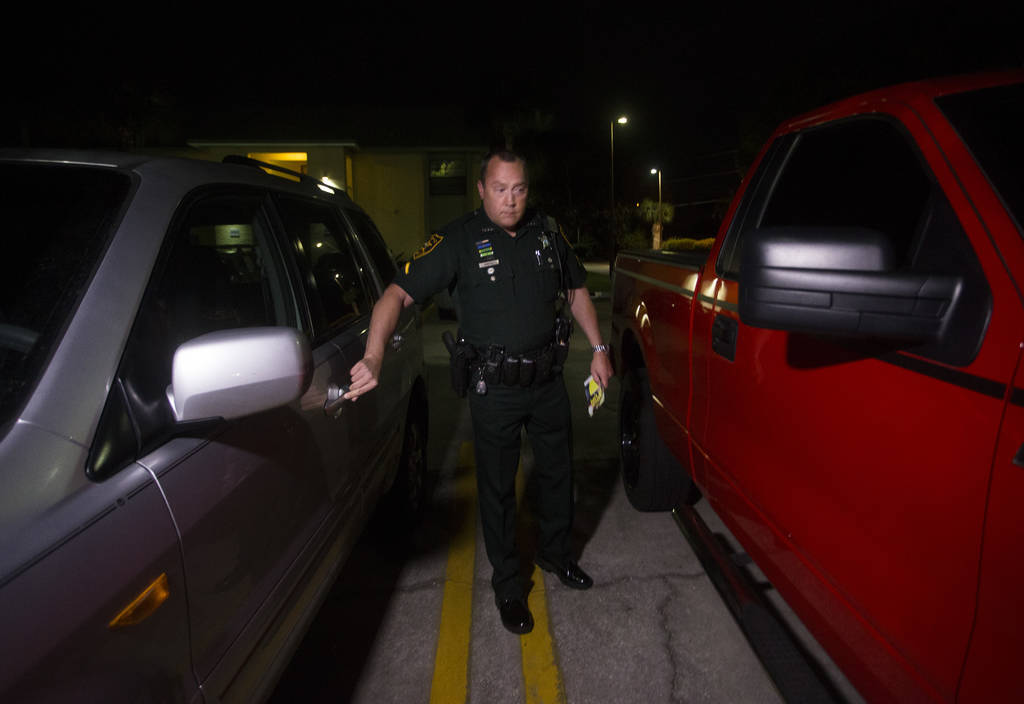
The Times sought to understand this phenomenon, reading thousands of pages of police reports; riding along with officers who specialize in this crime; interviewing judges, lawyers and criminologists; and talking with teenage car thieves, their families and their victims.
The newspaper built a database containing every juvenile auto theft arrest in Pinellas County for an 18-month period — 742 arrests in all, connected to 529 auto theft cases — and conducted a first-of-its-kind analysis of the danger generated by the crime, as well as the thieves’ methods, motives and social connections.
Reporters found that a stunning number of people leave their cars unlocked, often with spare keys in the cup holders, center consoles or under seats. This happened in at least 250 cases — three unlocked cars stolen every week.
How kids get the cars
Of more than 500 cars stolen by kids in Pinellas County between January 2015 and June 2016, in cases in which the method of theft is known, a majority was left unlocked.39%25%24%11%
Car unlocked
Access to key
Unknown
Car running
Forced entry
1%
They also found that many kids who take cars have little fear of getting caught, because they don’t expect to get into much trouble.
Florida law treats juvenile car theft as a “property crime,” no different from stealing a $300 phone. Even when kids are caught, they rarely spend more than a few hours in detention. They go on to steal a second, third or seventh car.
Cops and parents say the law is outdated. The danger to innocent people and the kids themselves has escalated well beyond a “kids being kids” mentality.
The problem grows on Facebook and Snapchat and Instagram, where young thieves brag, share tips and arrange rides for friends. It has become its own culture, with status symbols and a special language. Stolen cars are “stolos,” while the kids riding in them go “sliding.”
It’s getting out of control.
Teenagers are shooting off the guns they find in unlocked cars. They taunt police, who aim pistols at their heads and chests. Some move on to violent carjacking, emboldened by so many slaps on the wrist. Some die.
By the time the three girls drowned in the cemetery pond, they had racked up seven grand theft auto arrests between them in one year. Pinellas County Sheriff Bob Gualtieri called a news conference that day and stood in front of the girls’ poster board-mounted mug shots, hoping their deaths would be a wake-up call.
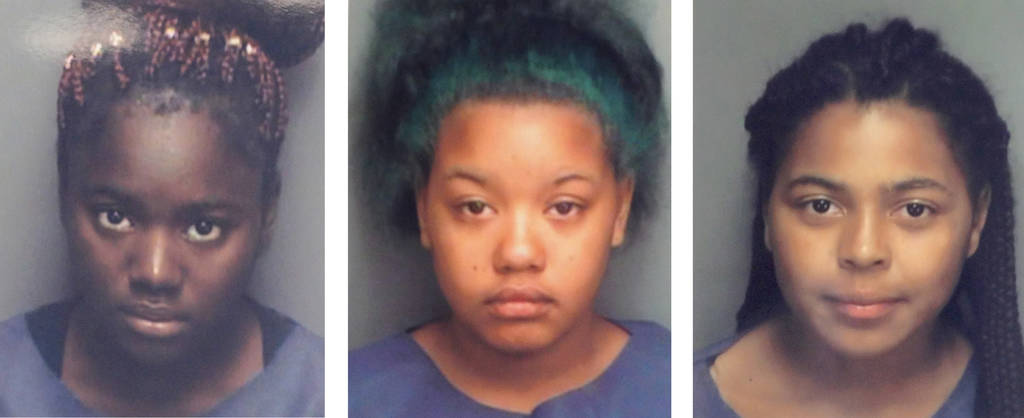
Looking tired, and at times shouting, he spoke of a car theft epidemic — people leaving cars unlocked, kids stealing them and driving recklessly or committing other crimes, getting hurt or hurting others. The sheriff was begging: “These things that are happening here in Pinellas County have got to change.”
But in the year that passed, stolen cars kept turning up, behind vacant houses and in alleyways and in hit-and-runs. Their fronts were crushed in, their tires were flat and they were riddled with McDonald’s cups, if it had been a good night, or bullet holes, if it had not.
St. Petersburg Detective Tim Brown, who has spent 13 years running down stolen cars, said the problem has never been this bad. He has never seen thieves so young. And he has never been so certain that an innocent person will be the next to die.
“How we haven’t had more people run over, injured, killed, just walking down the street, small kids, I have no idea,” he said. “Because they come around the corner on two wheels. And it’s just — it’s fun for them.”
■
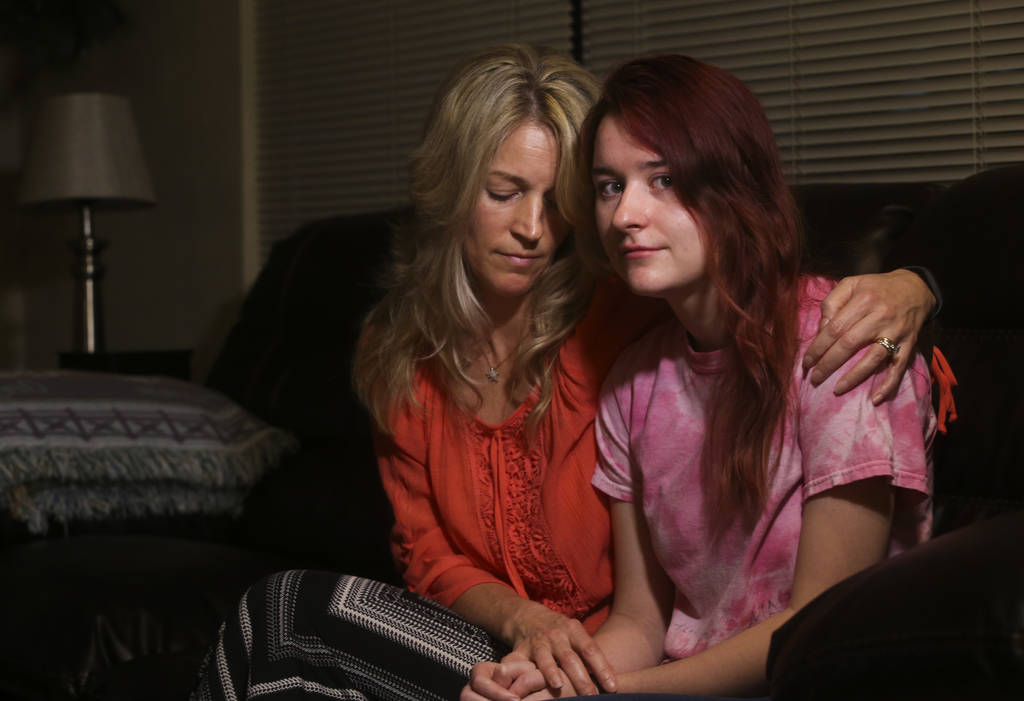
The first time Allye Arroyave was arrested for stealing a car, she was embarrassed.
Not because she had led police on a multi-county chase in a Hyundai Sonata, topping out at 115 miles per hour, crossing medians into oncoming traffic, blowing more stop signs than deputies could count.
She just wished she had taken a better picture. “It’s the worst mugshot because, first of all, I was not ready,” Allye, now 17, told Times reporters in an interview at her home last fall. “My hair was frizzy and grown out. It was terrible.”

Allye stole her first car at age 11. She says she drove it home and showed her brother, two years older, someone she knew took cars. He stacked two couch cushions on the driver’s seat so she could see over the steering wheel, Allye says, and took her to a Publix parking lot to teach her how to drive.
Now, six years later, her boyfriend is a car thief. She met him on Facebook. She’s on Instagram, too, where she posed for a photo last year inside a stolen car, with a caption that read “gta squad.” Cops used it as evidence to arrest her.
Online, kids share photos of themselves hanging out the sunroofs of stolen cars, wearing key fobs around their necks like trophies. They announce when they’re “on wheels” and trade warnings about cop sightings. Narcs out??
Even when they’re locked up, they’re showered with attention, friends posting on their Facebook walls as though it is their birthday: Free Lil Taliban. Free Tokyo Drift. Free Wildthangg.
This is what’s driving the juvenile car theft epidemic in Pinellas, a crime that’s so socially motivated, it spreads through teenage cliques like a virus.
Times reporters used a computer program to map out the social connections between kids caught riding in stolen cars together or arrested together in 2015 and the first half of 2016.
They found that one sprawling group of kids is responsible for 57 percent of the stolen car cases analyzed by the Times.
The kids don’t all hang out in the same group, or hail from the same neighborhood, or go to the same school. But they pile into stolen cars with the same people. And those kids know other kids who steal cars. And those know even more kids who steal cars.
Allye, for instance, is directly tied to 19 others mentioned in car theft reports. She was picked up with a boy last May, who was once caught riding in stolen cars with another boy, who was one of the last people to see Ashaunti Butler the night she drowned in the cemetery pond.
This massive web, which includes 278 kids arrested for auto theft in Pinellas County, accounts for most of the crashes and the vast majority of gunplay. Almost all of the most prolific car thieves — those arrested three times or more — fall within this cluster.
Andrew Fox, a professor at California State University, Fresno, who specializes in juvenile crime and social network analyses, did his own review of Times data and concluded that kids arrested have “a shocking amount of connectivity.”
“To have that many youths connected through one type of crime, it shows that it’s socially connected,” said Fox.
Here’s what that looks like:
Last May, Allye stole a $55,000 handicap-equipped van, a man’s only method of transporting his 6-year-old son with cerebral palsy.
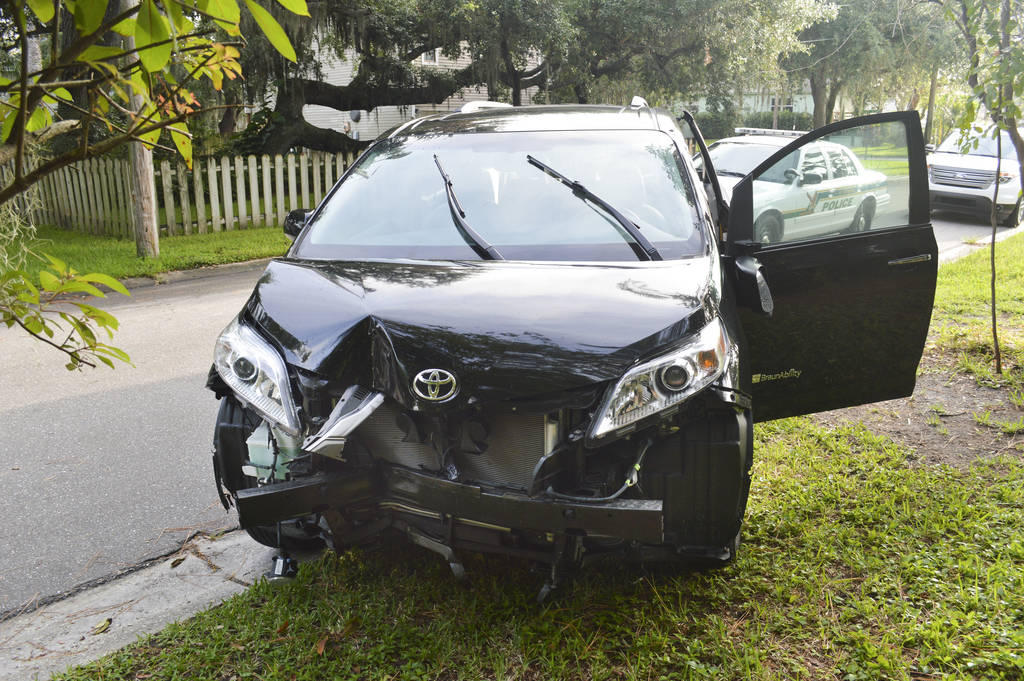
She used the van to shuttle her boyfriend and friend to St. Petersburg neighborhoods where they could break into more cars.
Speeding around, Allye crashed head-on into a tree or light pole — she later couldn’t remember which — before ditching the van. It was wrecked.
When police found it, the whole front was missing from the hood down. The back windows were smashed. The passenger door was crushed in.
Even the seats were broken and cracked.
■
Leaflet | Map data © OpenStreetMap contributors, CC-BY-SA, Imagery © Mapbox
Each dot represents the location of a stolen car for a case that involved kids being arrested for car theft by a Pinellas County law enforcement agency between January 2015 and June 2016.
In just one month, August 2015, kids in stolen cars caused at least 15 separate crashes.
- Aug. 3: A 15-year-old plowed into a dumpster outside a Pinellas Park mattress store after driving the wrong way down U.S. 19 in a BMW 740i.
- Aug. 4: Speeding around Central Park in Largo, a 17-year-old lost control of an Infiniti FX35, crashing into a steel pole. Several of his friends riding in the packed SUV went to the emergency room that night, one in critical condition with crushed lungs, broken ribs and a broken pelvis.
- Aug. 28: A 15-year-old in a Ford F-150 ran a stop sign in St. Pete Beach, T-boning an unmarked police car, which crashed into a parked car, prompting both to catch fire. The officer inside had to be treated for pain in his back and chest.
The Times analysis of 18 months of arrest reports turned up 137 documented crashes involving juvenile car theft suspects, although the number is higher — it doesn’t count the kids who weren’t caught, or the crashes nobody witnessed. Nearly twice as many cars turned up with damage.
Kids behind the wheels of stolen cars injured themselves or others at least 44 times. Typically, the thieves and their passengers emerged bloody or bruised after slamming into a house or a tree. But innocent people sometimes got caught in the way, like a 68-year-old Clearwater man sent to the hospital after a car full of kids ran a red light and flipped his SUV. The kids were speeding away from police who had turned their lights on, trying to flag them to stop.
In at least 100 cases examined by the Times, cars fled at high speeds after spotting police. Although Pinellas law enforcement agencies generally aren’t supposed to chase stolen cars unless they know the driver has committed a violent crime, just the sight of a cruiser could cause a kid to screech his tires and take off.
On the evening of Memorial Day 2015, Melvin Sturgis and two friends were stuck in traffic in front of Crabby Bill’s, heading toward Clearwater Beach to check out girls. A police officer on a bicycle rode up to the stolen Honda CR-V and ordered Melvin and his friends to roll down a window. Sgt. Rodney Johnson stuck his arm through the window, instructing Melvin to turn off the Honda.
Instead, the 16-year-old floored the gas pedal, the sergeant’s arm caught in the car. He dragged Johnson for several feet before fleeing toward Clearwater, driving the wrong way on Causeway Bridge. Eventually, Melvin lost control on a quick turn, and the CR-V crashed into a set of concrete stairs, flipping until it landed on its side. The impact was so violent that the front passenger’s forehead broke the windshield.
Police had to pull Melvin and his friends from the burning car. Later, sorting through the wreckage, the strewn-about sneakers and Diet Pepsi cans, they found guns — a .40-caliber Smith & Wesson on the floorboard and a 9mm Kel-Tec in the pocket of a passenger door, pointing upward.
Neither gun had been in the car when it was stolen.
Both had rounds in the chambers.
■

Late one night in 2011, St. Petersburg Police Officer David Crawford confronted 16-year-old Nicholas Lindsey, suspected of trying to steal a car. The teen had a gun. He shot the officer five times, killing him.
This case is never far from the minds of Pinellas officers and deputies as they pursue teen car thieves, aware of all the guns floating around in stolen cars, either found inside or swiped from others left unlocked.
“Remember this, and I will repeat this every chance I can, from now through forever,” Sheriff Gualtieri said at a news conference after the girls drowned, “the gun used to kill Tarpon Springs police officer Charlie Kondek in December of 2014 was stolen from an unlocked car. People need to lock their cars or take their guns out of their cars.”
Guns showed up in at least 52 of the recent car theft cases examined by the Times. Kids found everything from pistols to assault rifles in the cars they stole. In January 2015, a Lexus stolen off of Coquina Key was found the next day dotted with bullet holes, the passenger’s side window completely shot out.
The night after Christmas 2015, another stolen Lexus was shot up by teens in a stolen Nissan Altima. As Jaquez Jackson, 17, lay bleeding and dying in an alley, his friend used a T-shirt to wipe the stolen Lexus clean of fingerprints.
And in May 2015, gang members with a gun in a stolen Mazda CX-7 chased members of a rival gang in a stolen Chrysler 200 onto Interstate 275 North, shouting “Get that car, bro, get that car!” The gun was stolen out of a third unlocked car a month earlier.
Police go into confrontations ready to draw their guns. In dozens of cases, officers in Pinellas were a trigger-squeeze away from shooting a kid, as simple arrests veered toward frightening standoffs. “(I) pointed my firearm directly at center mass,” a St. Petersburg police officer wrote in a report, about a teen who reached for the head of a K-9 dog that bit him. “I’m only 14!” the teen yelled.
In October 2015, 14-year-old Trey Davis rammed a Pinellas Park police cruiser. The officer got out with his gun drawn, later noting he feared for his life, and told Trey to step out of a stolen Hyundai Elantra. Trey ignored him, instead reversing and speeding around the cruiser down the street.
Hours later in Tampa, in an unrelated case, Kobvey Igbuhay and three other teens ran into a wooded swamp after being spotted in a stolen car. A Tampa police officer said he struggled with the 18-year-old from St. Petersburg and was in fear for his life when he fired a fatal shot to the teen’s head.
There is a sense among law enforcement that it is only a matter of time before another one of these confrontations turns deadly.
Said Sheriff Gualtieri: “It could happen 5 minutes from now.”
■
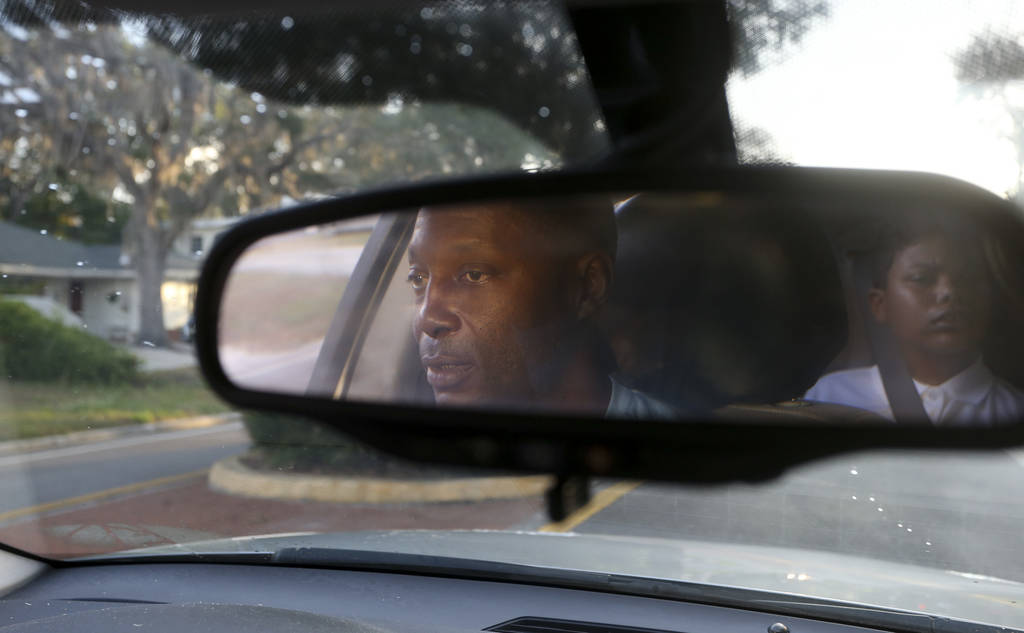
Even without guns, car thefts can quickly escalate.
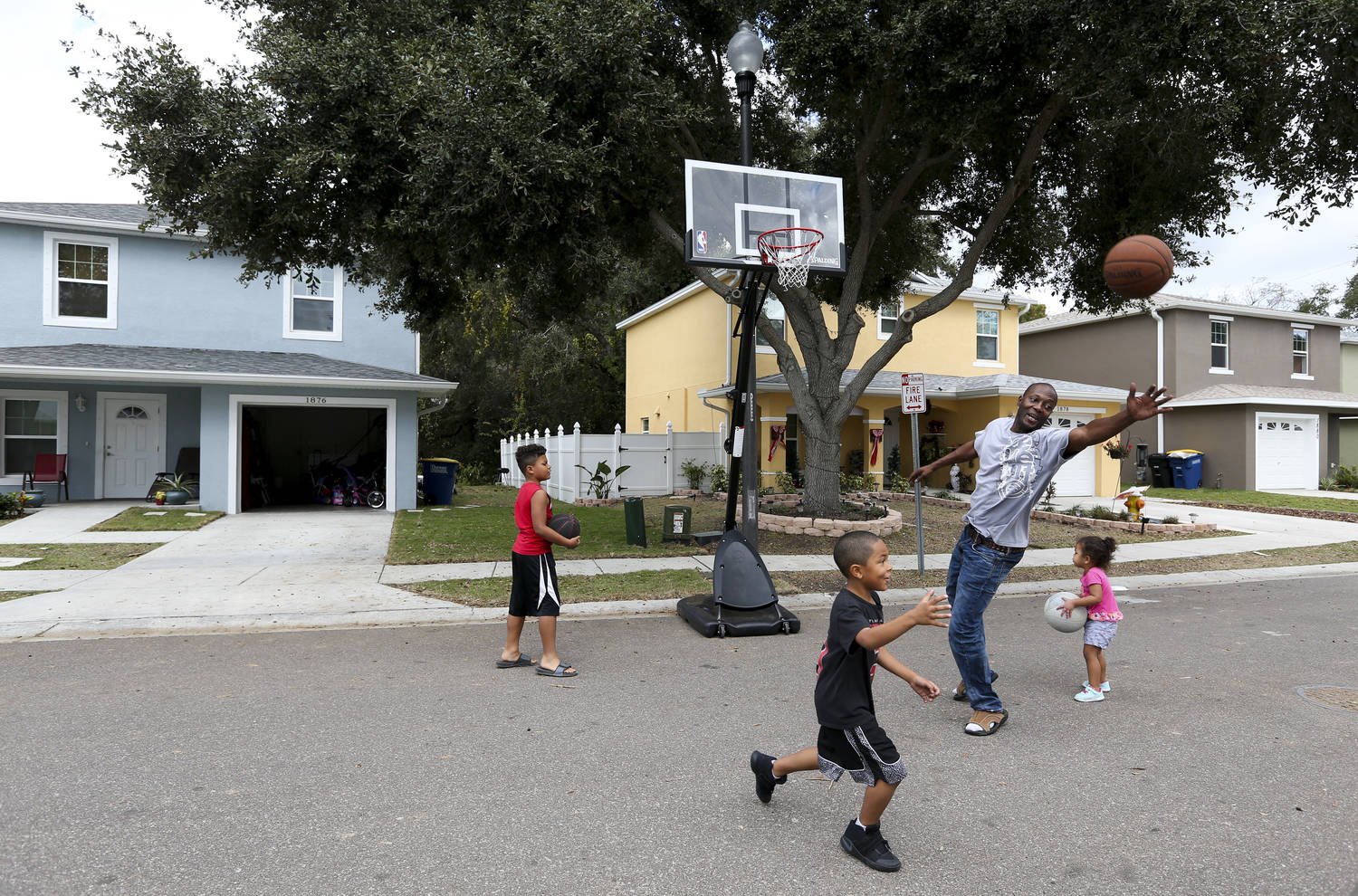
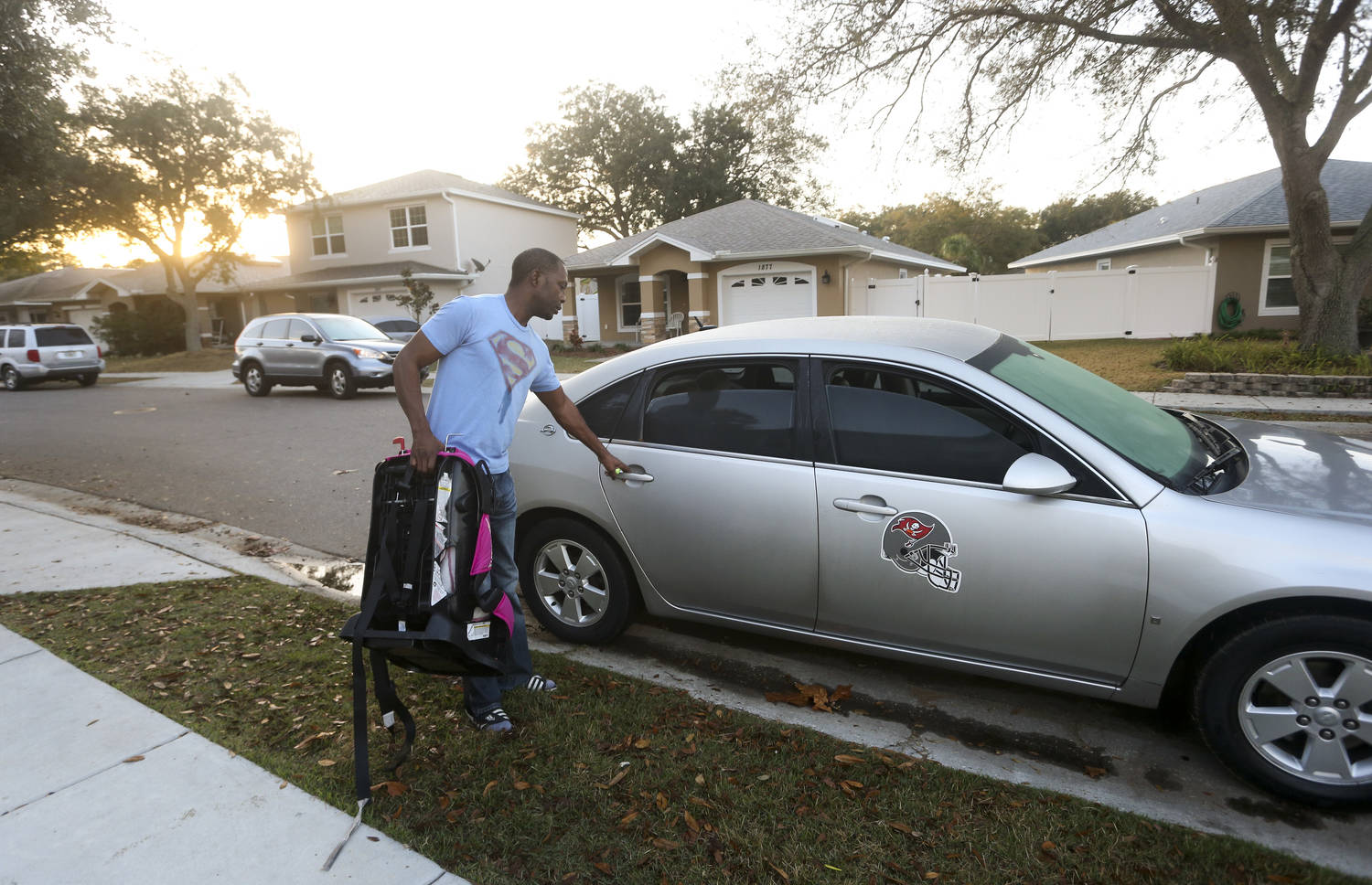
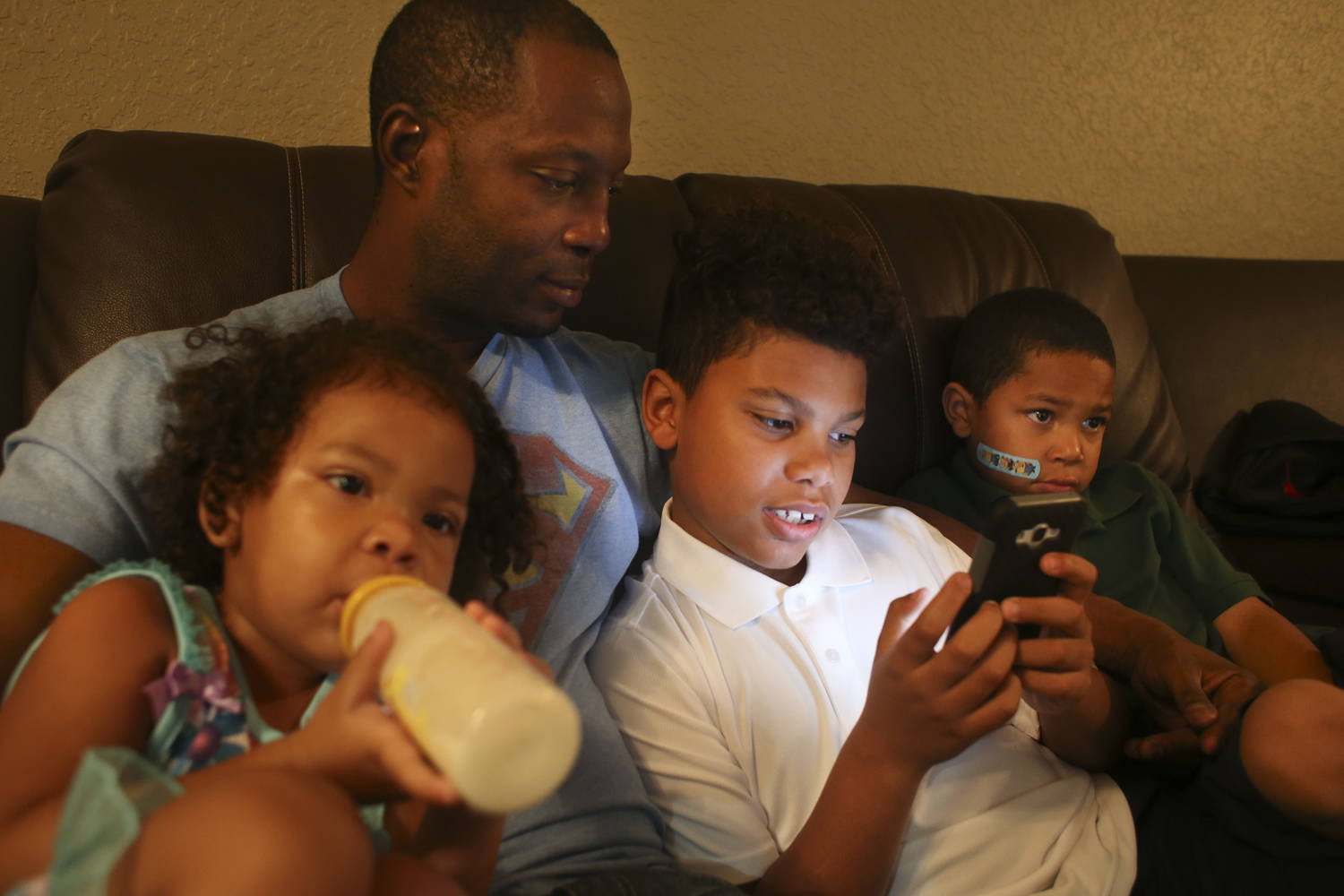
Alexander Hannah was driving his sons home from basketball practice when he stopped at a Citgo in Clearwater to buy phone chargers. His 8-year-old son, Trinzel, was playing on his new phone in the backseat; 4-year-old Asante was fast asleep. Hannah said he never leaves his car running with the kids inside. But he didn’t want to wake Asante.
The second Hannah entered the Citgo, a 15-year-old car thief named Roderick Davis Jr. hopped into the Chevy Impala, and drove off with Hannah’s young boys still in the backseat.
Trinzel didn’t look up from his phone at first. He thought the driver was his father, and asked him to turn up the radio. That’s when he heard an unfamiliar voice say, “Oh s—!”
Roderick pulled the Impala off the road behind an apartment complex, Trinzel says, and snarled at the boys, “Get out of my car.” Trinzel fumbled with the lock and his little brother’s booster seat. The boys held hands as they ran along the street, looking for their father.
Trinzel, now 10, still breaks down in tears when he remembers that night. “I didn’t know if he was going to kidnap us and take us somewhere, like throw us into a ditch or something, or if he was just going to kill us right then,” he says.
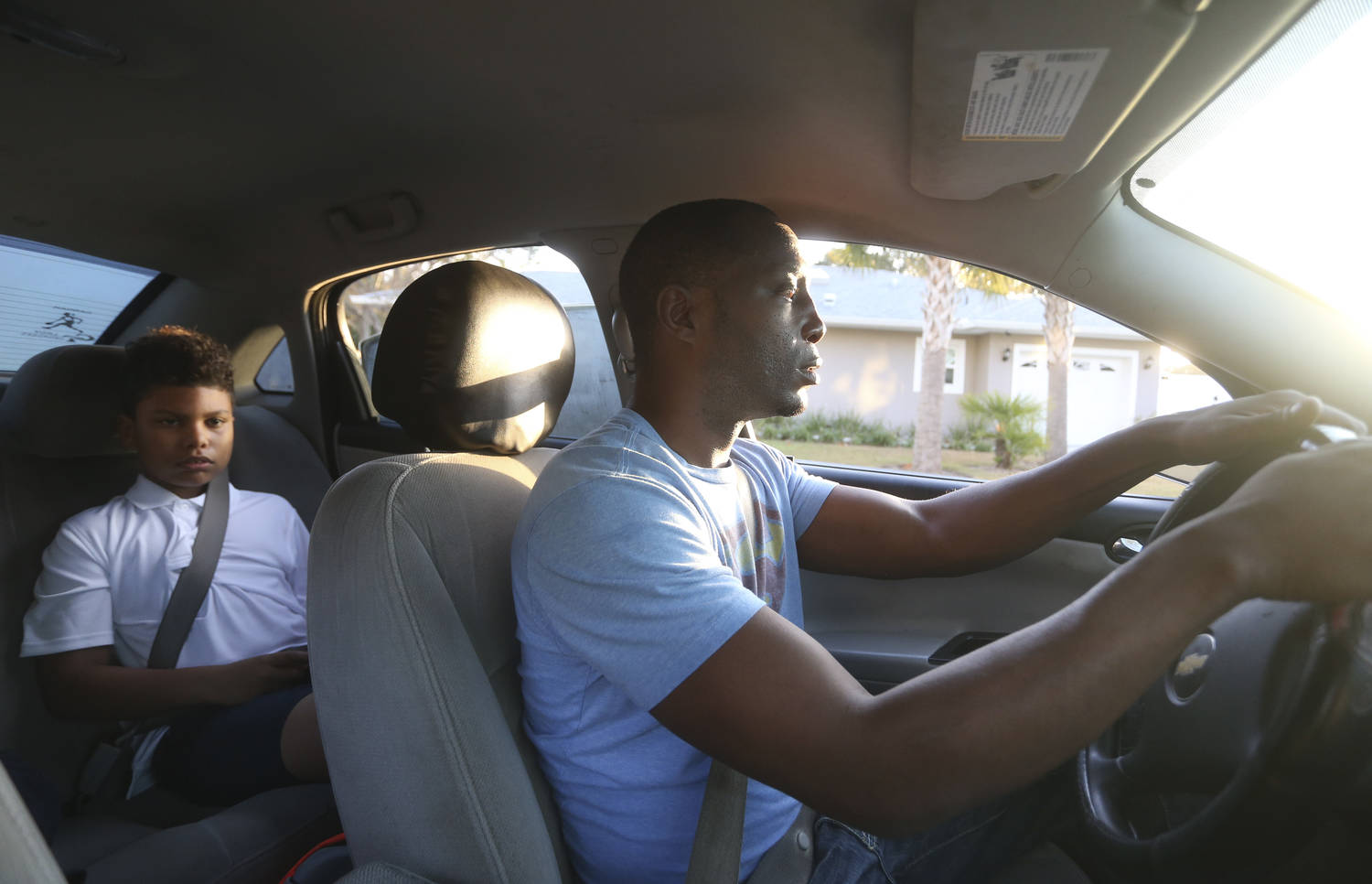

Some of these car thefts turn violent — like the one Dontrell Davis committed six days after he crashed into the Hamilton family minivan.
On Aug. 23, 2015, a woman was filling up water bottles in a Papa John’s parking lot when the 16-year-old went to steal the Hyundai Elantra she left running.
She saw him, but when the 55-year-old woman yelled at him to stop and ran up to him, Dontrell shoved her to the ground so hard she broke her arm and busted her lip. The teen nearly ran her over with her own car as she lay on the pavement, screaming for help.
Two months after that, an elderly woman walking her Yorkie was attacked by a group of car thieves in her gated neighborhood. They pushed her into her walker and snatched her keys from her pants pocket.
“I could not believe it was happening,” said Carol Dickson, now 75. “It made me totally fearful of going outside.”
■
Why has stealing cars become so popular in Pinellas County?
It’s a question that has everyone stumped.
In 1990, St. Petersburg police claimed to have traced one rash of car theft to its origin: A 14-year-old boy with a trick for starting General Motors cars with screwdrivers had moved down from Ohio. He taught a few kids, who taught a few more.
Today, there’s only speculation.
“There’s the beach environment here, you know, there’s a lot of tourism that happens here, and there’s kind of a laissez-faire attitude about St. Petersburg,” said the Rev. Kenneth Irby, pastor at Bethel African Methodist Episcopal Church in St. Petersburg, who was hired by the city as a liaison to at-risk youth.
He laughed, remembering that he had gone to the dry cleaner that morning, and a woman jumped out of her car, leaving it running with her purse sitting on the seat as she waited in line behind him. He wonders if this kind of laid-back, west Florida culture is colliding with opportunism in kids who are poor.

Pinellas is the most densely-populated county in Florida, with areas of poverty within walking distance of affluent ones. It’s also difficult to get around the county using its public transportation system, which is among the worst in the nation; in several police reports, kids said they stole a car because they needed a ride.
“It’s just like, people want to drive,” said Jacer Brown, a car thief who recently turned 18, in an interview from the county jail. “Especially, like, prom night.”
It’s clear from the records that the growth in arrests is happening primarily among the black population. The number of white kids getting arrested has remained about the same since 2011, but the number of black kids has almost tripled. In the 2015-16 fiscal year, according to Department of Juvenile Justice data, 69 percent of kids arrested for car theft were black, though black residents make up only 11 percent of the county’s population.
This steep climb, and stark disparity, doesn’t exist in arrests for other common juvenile crimes like assault or misdemeanor drug possession. Not one of the dozens of people interviewed by the Times, including the kids, their parents, community leaders and Pinellas-Pasco Public Defender Bob Dillinger, allege racial targeting. In many cases, cops find physical evidence on cars that leads them to suspects, or see the car listed on their “hot sheet” before they see the driver.
Gulfport Police Chief Robert Vincent — himself a victim of car theft — said it’s possible that kids in Pinellas steal more cars because they know police won’t chase them, forbidden by a policy that considers chases a threat to pedestrians and innocent drivers.
Clearwater Police Chief Daniel Slaughter said he supports the policy, but it often leads to frustration for officers on the street.
“For somebody to have to stand idly by and watch a juvenile drive around in circles at 100 miles per hour, waiting for him to kill a kid and then take the blame for it when he kills a kid because they didn’t do anything,” the chief said, “that’s not a fun day.”
■

In March 2016, Jadyn Im was arrested for stealing a Toyota RAV4 from Palm Harbor. It was his fourth grand theft auto arrest in three months. He served 21 days at the Pinellas Juvenile Detention Center and was released home.
Less than a week later, the 15-year-old stole a Toyota Camry. “What’s up, man?” Jadyn asked the deputy who came to arrest him. He was drinking a soda and holding a bag of sunflower seeds, a sweater tied around his waist.
Kids aren’t afraid of getting caught for grand theft auto.
They know that the Florida Department of Juvenile Justice’s point system, which evaluates a child’s risk to society, will rarely hold them in detention for more than a few hours: It takes 12 points to hold a kid after an arrest. A first car theft charge gets zero points. A juvenile could steal two cars in the same month and not get held.
They also know that, even if they do get locked up, they won’t serve longer than the Florida statute’s limit of 21 days before their charges are resolved in court. They’ll do that time at the county’s Juvenile Detention Center, or JDC, a facility that is more stable and comfortable than some of the kids’ own homes.
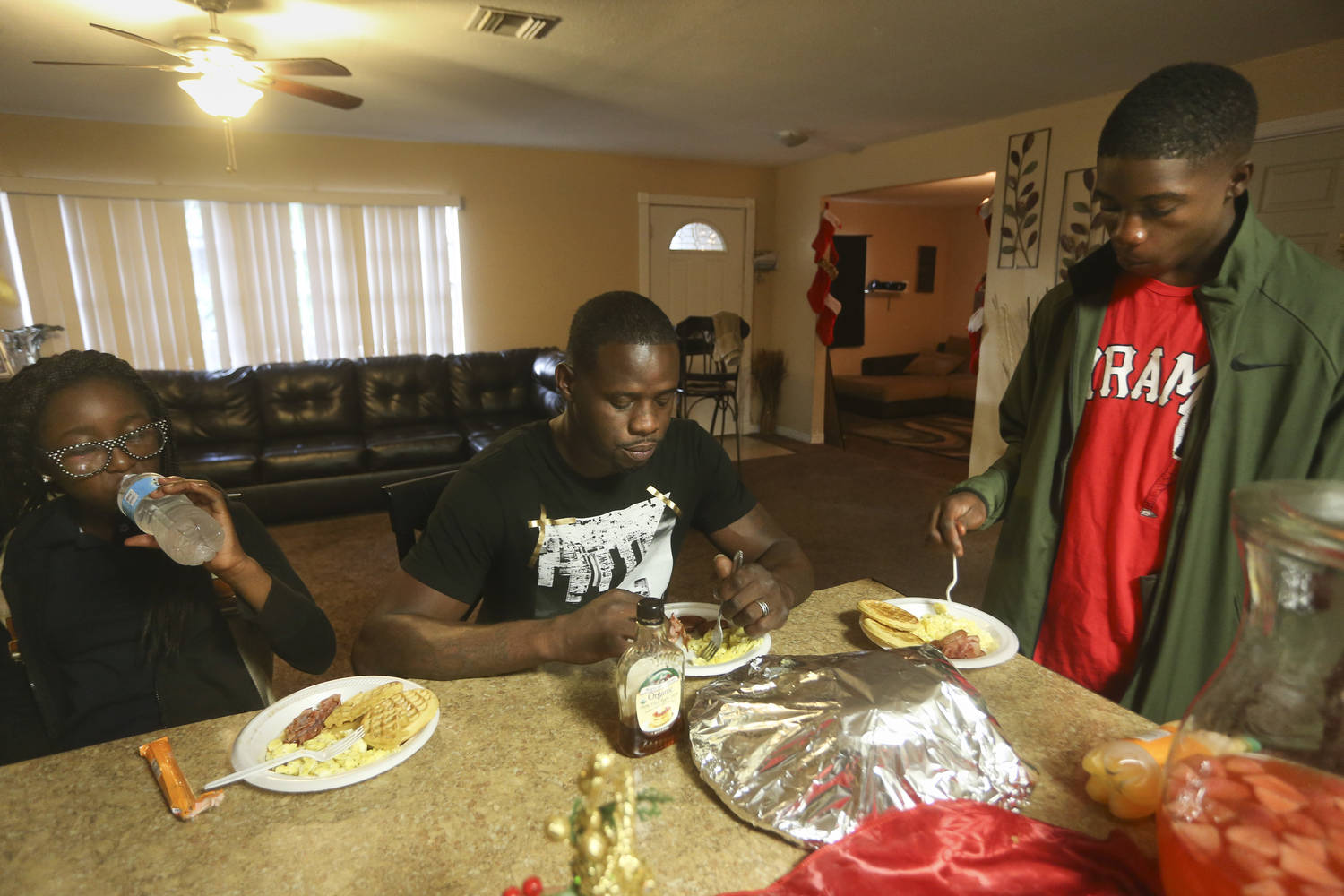
Kids have their own rooms there, painted with ladybugs and inspirational quotes. They get clean clothes and eat three meals each day — whole grain pancakes and sausage links for breakfast, chicken wraps and fresh fruit for lunch, beef chuck roast with baked potatoes for dinner. There is always dessert.

“It’s like day care,” Kaleb Frank, 17, told the Times. “You get fed three times a day, chilling, playing dominoes.”
“You stay with a whole bunch of kids your age that you can associate with, and get their (phone) numbers,” said Deyon, the Clearwater car thief, “so when you get out you can just contact them and be like, ‘Hey, you want to go car-hopping?’”
Many kids spend less than the maximum 21 days in JDC before they’re sent home. They are often handed probation or “diversion,” going free with conditions like mental health counseling, substance abuse therapy, curfews and community service.
Some are sentenced to months at residential programs, but aren’t transported right away. They’re told to wait at home for a bed to open up.
It’s understood by all the players — the kids and their parents, the cops, the lawyers, even the judges — that Florida’s justice system is designed to go easy on juvenile car thieves, giving them little reason not to steal another car as soon as they’re out.
One-third of all kids arrested in the period examined by the Times, a total of 165, were arrested again; dozens of those were arrested four or five times; a handful, six times.
The record was eight.
“The frustration starts when I arrest you three times in the past week and you’re still out,” said St. Petersburg police Chief Anthony Holloway. “Why are we doing this? The system’s not working. The system’s broken.”
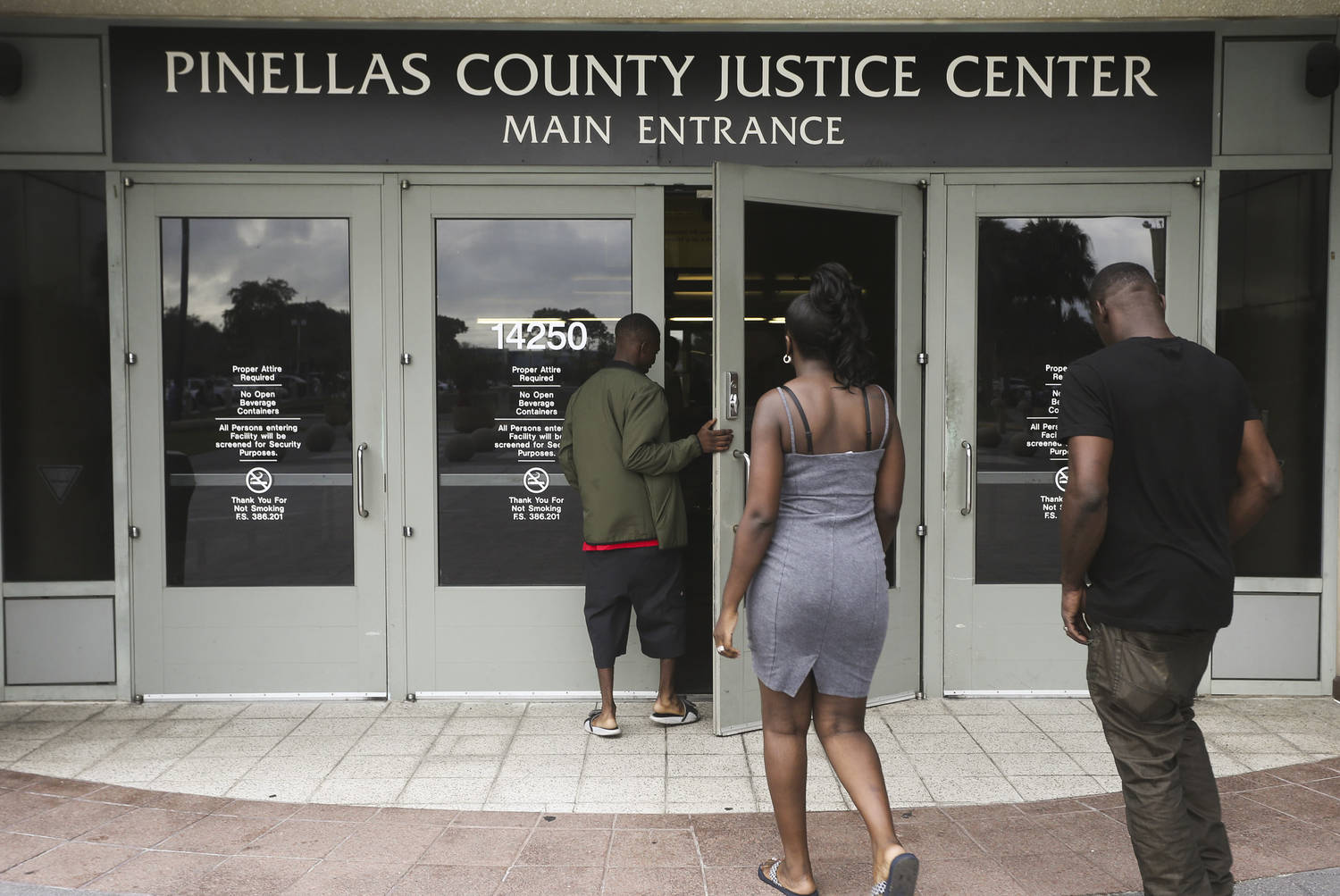
Parents of auto thieves come into Patrice Moore’s courtroom and beg the judge to give harsher punishments to their children, who seem to never learn their lessons. “At the end of the day,” she said, “my hands are tied.”

Dontrail Jackson Sr. said he wishes his son would have received more consequences after police caught him in a stolen Kia Optima in September.
As they tried to get away that night, Dontrail Jr. and his friends drove the wrong way on the Bayside Bridge, reaching speeds of 120 miles per hour.
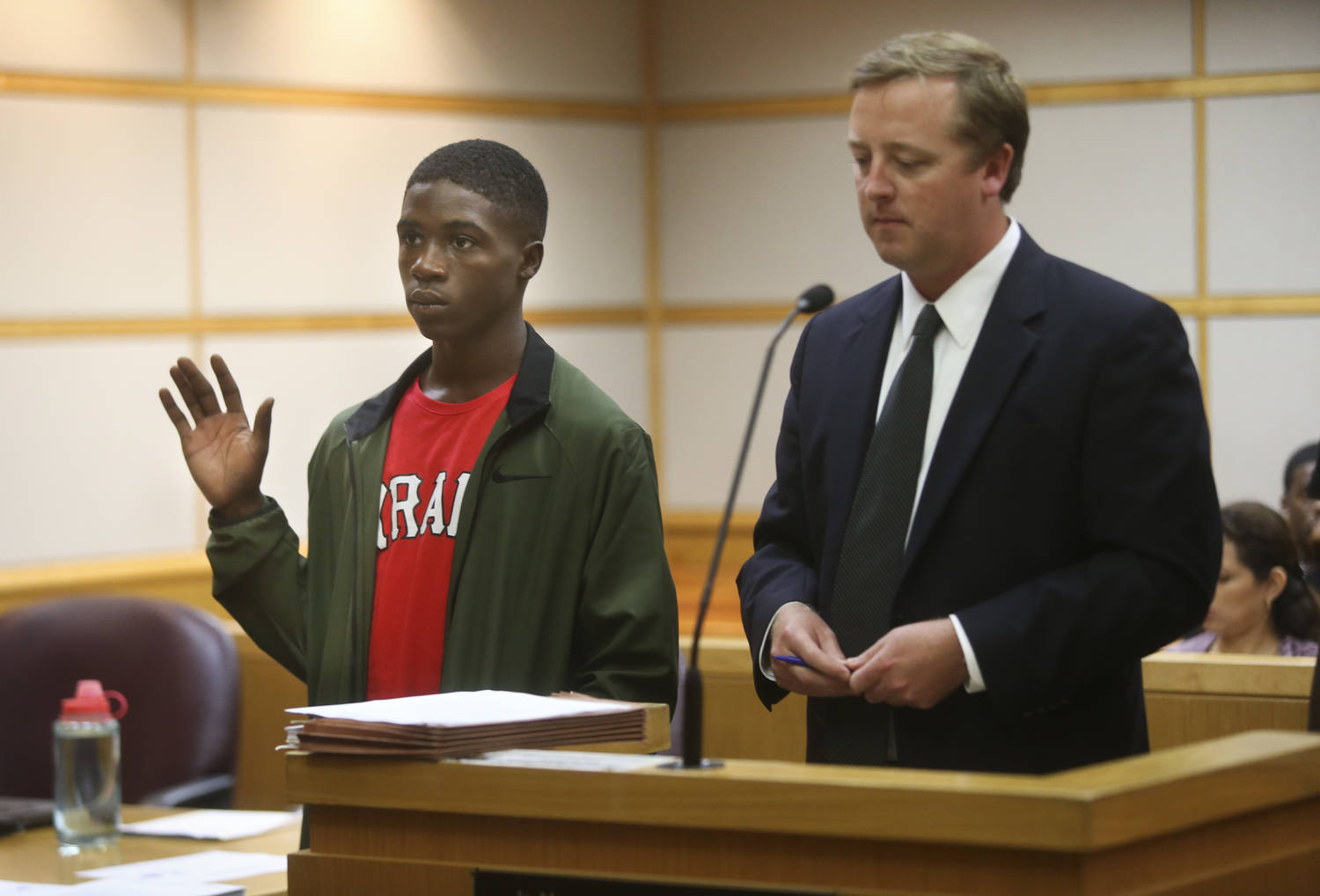
The 17-year-old was in and out of JDC. Three months later, he pleaded down to trespassing and was sentenced to probation.
“He wasn’t scared,” his father said. “He went to court with flip-flops on.”
■
Luis Herring Jr. says he’s sorry.
For driving over a woman’s foot as he stole her car.
For stealing 30 cars in three years.
He had been let off so many times that he didn’t think this one would be any different. But, like an increasing number of teens in Pinellas County, he wound up “direct-filed” into the adult system by prosecutors.
Luis, 16, sentenced to spend the next four years in prison, agreed to an interview with the Times. He wanted to tell his story to get the kids still out there to stop.
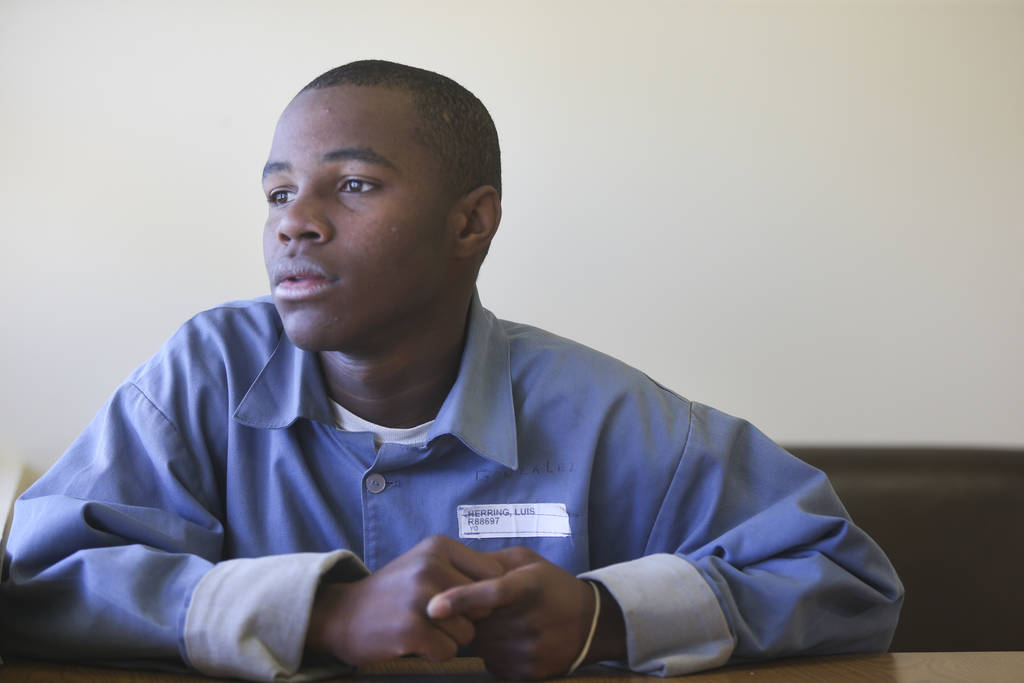
He says he was picked on as a boy, by older relatives who called him “faggot,” before he was comfortable enough to say he was gay. He responded by fighting, and by developing what he calls his “I don’t care attitude.”
“I learned to not care,” he said, “about nothing at all.”
For a while, he just broke into cars. But at 13, he started driving them off. “I always loved driving,” he said. “So I think that’s what kept me stealing cars.”
Six arrests didn’t stop him. Nor did the death of his friend Dominique Battle, one of the girls who drowned in the cemetery pond.
Then came July 11, 2016, the day that got him here. Luis was angry that morning. He and his brother had been fighting. His brother punched a hole in the living room wall. “My mama was upset, blaming the world,” he said. “I needed to get to the southside. When I’m frustrated and I just be driving, I think that it releases a lot of pain.”
He saw a woman pumping air into her car tires at a St. Petersburg Wawa. As he jumped into the driver’s seat, he didn’t expect her to try to stop him. He threw her to the ground, driving over her foot as he peeled off.
“I feel like a bad person,” he now says, thinking of all his victims. “I would say sorry, but I know… Sorry don’t f‑‑‑‑‑‑ count. It don’t f‑‑‑‑‑‑ cover it.”
He has something to say to kids stealing cars:
“Say somebody stole your mama’s car… steals their car, tears it up, breaks it down. Leaves (cigar) guts inside of it. Ashes and weed and s‑‑‑ like that… Now she don’t got a way to work to feed you and your brothers and sisters.
“People don’t think of (that),” he says, “because I didn’t think of it that way.”
Word has gotten to Luis, from others behind bars, about one kid in particular. He is gaining notoriety on Facebook, all over Snapchat, even on the TV news, for scamming an 89-year-old man out of his car.
Luis met him once, a short little kid, “a damn crook.” Luis says he went after him — car thief chasing car thief — when the boy stole his friend’s sister’s Hyundai Sonata and ditched it after crashing.
He doesn’t know this kid’s real name. Just that he’s young. Maybe 13.
He asked reporters, Have you ever heard of terrible T‑Man?
■
More in this series
Part 2: Looking for T‑Man
One of Pinellas County’s most notorious car thieves is 13. And he already has years of experience.Part 3: Wrong WayAt 15, Isaiah Battle was the county’s No. 1 car thief. He had every reason to stop.Something to run fromThe Times looked into the lives of the juvenile auto theft offenders with the most arrests from January 2015 through June 2016 in Pinellas County.
► The easiest way to get your car stolen.► They had just gotten their cars back. Then, it disappeared again.► How the juvenile justice system works — and doesn’t — when it comes to car theft.► Wrong Way: At 15, Isaiah Battle was county’s No. 1 car thief. He had every reason to stop.
About the story
Through public records requests of 10 law enforcement agencies in Pinellas County, the Tampa Bay Times obtained a report for every juvenile arrest for grand theft auto from January 2015 through June 2016, and used the reports to create the most comprehensive database to date of this crime in the county.
Reporters recorded every suspect, every victim and every car. They analyzed details of each case, from how a car was stolen, to whether it was involved in a crash or a police pursuit, to whether the suspects stole it from someone they knew or a stranger.
They created a spreadsheet of every person involved in a car theft, including passengers of the juveniles arrested. They used a specialized computer program to map connections between the people, after first consulting with experts in social network analysis. The Times gave the data to Andrew Fox, a California State University professor who specializes in juvenile crime and social network analysis, who independently analyzed it.
Reporters compiled arrest data from the FBI’s Uniform Crime Reporting system to compare the raw number of arrests in Pinellas County to other places in Florida and across the country. The Times was unable to obtain data from Cook County, Ill.
Reporters spent eight months interviewing those closest to Pinellas County’s car theft epidemic, including teenage car thieves, their families and their victims. They spent days in juvenile court and nights in police cars on ride-alongs. They interviewed police chiefs, judges, state leaders and experts on juvenile crime.
As a matter of practice, the Times takes great care in deciding whether to publish the name of a juvenile charged with a crime. In a number of cases in this series the Times has published the names of even young juveniles. In making those judgments, the newspaper considered the child’s age, number of convictions, severity of crimes and whether a parent or guardian was present for an interview.
South Beach armed burglary victims seek $12M in damages for negligence
Andrea Torres, Digital Journalist
Published: July 15, 2025 at 12:24 PM
Tags: Miami-Dade CountyOpens in new window, Miami BeachOpens in new window, South BeachOpens in new window, West AvenueOpens in new window, CrimeOpens in new window, CourtsOpens in new window
Burglary victim: ‘I could tell in her eyes and in mine that we both thought we were going to die’
MIAMI — Detectives arrested a felon for a burglary at a condo in Miami Beach, and while the criminal case remained pending on Tuesday, the victims in the case sought justice in Miami-Dade County civil court.
Attorney Bernardo Pimentel, II, of Leesfield & Partners, announced the filing of the $12 million negligence lawsuit during a news conference on Tuesday morning in Miami’s Coconut Grove neighborhood.
“Residents should never have to fear for their safety simply walking down the hallway or taking out the trash,” Pimentel said about the 77-page lawsuit.
Pimentel was representing Jacob Kirstein, Kylee Holland, and Gary Burns, who were the victims of the felon’s alleged armed burglary last month in South Beach, records show.
“I was knocked to the floor and the blood was squirting out of my head, while I made eye contact with my fiancee,” Kirstein said while reading a statement. “At that point, I could tell in her eyes and in mine that we both thought we were going to die.”
According to the Miami Beach Police Department, Brian Lopez broke into Flamingo Point at 1508 Bay Road on June 17, in the West Avenue area.
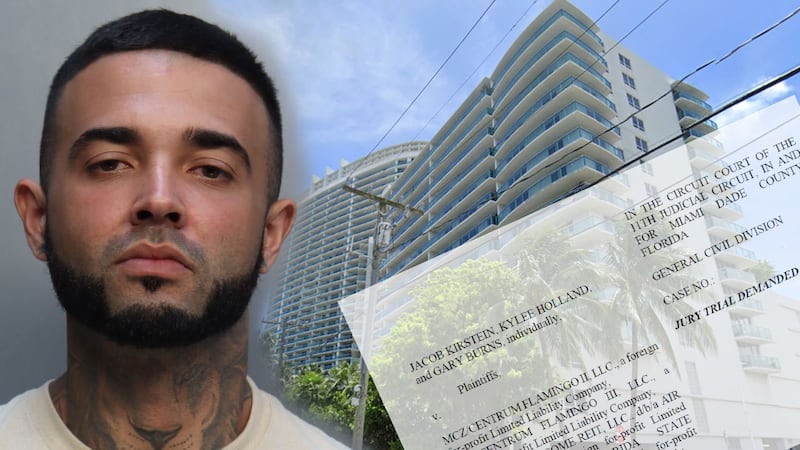
The plaintiffs sought damages from MCZ/Centrum Flamingo II; Apartment Income REIT; Florida State Protection Unit, a security services provider; and Lopez, also known as “King Lay Low,” records show.
“No one, absolutely no one who lives in Flamigo Point, should ever have to experience what we did,” Holland said as she read a statement. “We are speaking out because this cannot be ignored. This has to be changed.”
Holland reported she walked out of her 9th-floor apartment in the North Tower to throw out the trash when Lopez, 31, held her at gunpoint, records show.
Once Lopez, of Hialeah, broke into the apartment where Holland and Kirstein lived, he ordered them and Burns, a guest, to get on the ground, police reported.
Detectives reported Lopez, a convicted felon, pistol-whipped Kirstein during a heist that included $1,500 in Zelle transfers and a carjacking attempt, records show.
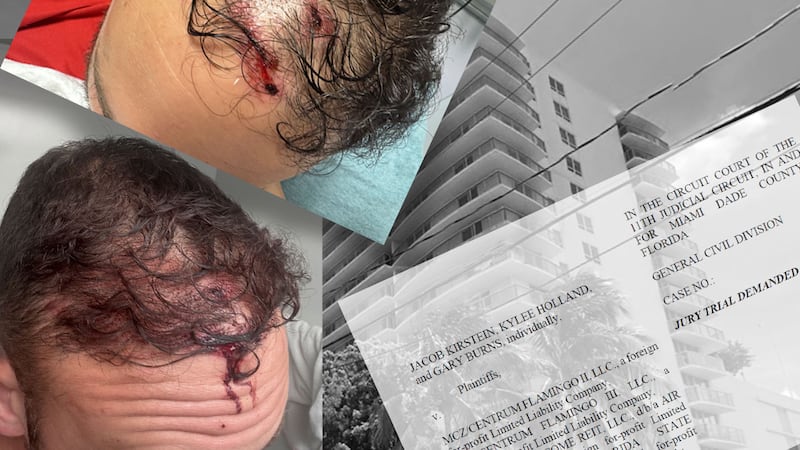
After the crimes, a detective stopped Lopez — who corrections released from prison on Jan. 29 — at Bay Road and 16th Street, and he had Burns’s stolen cell phone in his pocket, records show.
Lopez appeared in Miami-Dade County court on June 18, and a judge ordered him to stay away from the victims and denied him bond, records show.
Court records show Miami-Dade prosecutors filed two cases against Lopez on June 18. County Circuit Judge Ariel Rodriguez is presiding over both.
One case is for burglary of an unoccupied dwelling and petit theft. The other, which is related to the civil lawsuit, is for robbery home invasion with a firearm, three counts of robbery with a deadly weapon, and burglary with assault or battery.
County inmate records show corrections was holding Lopez on Tuesday at the Miami-Dade County Pre-Trial Detention Center.
Local 10 News Assignment Editors Mercedes Cevallos and Frine Gomez contributed to this report. Local 10 News is waiting on statements from the defendants.
Federal judge dismisses lawsuit against Gardens officers in viral ‘unhinged cop’ video
Julius Whigham II, Palm Beach Post
Add Yahoo as a preferred source to see more of our stories on Google.1
PALM BEACH GARDENS — A judge has dismissed a lawsuit against two Palm Beach Gardens police officers accused of using excessive force against a man who called 911 after an altercation at a swimming pool last year.
U.S. District Court Judge Donald Middlebrooks ruled that neither Bethany Guerriero nor Joseph Strzelecki used excessive force in detaining Ryan Gould on May 9, 2023, at a community pool at the Sabal Ridge apartment complex.
In a ruling on a motion for summary judgment, Middlebrooks wrote that Guerriero and Strzelecki had probable cause to arrest Gould and were entitled to both qualified immunity and immunity under federal law. He entered a final judgment in Guerriero and Strzelecki’s favor on Thursday, Aug. 29.
Qualified immunity protects officers as long as their conduct does not violate “clearly established” constitutional rights, or rights that a reasonable officer would know.
In her own words: Bethany Guerriero of viral ‘unhinged cop’ video explains why she held man at gunpointhttps://www.youtube.com/embed/yEU4BgyVkhM?si=SuQnGcs3lVwYS1BD
On Friday, Aug. 30, Miami-based attorney James Slater, who is representing Gould, filed an appeal with the U.S. 11th Circuit of Appeals in Atlanta.
“We disagree with the decision and we will take it up with the Court of Appeals,” Slater told The Palm Beach Post. He declined to discuss specifics of the judge’s ruling.
Arbitrator recently restored fired Officer Bethany Guerriero to active duty

The ruling marks the second major decision to go in Guerriero’s favor within the past couple of weeks. An arbitrator recently reinstated her to the Palm Beach Gardens Police Department after it had fired her in 2023.
In his written decision, Middlebrooks said he considered multiple factors.
“Having carefully considered the totality of the factual record, I do not find there to be a triable issue of fact as to whether the Defendants used excessive force.” he wrote. “As to the need to use any force, Officers Guerriero and Strzelecki had been dispatched in light of a 911 call that a white male was armed with a firearm at the pool.”
Middlebrooks also concluded that “it is clear from the body camera footage that Plaintiff put his right hand into his right pocket after being instructed not to. At that point, any reasonable officer who was called to a scene due to a man brandishing a concealed weapon would have been aware of the danger of a man reaching into his pocket after being instructed not to.”
Incident went viral on YouTube as arrested man protested officer’s tactics
Guerriero and Strzelecki’s encounter with Gould, captured in a viral YouTube video called “Innocent Man Arrested by Unhinged Cop,” occurred in the parking lot of the complex along Military Trail near PGA Boulevard. Gould and a neighbor had gotten into a verbal spat at the community swimming pool, and both called 911 to report the other.
Guerriero argued that she didn’t know which man had the gun when she pulled into the apartment’s parking lot. Although Gould wore only swim trunks and Crocs, Guerriero said she thought he may have concealed it in his pocket or beneath the towel on the ground behind him.
More in U.S.

L.A. Mayoral Candidate’s Daughter, 22, Dies After She Was Found by Highway in ‘State of Medical Distress’
 People
1.5K

FBI Source Claimed Trump Visited Epstein’s Home Just Before Announcing Presidential Run
 The Daily Beast
396

John Fetterman Goes Off on Anti-ICE Protesters on Fox News: ‘Don’t Ever Ever Dox People and Target Their Families’
 Mediaite
3.1K
She said Gould ignored commands to keep his hands out of his pocket as he reached into a pocket to grab a cellphone. Guerriero drew her gun and demanded that Gould get on the ground.
Strezelecki then brandished his Taser for 23 seconds before reholstering it. Gould was taken to the police department’s headquarters, but was never charged with a crime or booked into the Palm Beach County Jail.
Want more Palm Beach Gardens news?
Sign up for our Post on Palm Beach Gardens weekly newsletter, delivered every Thursday!
Julius Whigham II is a criminal justice and public safety reporter for The Palm Beach Post. You can reach him at jwhigham@pbpost.com and follow him on X, the platform formerly known as Twitter, at @JuliusWhigham. Help support our work: Subscribe today.
This article originally appeared on Palm Beach Post: Judge tosses lawsuit against Gardens officers in ‘unhinged cop’ videoView comments(1)
Up next
The Officers Who Killed Renee Good Appear To Have Violated ICE’s Own Use-Of-Force Policies
Brandi Buchman
Tue, February 3, 2026 at 6:17 AM GMT+7
6 min read
Add Yahoo as a preferred source to see more of our stories on Google.444
The federal agents led by an ICE officer who surrounded and fatally shot Renee Good in Minneapolis last month appear to have violated the agency’s policies regarding the use of force during nearly every step of the encounter, according to internal documents obtained by HuffPost.
The ICE Firearms and Use of Force Directive states that it “serves as the authoritative guidance” for Immigration and Customs Enforcement agents. It outlines requirements on how to handle fleeing subjects, including those who are in a vehicle; how to properly handle firearms in close proximity to people; guidelines for deescalation; and what actions agents should take before resorting to deadly force.
Life: We Asked Former Military What They Think Of What ICE Is Doing
“ICE employees are expected to be familiar with the contents of this Handbook and required to take appropriate action to comply with policies and procedures established herein,” it says. “Violation of the policies and procedures contained in this Handbook may be grounds for disciplinary action or other appropriate action.”
Video of the encounter shows three officers approaching Good’s vehicle, and at least two of them instructing her to get out. Good is sitting in the driver’s seat, while her wife stands beside the vehicle. The federal agents bark commands at Good to “get out of the ******* car”; one reaches inside the driver’s side window and attempts to unlock the door. ICE officer Jonathan Ross comes from around the passenger side to stand in front of the vehicle. Good appears to try to maneuver away from the officers and drive away.
Ross, who is recording on his cellphone with one hand and holding his gun in the other, then shoots at Good at least three times. He refers to her as a “******* *****” after shooting her in the head.
The handbook states that only one officer should be giving orders at a time to avoid confusion, and that officers should have a “professional, courteous demeanor” and a “positive attitude” on approach. Officers are instructed to give commands in a “professional, firm voice” and use “instructions that are simple, easy to understand and repeated as necessary.”

Like this article? Keep independent journalism alive. Support HuffPost.
Michel Moore, a former chief of the Los Angeles Police Department, explained in an interview with HuffPost why this early moment of the interaction made the scene unnecessarily tense.
“The use of profanity in that charged situation lacks professionalism, and it heightens and escalates tensions,” Moore said. “You don’t walk up and say, ‘Mother, may I?’ or ‘Would you please mind stopping?’ That’s not reasonable. But going all the way to ‘get the **** out of the car’ — well, you’ve missed all the other steps of establishing what we call a command presence.”
Politics: Speaker Johnson Faces Tough Choices On Partial Government Shutdown And Debate Over ICE
Not waiting for Good to comply with this order, one officer reaches inside the driver’s side window. Though this is not explicitly prohibited in the handbook, it states that “ICE policy requires officers to adjust force based on evolving circumstances and to consider environmental and tactical factors.”
“There are a number of really grave and serious tactical and legal mistakes that the officers on the scene made to ultimately precipitate a use of force that was not necessary, and not proportional to the nature of the threat,” said Matthew Barge, a senior fellow for the Policing Project at NYU School of Law. He has spent 18 years probing police and public safety issues and has reviewed thousands of hours of footage of deadly or excessive force. Officers approached Good in a way that was “completely uncoordinated and really chaotic,” Barge said.
More in U.S.

Epstein Assistant Told Feds He Introduced Melania to Trump, Files Reveal
The Daily Beast

Bovino frustrated by directive to conduct ‘targeted operations’ in Chicago
 NBC News
95

The Trump administration’s rushed narrative about the killing of Alex Pretti has collapsed
 CNN
CNN
688
At the same time, Ross was filming the encounter with Good and her wife with his cellphone. The handbook does not explicitly prohibit handling a phone while holding a gun, but it does emphasize control, awareness and safe handling of a weapon when in close contact with others.
Stepping into the path of a vehicle is widely recognized by law enforcement as a high-risk tactic. One ICE officer previously told HuffPost they were trained to consider vehicles to be deadly weapons and, following the Good shooting, they were told by officials not to stand in front of cars and to be “cautious around them.” A senior Department of Homeland Security official told NBC News that ICE officers are trained never to approach a vehicle from the front and instead, approach in a “tactical L” 90-degree angle to prevent injury.
“Deadly force is not authorized solely to prevent the escape of a fleeing suspect,” the handbook states. “Deadly force against a fleeing subject is only authorized if there is probable cause to believe that the escape of the suspect would pose an imminent danger of death or serious bodily injury to the officer or another person.”
“The use of excessive force by ICE employees is strictly prohibited,” the handbook warns.
The Department of Homeland Security did not respond to a request for comment about apparent violations of ICE’s use-of-force policy.
Even if officers had probable cause to believe Good was interfering with their operations and she attempted to flee from them as they approached her car, Moore said most law enforcement officers would advise letting her leave and then investigating later. “You don’t shoot at a moving vehicle,” he said. “You get away from it.”
Politics: Reported Size Of Trump’s New ‘Folly’ Draws Backlash Amid Cost-Of-Living Crisis
Even when considering that a vehicle could be seen as a potentially deadly weapon, protocol suggests Ross may have moved too quickly when deciding to fire his gun.
ICE operates under a “use of force continuum,” the handbook says. Agents must weigh the “totality of the circumstances” and first consider using “intermediate force” to deescalate if reasonable. (Last year, the Supreme Court used the same phrase — “totality of the circumstances” — when explaining what investigators must look at when evaluating whether an officer who used deadly force acted reasonably.)
Deescalation tactics named in the handbook include giving verbal warnings or establishing containment zones, like blocking off a street so a subject in a vehicle cannot flee. Even using chemical agents to deter a subject can be considered reasonable force, according to the manual.
But so far, the administration has slow-walked a criminal investigation of the agents involved in killing Good, after Trump officials initially slandered her as a “domestic terrorist.” The FBI cut out state and local officials from the investigation. And the path to prosecution for federal agents is narrow.
The handbook warns that agents will face consequences for violating ICE policy. Ross seems to have faced only one consequence since the shooting on Jan. 7: A Department of Homeland Security spokesperson told HuffPost last week that he had been put on leave.