“Chaos and Uncertainty”: A Concealed Carry Mandate is Dangerous and Unpopular
Introduction
New York City is the largest city in the United States and the most visited, welcoming nearly 65 million tourists in 2024 alone.1 And while navigating Times Square can be a challenge, tourists getting up early for a bagel or staying out late on Broadway can rest assured that they are in one of the safest large cities in the country—with a gun homicide rate four times lower than the average large US city.2 One reason for New York’s low gun homicide rate is its strong gun laws, including a requirement that gun owners obtain a permit to carry a concealed gun in public. While states that have repealed strong permitting requirements have seen dramatic increases in violence in the decade that followed,3 New York has avoided that fate in part by retaining strong licensing laws.
But legislators in Congress are now threatening to end this rule—and the peace of mind it provides. These lawmakers are pushing a federal mandate that would override carefully crafted gun safety laws, like New York’s, commanding states to ignore their own laws and instead allow people from across the country to carry loaded, hidden handguns in public without even so much as a permit or background check. Such a mandate would force each state to allow violent offenders from out of state to carry firearms within its borders—even if those people could not otherwise legally buy a gun in that state or were from one of 29 states that don’t require a license to carry at all. This would jeopardize public safety and tourism in New York City and in cities and towns across the country by undermining the permitting systems that keep people safe and that reflect the will of local voters.
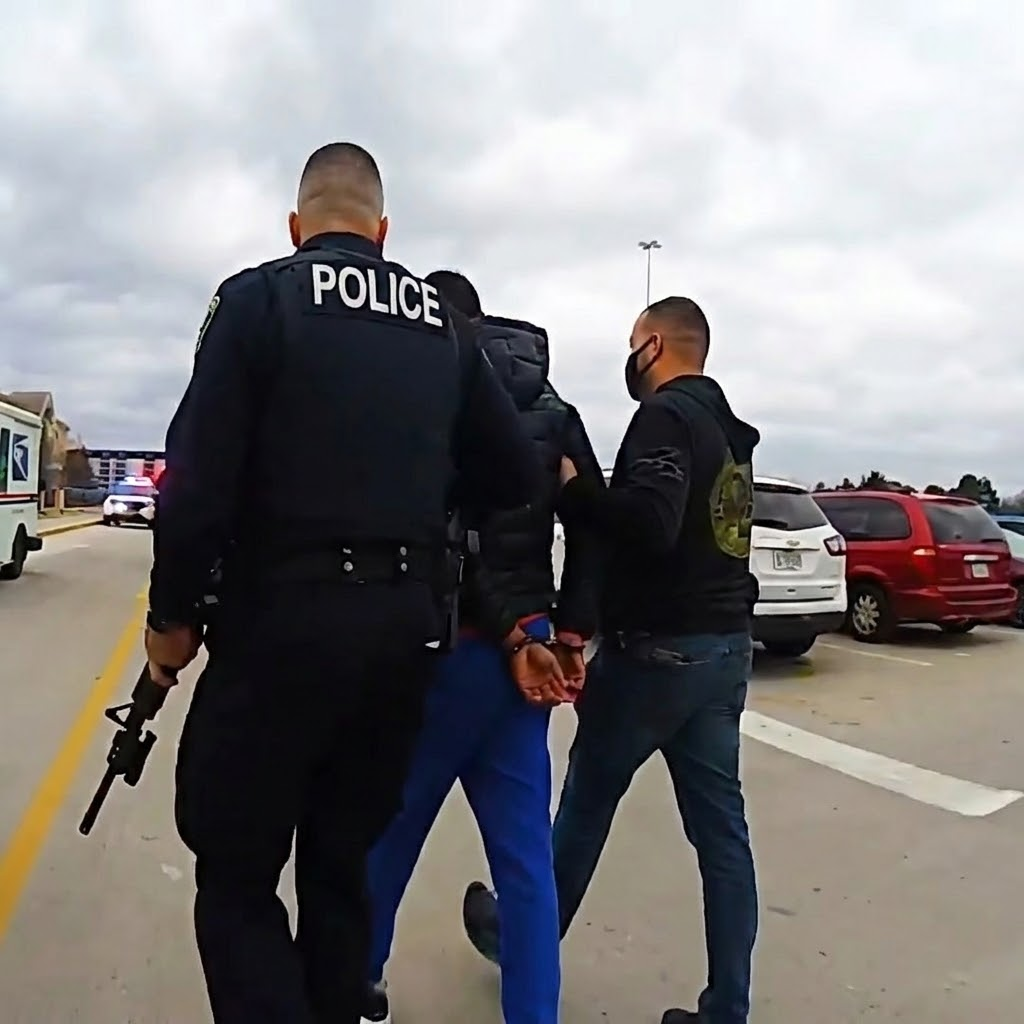
Dangerous results will follow: If one of the leading mandate proposals were to become federal law, New York City Police Department officers could not arrest a man from South Carolina with a history of domestic violence for carrying his loaded firearm without a license through the city on his way to find his estranged girlfriend. Further, the police officers involved could even be sued for stopping him and asking questions. Perhaps this is the reason the policy is broadly opposed by the public and has long been unpopular with law enforcement.4
Overriding state concealed carry permitting requirements could increase gun deaths and assaults in our country and would make it more challenging for law enforcement to protect our communities.
What Is a Concealed Carry Mandate?
As of March 2025, 21 US states require a permit to carry a concealed gun in public. While standards vary, the process for obtaining a permit can involve a background check, firearm training, and safety education to be sure that those carrying hidden guns in public are both vetted and trained. Strong state laws also bar people who are under 21 or have violent criminal histories from getting a permit and carrying guns in public. A concealed carry mandate, also called concealed carry reciprocity, is proposed federal legislation5 that would override these state laws. This legislation would mandate that all states recognize the concealed carry standards of every other state—even those with no permit requirement at all.
A Federal Mandate Would Override State Laws That Protect the Majority of Americans
In the United States today, people in every state are allowed to carry concealed guns in public.6 But most people live in states where their representatives have determined that permits for carrying these guns are a vital part of protecting the public.7
Further, existing federal law already addresses the issue of transporting firearms through states. Law-abiding gun owners are allowed to transport securely stored firearms in a vehicle through a state, even if the state law would otherwise prohibit them from carrying in that state.8
Importantly, this proposed mandate is different from how other licensing agreements between states have been handled, such as with driver’s licenses. States voluntarily accept each other’s driver’s licenses—there is no federal mandate. They choose to do this because all states require a license to drive, and generally have similar standards. In every state in the country, residents must actually drive a vehicle and pass a test before obtaining a license. By contrast, the variation between strong and weak concealed carry laws throughout the country is dramatic. Would you want someone from another state who had never passed a driving test—and may never have driven a car before—on the highway next to you and your family?
Letting states choose who can carry concealed handguns within their borders protects us because what works for some states may not work for others. In the American system, states have always been empowered to make these decisions—and indeed gun-carrying practices and social norms vary widely in different regions and between urban, suburban, and rural places.
Most people live in states that require a permit to carry concealed guns in public.
The proposed federal mandate could also open the floodgates for people who pose a danger to our communities to carry concealed, loaded handguns in public. This is because while guns purchased through licensed dealers require a background check, many guns are bought from unlicensed sellers—for example, online or at a gun show—without any check at all. In the 28 states without background checks on all gun sales, people who are prohibited from having guns can easily buy one through these private transactions with no questions asked. This could include domestic abusers or felons. A concealed carry permit may be the only background check some of these folks ever receive—and the only opportunity to stop those who are prohibited.
The Impact on Public Safety
In a landscape where state requirements for concealed carry permits have changed rapidly in recent years—with 17 of the 29 permitless states repealing their permit requirement in just the last six years9—it is important to understand the risks and impact of increasing the presence of guns in public spaces. Research reveals the serious threat to public safety that comes from allowing people to carry a concealed gun in public—in grocery stores, public parks, and on public transportation—without vetting or training.10
Most states that have repealed their concealed carry permitting requirements in recent years have seen increases in gun homicide and gun death rates.
- States that removed concealed carry permit requirements between 1999 and 2021 saw, on average, a 27 percent increase in gun homicides within three years of the change—the US as a whole saw less than half that increase.11
- Another analysis found a similar trend: 16 of the 20 states that enacted permitless carry between 2015 and 2022 experienced higher non-suicide shooting death rates after removing their permit requirements.12
- In one notable case, after West Virginia ended its requirement in 2016, gun homicide rates increased by 48 percent, handgun death rates rose nearly as much, and overall gun death rates climbed by 29 percent—all while gun death rates in the US remained relatively unchanged.13
It’s no surprise that when states allowed people to carry a concealed, loaded handgun in public without a permit—let alone training or live-fire experience—gun use and misuse increased. When states eliminated their concealed carry permit requirements, more people died from guns. A new federal mandate would risk the same outcome across the nation, particularly in states that have retained and even strengthened their permit laws and concealed carry standards.
When states eliminate strong concealed carry requirements, the rate of gun assaults increases.14
- States that abandoned strong concealed carry permitting systems—including those with live firearm training requirements—for permitless carry between 1981 and 2019 saw an average 32 percent increase in gun assaults.15
- On the ground, this resulted in approximately 21 additional people being shot each year for every 100,000 residents.16 For a city like Philadelphia, that could mean 300 more people shot and countless more impacted each year.17
- States with concealed carry permit requirements that included prohibitions for violent misdemeanor convictions, live-fire requirements, and the authority for permit issuers to deny an applicant based on a history of dangerousness or questionable character saw 22 percent lower firearm assault rates and 30 percent lower firearm homicide rates than states without these safeguards.18
These studies highlight the public safety benefits of strong concealed carry permitting requirements.
Gun violence in public—like road rage shootings—is more common in states without concealed carry permit requirements.
- Road rage shootings are increasing at an alarming rate in the US. In 2018, over 200 people were shot and killed or wounded in a road rage incident. By 2023, those numbers had doubled, with someone shot and wounded or killed in a road rage incident, on average, every 18 hours.19
- States that did not require a permit had more than triple the rate of road rage shooting victimizations than those states with the historically most protective standards.20
Having a gun in the car emboldens drivers to behave in ways they otherwise wouldn’t. Policies that make it more likely that people will bring firearms into their vehicles only worsen this issue.
Overriding laws requiring permits to concealed carry in public increases the rate of fatal shootings by police.21
- For law enforcement, the prospect of more people carrying hidden handguns—many without a permit—is not only challenging but dangerous. Police officers need the ability to verify that people carrying concealed, loaded guns in public are legally allowed to carry them, to protect both those around them and themselves.
- Additionally, this poses a risk to those interacting with police. If officers are concerned that everyone they speak to or pull over is carrying a hidden gun, they may be more likely to respond with force.
- When researchers compared states that require concealed carry permits with states that removed the requirement, they found that the rate of fatal shootings by police in states without permits was, on average, 13 percent higher than expected had the requirement remained in place.22
Forcing states to allow people from all other states to carry concealed handguns could complicate the job of law enforcement.
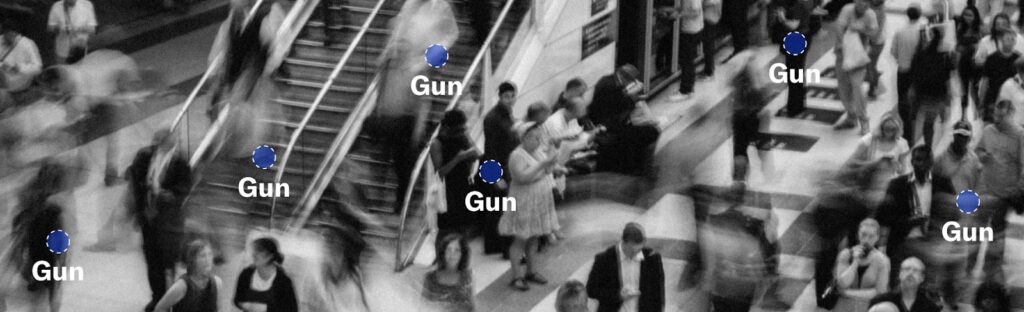
On February 14, 2024, an argument broke out at the Kansas City Chiefs Super Bowl parade in downtown Kansas City, Missouri, where a million people had gathered to celebrate. In many other cities it would have ended as it had started—with words. But it was in Missouri, where people can carry a concealed, loaded handgun in public without a permit, and the argument ended instead in a mass shooting, leaving one person dead and another 20 people wounded.23
One of the shooters that day had pulled a gun three years earlier, but prosecutors were unable to charge him with carrying a gun without a license—a crime that, had the permit requirement not been repealed, would have prohibited him from having a gun at the Super Bowl parade. The tragedy that scarred what would have been a triumphant celebration could possibly have been avoided.24
A Federal Mandate Is Unpopular
Researchers aren’t the only ones who say that overruling state permitting laws is a bad idea; so do people and organizations25 across the country. A federal mandate would go against the wishes of the majority of Americans—including gun owners and Republicans—who oppose allowing people to carry concealed guns without a permit26 and support requiring gun owners to pass a safety test before obtaining a concealed carry permit.27 When guns are present, people report that they are less likely to feel safe on public transit, less likely to shop at fairs and farmers’ markets, and less interested in recommending a park to a friend.28
3 in 4
Three in four Americans oppose allowing people to carry concealed guns without a permit, including a majority of gun owners and Republicans.
Pew Research Center, “Gun Violence Widely Viewed as a Major—and Growing—National Problem,” June 28, 2023, https://www.pewresearch.org/wp-content/uploads/sites/20/2023/06/PP_2023.06.28_gun-violence_REPORT.pdf.
3 in 4
Three in four Americans support requiring individuals to pass a test demonstrating safe and lawful use of firearms before obtaining a concealed carry permit. Among gun owners, more than two in three support the policy.
Cassandra Crifasi et al., “Public Opinion on Laws Regulating Public Gun Carrying,” Preventive Medicine (2022), https://doi.org/10.1016/j.ypmed.2022.107067.
This proposal is also unpopular with state and local law enforcement due to the unique challenges it creates.29 Police often have no way to verify whether an out-of-state permit is valid, meaning they would be unable to confirm if a person presenting a carry permit is a law-abiding gun owner.30 And because the legislation would allow many people to carry concealed firearms with no permit at all, law enforcement would have no permit to evaluate. That’s why the National Law Enforcement Partnership to Prevent Gun Violence31 responded to federal efforts to override state concealed carry permitting laws by stating:
“This obvious step in the wrong direction would sow chaos and uncertainty, making a cop’s job harder and citizens less safe.”32
Attorneys general,33 mayors,34 city councilmembers,35 and prosecutors36 have long agreed that a federal mandate on concealed handgun carry would make their jobs more challenging. It would also undermine states’ rights, since states have long held the authority to decide who can carry a concealed gun in public and where concealed guns are prohibited.
Conclusion
A federal mandate forcing every state to accept every other state’s concealed carry standards—including those without any permit or safeguards at all—is dangerous and unpopular. Research shows that when states stop requiring permits to carry hidden handguns in public, gun homicides, gun assaults, and overall gun deaths can increase. These states also tend to have higher rates of road rage shootings and shootings by police. States have long had the power to craft tailored laws to protect their residents from violence, fear, and uncertainty. A federal mandate overruling this authority and gutting state laws poses grave public safety concerns. SharePrint
Learn More:
- Block a Federal Concealed Carry Mandate
- Educate Gun Owners of Risks
- Gun Owner Safety Training
- Guns in Public
- Keeping Guns Out of the Wrong Hands
- Prohibit People With Dangerous Histories From Having Guns
- Require Permits to Carry Concealed Guns in Public
- Responsible Gun Ownership
- Strong Standards for Carrying Concealed Guns in Public
Everytown Research & Policy is a program of Everytown for Gun Safety Support Fund, an independent, non-partisan organization dedicated to understanding and reducing gun violence. Everytown Research & Policy works to do so by conducting methodologically rigorous research, supporting evidence-based policies, and communicating this knowledge to the American public.
GOP bill would eliminate concealed carry permits in Wisconsin
BY Alex Loroff Wisconsin
PUBLISHED 4:00 PM ET Jan. 29, 2026
MADISON, Wis. — A Republican lawmaker wants to get rid of certain regulations for carrying a firearm in Wisconsin.
There are 29 states in the U.S. that allow constitutional carry, which means individuals can carry a concealed firearm without a permit.
What You Need To Know
A Republican lawmaker wants to get rid of certain regulations for carrying a firearm in Wisconsin
Assembly Bill 609 removes the requirement to have a license to carry a concealed weapon in Wisconsin
The DOJ would still be required to perform background checks to see if a person is prohibited from carrying a concealed firearm under federal law but not state law
There are 29 states in the U.S. that allow constitutional carry, which means individuals can carry a concealed firearm without a permit
Wisconsin is not on that list, and State Rep. Chanz Green, R-Grand View, believes the state’s concealed carry laws are too restrictive.
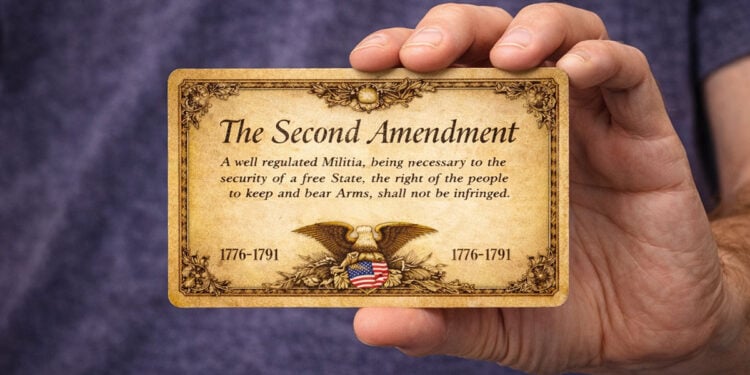
“As a gun owner and a proud advocate for the Second Amendment, I don’t feel that me having to get a permit to conceal and carry is necessary,” Green said.
Assembly Bill 609 removes the requirement to have a license to carry a concealed weapon in Wisconsin.
The DOJ would still be required to perform background checks to see if a person is prohibited from carrying a concealed firearm under federal law but not state law.
State Rep. Angela Stroud, D-Ashland, said while she understands what the Second Amendment protects, guardrails need to be in place.
“The Constitution gives us rights, and it also does not preclude regulation,” Stroud said.
Stroud said she’s researched firearm regulations for more than a decade. She referenced a study by the RAND Research Organization that showed states with permitless carry have higher rates of violent crimes and firearm homicides.
“The research is just abundantly clear that when we water down any permitting process, or in this case get rid of it altogether, we don’t keep the public safe,” Stroud said.
Stroud said she’s a gun owner, as well as a concealed-carry permit holder. She added she isn’t trying to take those rights away; she’s just concerned with the safety risk of firearms becoming more accessible.
“When you have more people carrying who maybe haven’t thought through the responsibility of it, then things can go south,” Stroud said.
Green doesn’t think the actions of those who don’t use firearms safely should be held against responsible gun owners.
“I don’t want to punish good-behaving, gun-owning citizens in Wisconsin because bad actors can’t get their stuff together,” Green said.“I don’t want to punish good-behaving, gun-owning citizens in Wisconsin because bad actors can’t get their stuff together,” Green said.
Green said he’s skeptical the governor would sign his bill, even though he believes it’s the right thing for the people of Wisconsin.
“If Tony Evers chooses to veto this, well that’s him infringing on the Second Amendment as far as I’m concerned,” Green said.
The bill was heard in an Assembly committee in January. It needs to be passed by that committee before it can be scheduled for a vote in the State Assembly.
Wisconsin Bill Would Eliminate the Need for Concealed Carry Permits Statewide

in Articles, Concealed Carry, Firearm Laws & Litigation, News
Reading Time: 3 mins read
Share on FacebookShare on Twitter
https://instaread.co/player?article=wisconsin-bill-would-eliminate-the-need-for-concealed-carry-permits-statewide&article_url=https%3A%2F%2Fwww.usacarry.com%2Fwisconsin-bill-would-eliminate-the-need-for-concealed-carry-permits-statewide&publication=usacarry&version=1770107100000
MADISON, WI — A sweeping firearms bill introduced in the Wisconsin State Assembly aims to eliminate the requirement for a concealed carry permit, effectively making Wisconsin a constitutional carry state. Assembly Bill 609 (AB609), introduced by Representative Green and a coalition of Republican lawmakers, is currently under review by the Assembly Committee on State Affairs.
If passed, AB609 would repeal the existing general prohibition on carrying a concealed weapon without a license. Instead, the bill affirms the right of any individual legally allowed to possess a firearm under federal law to carry it concealed without obtaining a permit from the Wisconsin Department of Justice (DOJ). The option to obtain a concealed carry license would remain for those seeking reciprocity in other states or wishing to carry in federal school zones.
AB609 also proposes significant changes to current firearm-related statutes, including:
- Repeal of numerous concealed carry license provisions: Background check standards, training mandates, revocation procedures, and restrictions based on certain state-level prohibitions would be removed.
- Uniform penalties for carrying in prohibited places: Current law distinguishes penalties based on whether or not a person holds a concealed carry license. AB609 would eliminate this distinction, making any violation of restricted-location carry a Class A misdemeanor regardless of licensure status.
- Expanded list of restricted areas: The bill maintains restrictions on carrying in specific locations such as police stations, correctional facilities, and certain courtrooms, while also adding “nuisance” properties and federally prohibited areas to the list.
- Changes to hunting distance regulations: The required distance for hunting near schools, hospitals, or sanatoriums would be reduced from 1,700 feet to 1,200 feet.
- Removal of restrictions on loaded long guns in vehicles: Current state law only allows handguns to be loaded in vehicles. AB609 would permit all firearms to be loaded, regardless of type.
- Clarifications on property and employment rights: The bill maintains employers’ rights to restrict firearm possession during employment but prohibits policies that ban employees from keeping firearms or ammunition in their own vehicles.
If passed, this legislation brings Wisconsin’s laws in line with constitutional carry principles already adopted in more than half the U.S. states. It simplifies firearms laws, removes unnecessary bureaucratic hurdles, and restores rights protected under the Second Amendment.
Get the latest articles, DGU stories & a chance to win a free gun! Join the USA Carry newsletter below.Enter For a Chance To Win a Gun
*No Purchase Necessary. See Terms and Conditions for more details.
Critics, however, express concern over the removal of state-level background check requirements and the potential public safety implications of unlicensed carry without mandatory training. While these concerns are often raised in debates over constitutional carry, they have not materialized in the majority of states that have already adopted similar laws. Currently, more than half of the United States allow permitless concealed carry, and there is no conclusive evidence showing a rise in violent crime as a direct result. Law-abiding gun owners remain responsible for understanding and following the law, and federal prohibitions on firearm possession by prohibited persons still apply regardless of state permit requirements.
While AB609 does not alter federal firearm restrictions or the Gun-Free School Zones Act, it seeks to better align Wisconsin’s statutes with federal allowances, particularly for individuals possessing a valid concealed carry license recognized under federal law.
The bill was introduced on October 29, 2025, and has since seen a public hearing and the offering of an amendment by Rep. Green on January 15, 2026. Its progress through committee will determine whether it advances for a full Assembly vote.
AB609 represents a continued legislative push by pro-Second Amendment lawmakers to reduce regulatory barriers for lawful gun owners. Its emphasis on aligning state and federal standards reflects a broader trend toward strengthening the rights of responsible citizens to carry without government-issued permission.