Trump’s Attack on Venezuela Reflects Congress Surrendering Its Decision-Making Powers
“Here we go again.”
By Sarah Burns, Rochester Institute of Technology
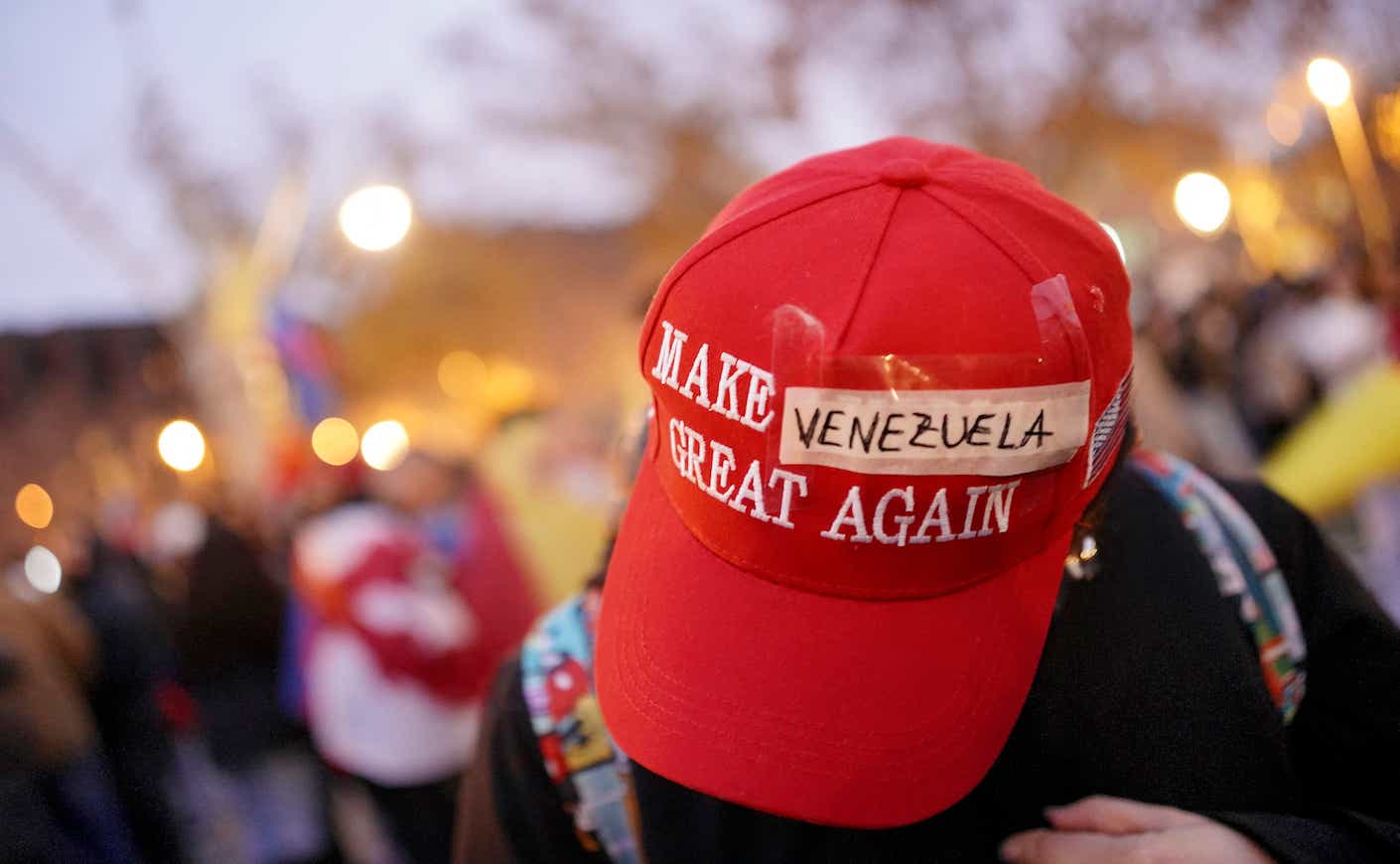
Americans woke up on Jan. 3, 2025, to blaring headlines: “US CAPTURES MADURO, TRUMP SAYS,” declared The New York Times, using all capital letters. The U.S. had mounted an overnight military raid in Venezuela that immediately raised questions of procedure and legality. Prime among them was what role Congress had — or should have had — in the operation.
Politics editor Naomi Schalit interviewed political scientist Sarah Burns, author of the book The Politics of War Powers and an expert at Rochester Institute of Technology, on the historical struggle between Congress and U.S. presidents over who has the power to authorize military action.
More Like This
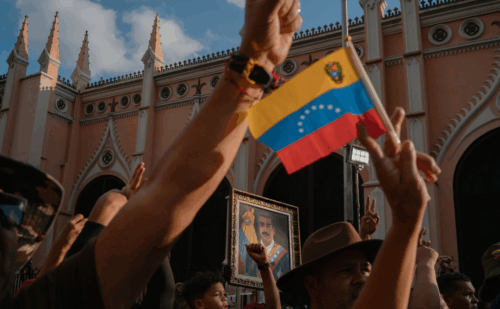
Can the U.S. “Run” Venezuela?
What One Venezuelan Wants Americans to Understand About Saturday’s OperationA Failure of ImaginationCan Lawmakers Strike a Deal to Avoid a Government Shutdown?
Is this a war?
I wouldn’t call it a war. This is regime change, and whether or not it has a positive impact on the United States, whether or not it has a positive impact on Venezuela, I think the likelihood is very low for both of those things being true.
How does Congress see its role in terms of military action initiated by the United States?
Congress has been, in my view, incredibly supine. But that’s not just my word. Having said that, it is true that Congress — in the House, predominantly — tried to pass a war powers act recently, saying that President Donald Trump was not allowed to take any action against Venezuela, and that failed on very close votes.
So you see some effort on the part of Congress to assert itself in the realm of war. But it failed predominantly on party lines, with Democrats saying we really don’t want to go into Venezuela. We really don’t want to have this action. Republicans predominantly supported the president and whatever he would like to do. Moderate Republicans and Republicans in less safe districts were and are more likely to at least stand up somewhat to the president, but there are very few of them.
So there may be an institutional role for Congress, a constitutional role, a role that has been confirmed by legal opinion, but politics takes over in Congress when it comes to asserting its power in this realm?
That’s a perfect way of putting it. They have a legal, constitutional, one might even say moral, responsibility to assert themselves as a branch, right? This is from Federalist 51, where James Madison says, “Ambition must be made to counteract ambition.” So it should be that as a branch, they assert themselves against the president and say, “We have a role here.”
Start your day smarter. Subscribe to Wake-Up Call.Emailsourcecoi_openedcoi_day_of_weeklast_referral_datetotal_referralsreferral_emailreferral_namesource_detailSubmit
By joining you accept KCM Terms of Service & Privacy Policy
In the 1940s, presidential scholar Edward Corwin said that in the realm of foreign policy, it is an invitation for Congress and the president to struggle. So it should be that Congress and the president are struggling against each other to assert, “I’m in charge.” “No, I’m in charge.” “No, I’m in charge,” in an effort to create a balance between the two branches and between the two things that each of the branches does well. What you want from Congress is slow deliberation and a variety of opinions. What you want from the president is energy and dispatch.
So certainly, if we have an attack like 9/11, you would want the president to be able to act quickly. And you know, conversely, in situations like the questions around what the U.S. is doing in Venezuela, you want slow deliberation because there is no emergency that requires energy and dispatch and speed. So the president shouldn’t be entirely in the driver’s seat here, and Congress should very much be trying very hard to restrain him.
What power does Congress have to restrain him?
They have to pass legislation. They aren’t particularly well-suited to passing legislation at present, so there is no clear way for them to constrain the president.
One of the things that members of Congress have attempted to do several times, with very little positive impact, is go to the courts and say, “Can you restrain the president?” And political scientist Jasmine Farrier has written that the courts have regularly said to members of Congress: “You have the power to stop the president, and you are ineffective at that. And so if you want to stop the president, you shouldn’t turn to us. You should work together to create legislation that would restrain the president.”
What would such legislation do? Cut off money for troops? Is it finger-wagging, or is it something really concrete?
There are a few different tiers. Joint resolutions are finger-wagging. They just say, “Bad, Mr. President, don’t do that.” But they have no effect in law.
The War Powers Resolution, first passed in 1973, is a legitimate way of trying to restrain the president. Congress intended to say to presidents, “You cannot start a war and continue a war without our authorization.” But what they said instead was “You could have a small war or a short war — of 60 to 90 days — without our authorization, and then you have to tell us about it.” That just sort of said to presidents the opposite of what they intended. So President Barack Obama took advantage of that with the military engagement in Libya, as well as Trump in his first administration.
This is not a partisan issue. It’s not Republican presidents who do it. It’s not Democratic presidents who do it. It’s every president since the War Powers Resolution was passed, and the only time that Congress has drawn down troops or drawn down money was the Vietnam War.
Other than that disastrous war, we have not seen Congress willing to put itself on the politically negative side, which is taking money away from the troops. Because if you take away money right now, they’re going to be harmed.
What is the War Powers Resolution?
The War Powers Resolution from 1973, also known as the War Powers Act, was Congress — during the Vietnam War — saying definitively to President Richard Nixon, “You have overstepped your bounds.” They had explicitly said in law that you cannot go into Cambodia. And Nixon went into Cambodia.
So that was their way of trying to reassert themselves very aggressively; as I mentioned before, it didn’t work effectively. It worked insofar as presidents don’t unilaterally start wars that are large-scale, the way that World War II was large-scale. But they do have these smaller actions at varying levels.
Then we get to 9/11, and we see the 2001 authorization for the use of military force, and the 2002 authorization for the use of military force. The 2001 law authorized going after anyone in al-Qaida and associated with 9/11. The 2002 authorization was directly related to Iraq, saying, “There is a problem with Iraq, we have to do something.” Both of them were extremely vague and broad, and that’s why we’ve seen four presidents, including Trump, using the 2001 and 2002 authorizations to carry out all sorts of operations that had very little to do with Saddam Hussein or al-Qaida.
In 2021, Senators Mike Lee, Bernie Sanders, and Chris Murphy collectively got together and tried to create a national security document that would restrain presidential unilateralism. It was a good effort on the part of members of Congress from a variety of different ideological views to attempt to restrain the president. It did not even sort-of pass — it barely got out on the floor.
Since that time, we haven’t seen a lot of effort from members of Congress. They haven’t really reasserted themselves since the war in Korea, which began in 1950. It’s very clear that ambition is no longer being checked the way that it was meant to by the founders.
When you woke up that morning and saw the news, what was your first thought?
Here we go again. This is not a Republican or a Democratic issue. Lots of presidents have made this error, which is that they think if you do this smaller-scale action, you are going to get a positive result for the nation, for the region, for international stability. And very rarely is that the case.
Sarah Burns, Associate Professor of Political Science, Rochester Institute of Technology
This article is republished from The Conversation under a Creative Commons license. Read the original article.
As Guard deploys, Trump to seek ‘long-term’ federal control of DC police
Trump pledged to make Washington “crime-free.”
ByMichelle Stoddart, Sarah Beth Hensley, and Anne Flaherty
0:42
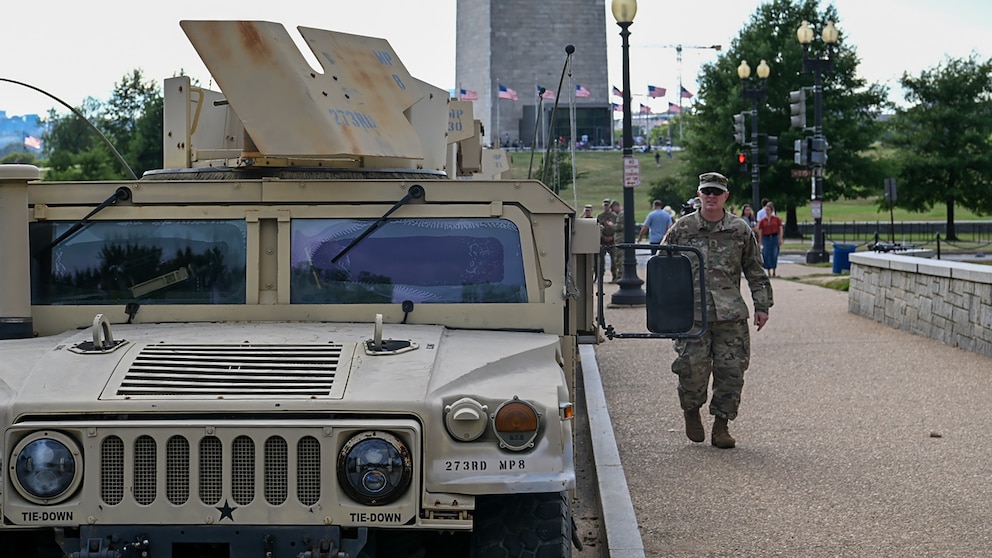
DC wakes up to troops deployed along the National MallTrump’s plan to address crime in D.C. calls for deploying National Guard troops along the National Mall overnight Wednesday into Thursday morning, according to a source.
Staff Sgt. Deonte Rowell/AU.S. Army
President Donald Trump said on Wednesday that he will seek more permanent federal control of the Washington, D.C., police force as he continues his efforts to ramp-up crime enforcement in the nation’s capital.
Earlier this week, Trump announced his plans to deploy National Guard troops in the nation’s capital, declaring a public safety emergency in order to put the Washington police department under federal control and station the National Guard on the city’s streets. Trump’s current control of the D.C. police force expires in 30 days, after which Congress would have to weigh in.
Asked Wednesday whether he’d work with Congress to extend the emergency authorization allowing him to temporarily seize control of local law enforcement, Trump said he’ll ask Congress for a “long-term” extension of federal authority over the Washington police force.
MORE: National Guard troops told to maintain presence near National Mall as part of Trump’s anti-crime mission
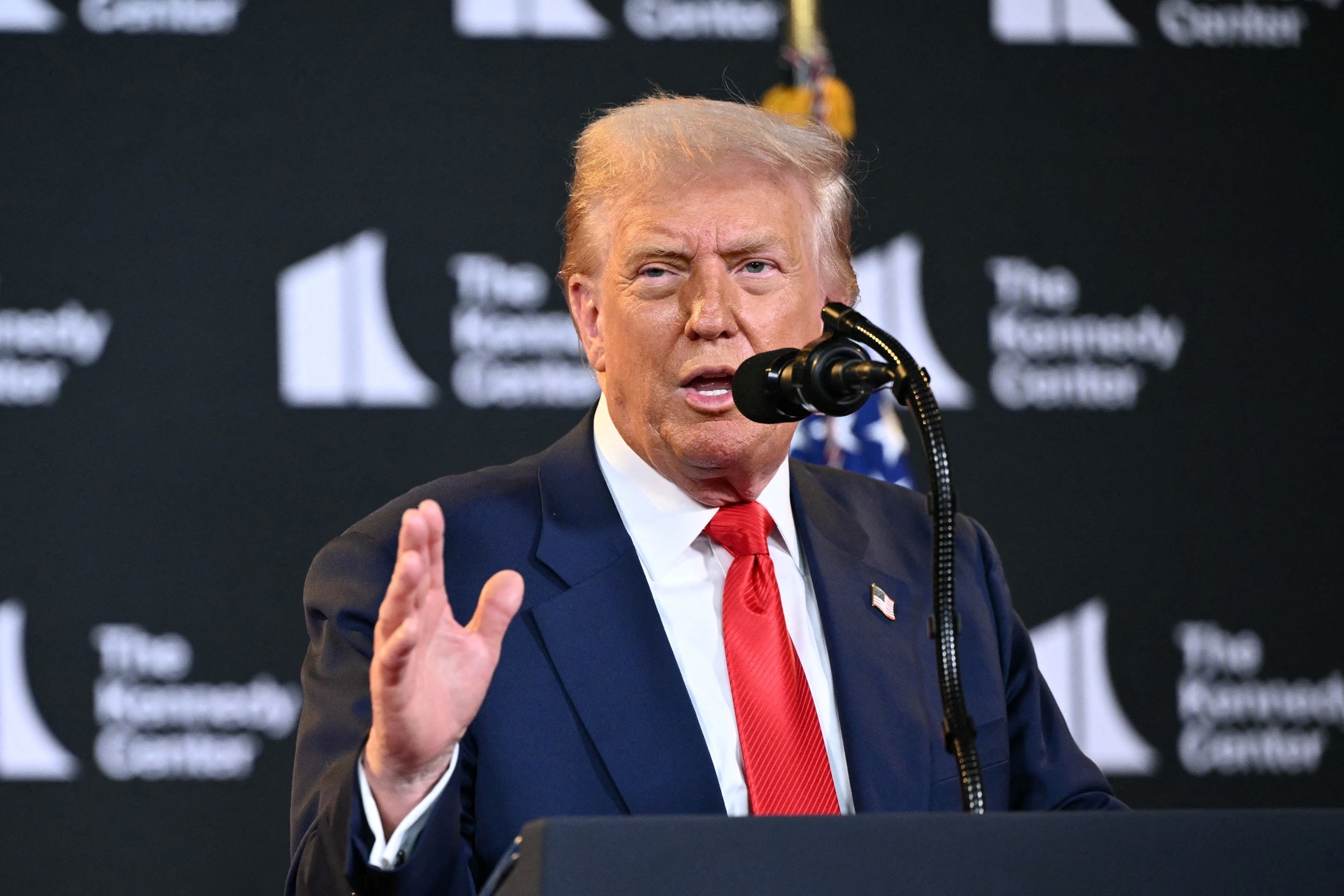
“We’re going to be asking for extensions on that — long-term extensions, because you can’t have 30 days,” Trump said at an event at the Kennedy Center.
Trump indicated at one point that he’d ask Congress for more funds to fight crime and to make repairs to Washington’s streets and parks.
“We’re going to make Washington beautiful. We’re going to redo roads. We’re going to redo the medians. The pavers and the medians are all throughout the city. We’re going to take all the graffiti off. We’re going to have to remove the tents. And the people that are living in our parks, we’re going to be redoing the parks, the grasses and all. We’re going to be going to Congress for a relatively small amount of money. And [Senate Budget Committee chair and GOP Sen.] Lindsey [Graham] and the Republicans are going to be approving it,” Trump said.
MORE: What to know about DC Home Rule Act as Trump puts DC police under federal control
Trump has long threatened to take control of Washington, saying he wants to crack down on violent crime in the District although police statistics show that in the past two years, violent crime has gone down.
“Fighting crime is a good thing. We have to explain we’re going to fight crime — that’s a good thing,” Trump said Wednesday. “Already they’re saying, ‘He’s a dictator,’ he said, referring to Democrats. “The place is going to hell. We’ve got to stop it. So, instead of saying, ‘He’s a dictator,’ they should say, ‘We’re going to join him and make Washington safe.'”
“We’re going to be essentially crime-free. This is going to be a beacon, and it’s going to also serve as an example of what can be done,” Trump said.
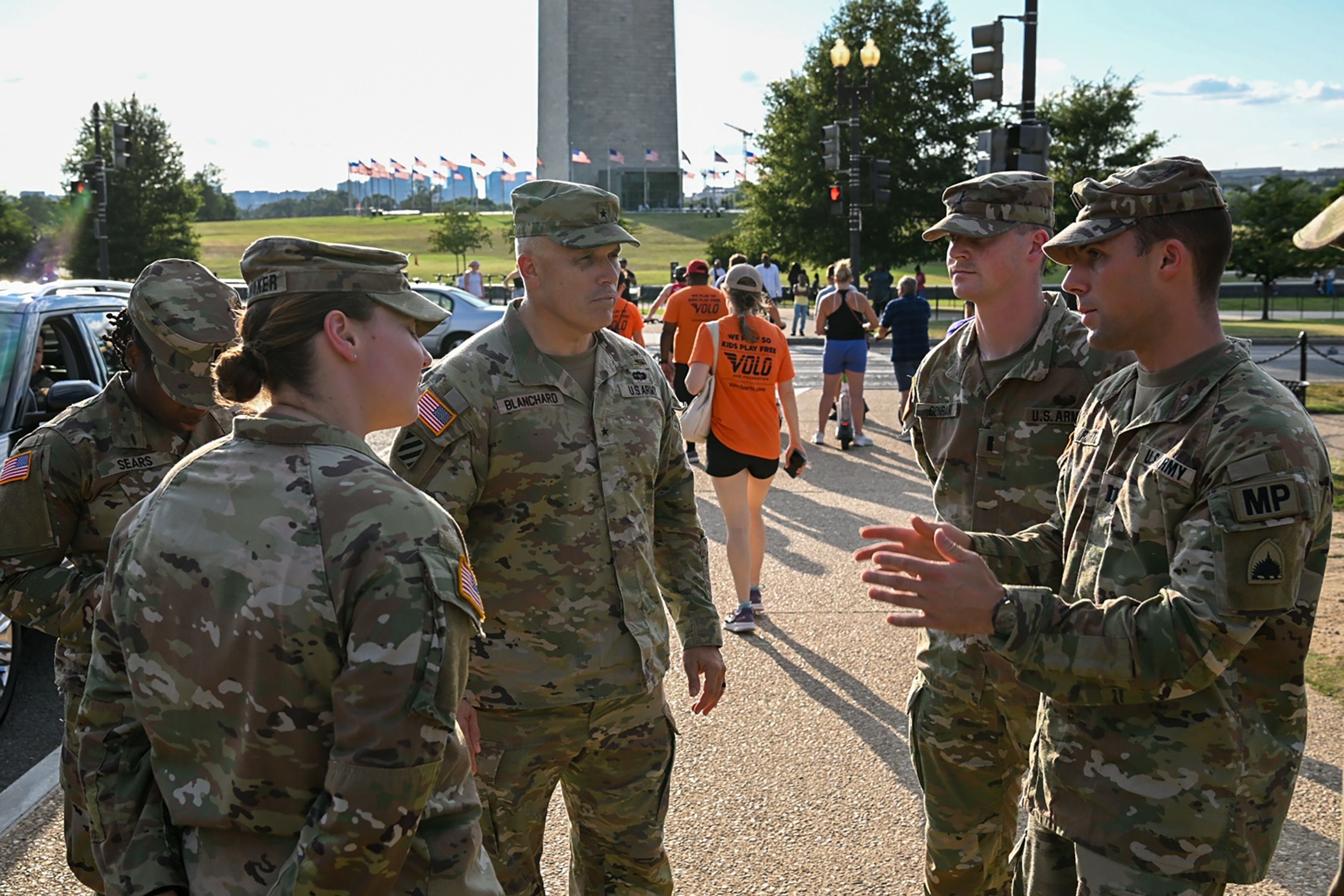
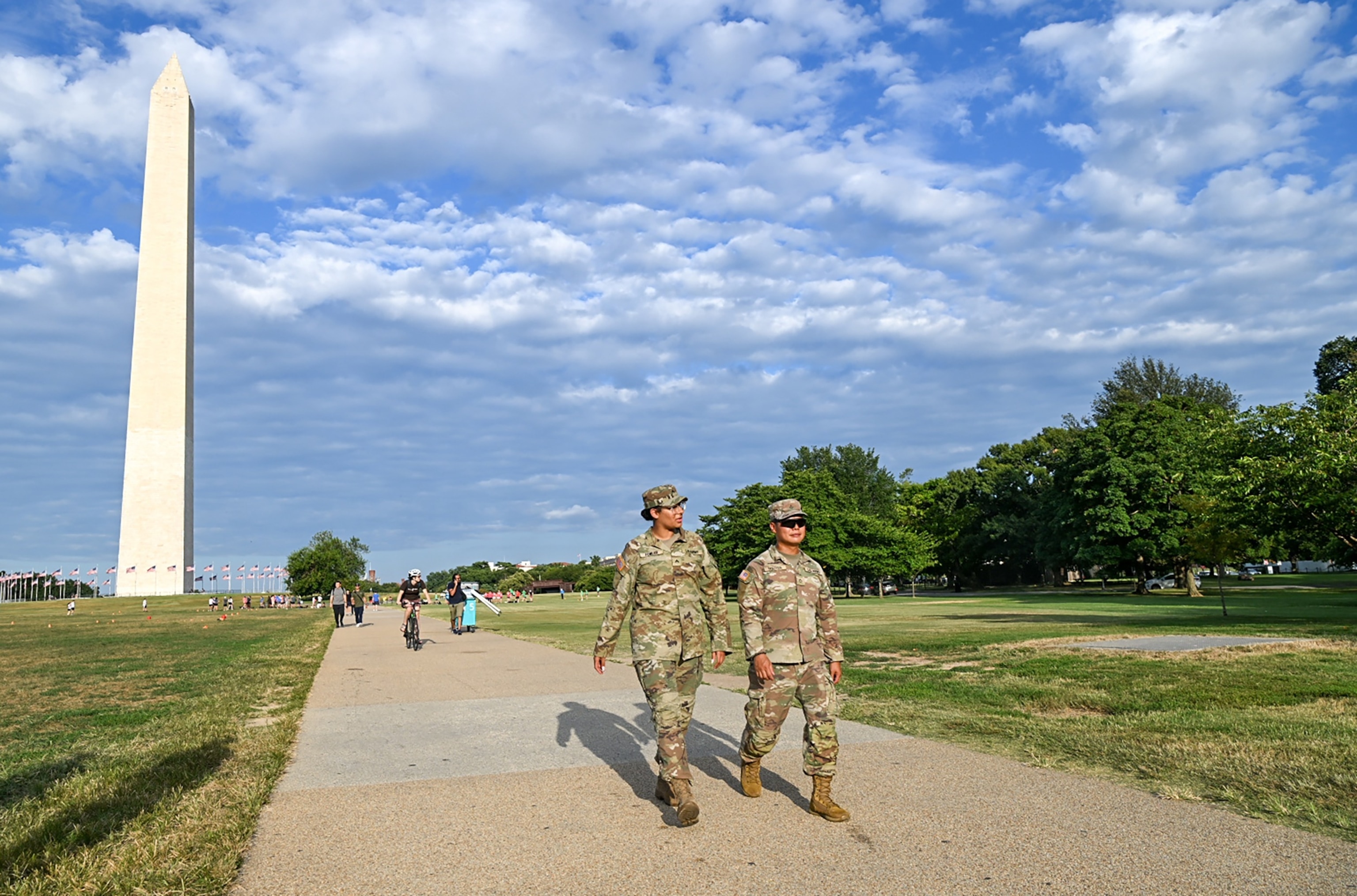
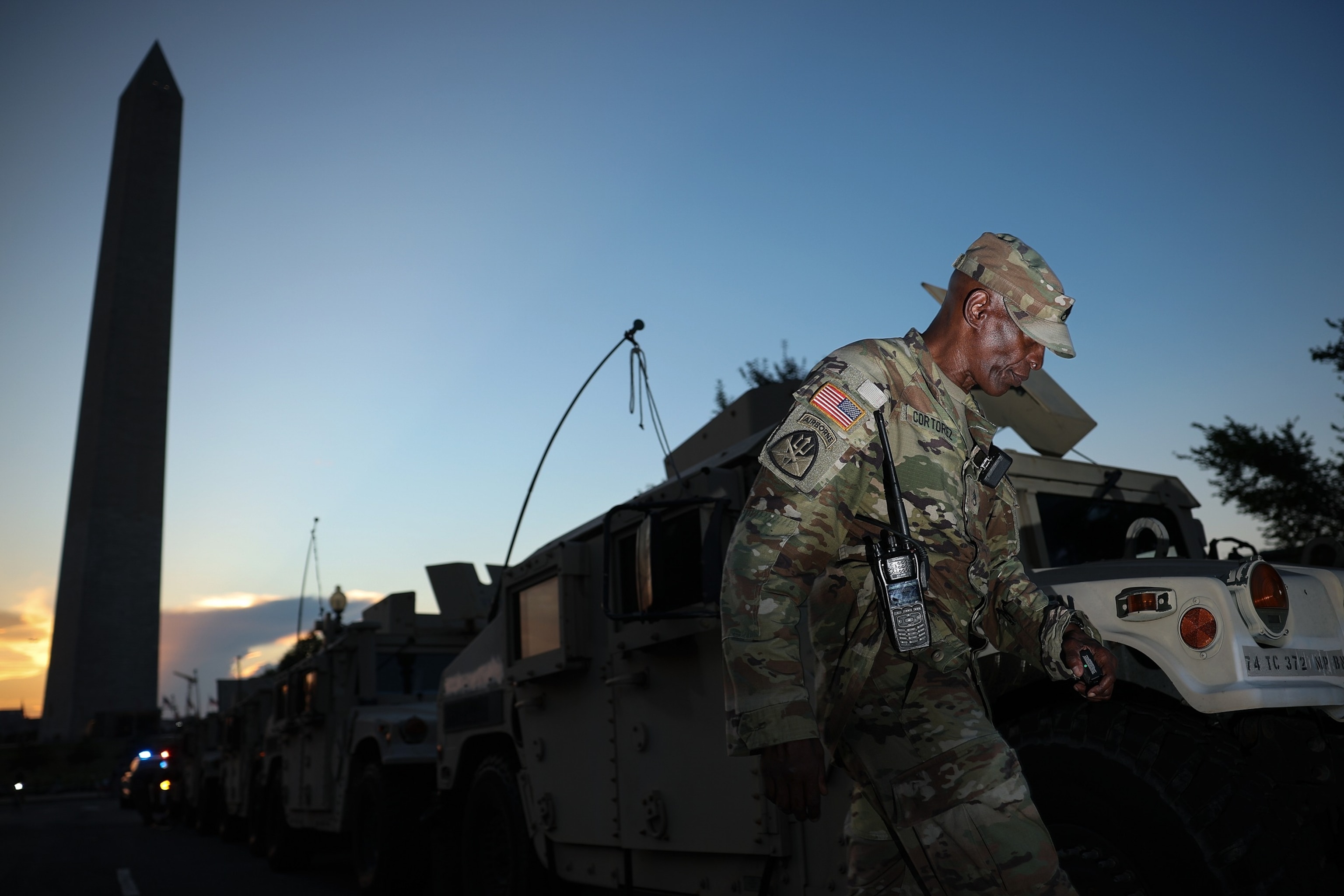
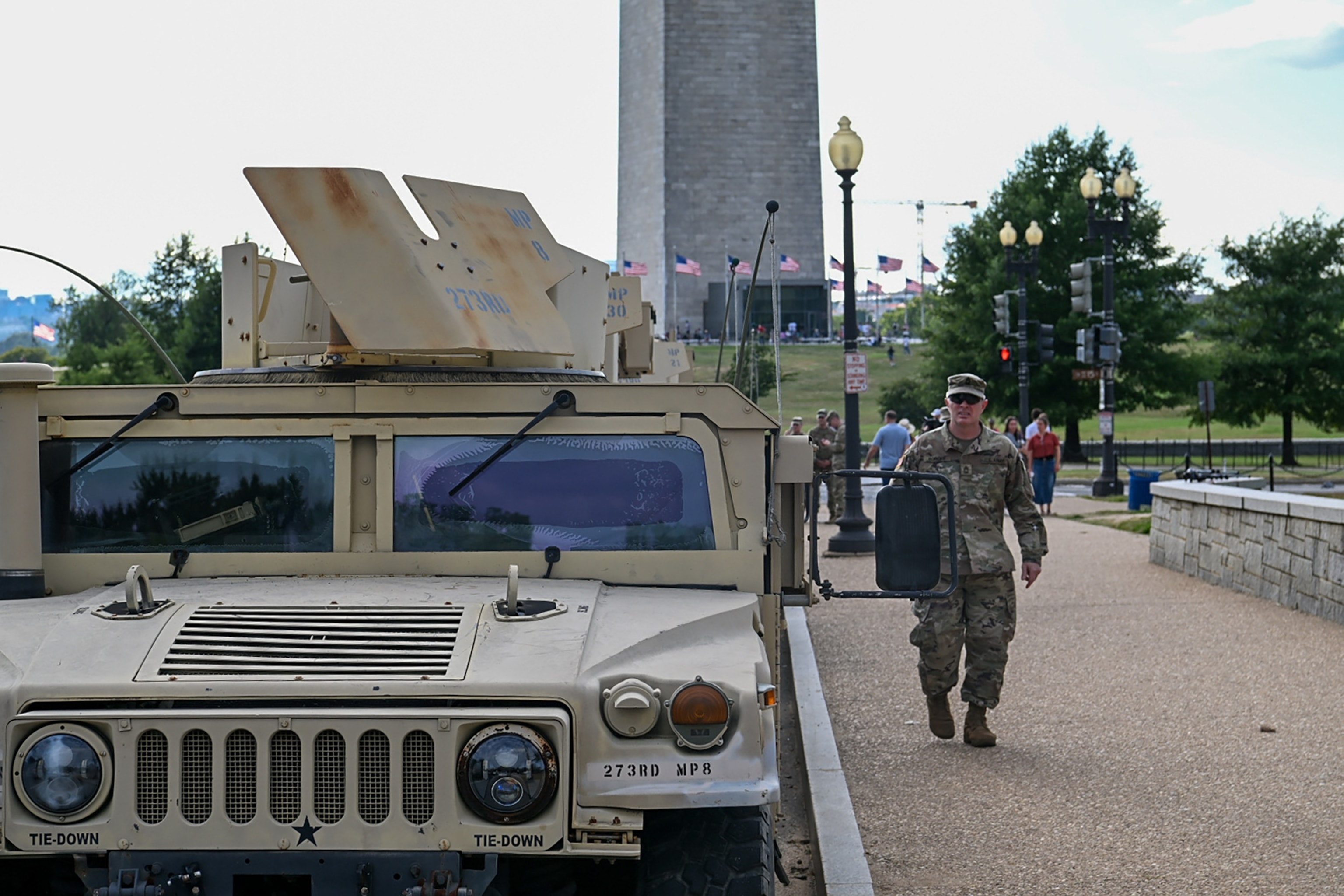
National Guard troops began deploying in larger numbers along the National Mall overnight, according to a person familiar with the plan.
According to a person familiar with the effort, the latest plan calls for sending the activated Army soldiers to spots around the National Mall in the middle of the night so they will be visible to D.C. residents by Friday morning.
Popular Reads
Minneapolis live updates: ICE arrest powers expanded, memo says
Partial government shutdown expected to extend longer than anticipated
Winter storm updates: Dozens dead across US in wake of massive snowfall, deep freeze
Officials said the Trump administration is still in the process of setting up a joint task force, which will be led by Army Col. Larry Doane. While the task force is expected to include 800 activated soldiers, D.C. residents won’t see that many on the streets.
The troops will work in shifts of 100 to 200 troops at a time, and some of them will be assigned to administrative or logistical roles in support of local law enforcement, officials told ABC News.
ABC News producers did not see any National Guard or increased law enforcement presence around Washington Wednesday afternoon — including around the National Mall, D.C. Armory or in Logan Circle where a man was gunned down and killed earlier this week.
A White House official told ABC News that, beginning Wednesday night, officials expected a “significantly higher National Guard presence to be on the ground throughout Washington, D.C.” The White House official added that beginning Wednesday night, the deployment will transition to round-the-clock, 24/7 operations. Those operations had been previously focused on evening and overnight hours.
On Tuesday night, more than 1,450 federal law enforcement officers and National Guard members patrolled Washington, according to a White House official. Law enforcement teams made 43 arrests on Tuesday night — nearly twice the number made Monday night, the official said.
Those law enforcement teams included 750 D.C. Metropolitan Police Department officers who were “uniformed, marked as patrol and directly assigned as anti-crime officers,” the White House official said. That was in addition to the federal law enforcement who had been previously mobilized in the area. The White House official said that there were about 30 National Guard troops on the ground last night.
MORE: Trump admin live updates: Trump threatens ‘severe consequences’ for Putin if he doesn’t stop war
The law enforcement teams were “deployed throughout all seven districts in D.C. to promote public safety and arrest violent offenders,” the White House official said.
After Trump’s announcement Monday, approximately 850 officers and agents fanned out over D.C. right after Trump declared a crime emergency in the capital, making 23 arrests, White House press secretary Karoline Leavitt said Tuesday.
On Tuesday, National Guard troops were spotted on the National Mall, with many stationed around the base of the Washington Monument. The troops left Wednesday morning.
It was not immediately clear why the presence of U.S. troops along the National Mall was needed, other than to put Trump’s orders on display. The area, marked by museums, monuments and long stretches of grass, is known as a relatively safe part of the city that attracts mostly tourists and school groups.
ABC News’ John Parkinson contributed to this report.
Editor’s note: This story has been updated to reflect that National Guard did not make any arrests of individuals in Washington.